Top FPV board cameras provide clear image quality, low latency, and reliable performance for racing and freestyle flying. This guide highlights five standout FPV board cameras, explaining who each is best for and why they were selected. Whether you’re building a micro Whoop, a racing quad, or a freestyle drone, these options help you balance weight, image quality, and ease of use.
Buyer’s quick-start table
| Product | Best For | Key Advantage | Weight |
|---|---|---|---|
| Foxeer Razer Mini V3 | Racers Who Need Low Latency | 1200TVL, low noise, 1/3″ sensor | Lightweight |
| Micro Drones And Indoor Flying | Global WDR, 160° FOV | Very lightweight | |
| RunCam Spotter V2 | All-in-One FPV Kits | 160° FOV, integrated TX and mic | All-in-one module |
| Wolfwhoop WT03 | DIY Micro Builds | Ultra micro size, plug-and-play | Ultra compact |
| MEIVIFPV Caddx Ant | Racing And Cinewhoop Micro | 165° FOV, WDR | Very light |
Foxeer Razer Mini V3 FPV Camera Review
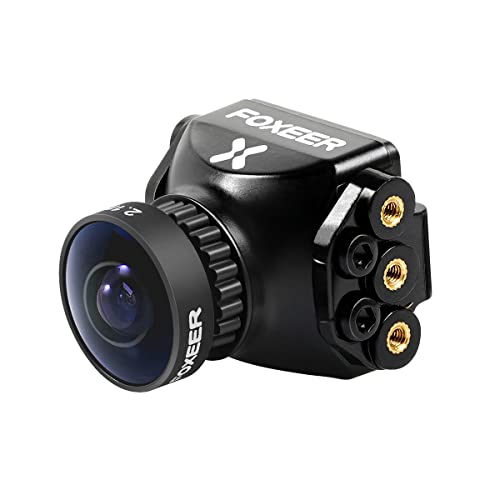
The Foxeer Razer Mini V3 is a compact FPV camera with a 1/3″ CMOS sensor and 1200TVL resolution. It emphasizes low latency and clean imaging, suitable for fast FPV racing and freestyle. The camera supports 4:3 PAL/NTSC and offers stable CVBS analog output with a fast exposure shutter that adapts from 1/25 to 1/10,000 seconds. This camera is best for pilots who need reliable, responsive video under varied lighting conditions.
Best for: Racers and freestyle pilots who require low latency and robust performance in mixed light. The 1200TVL sensor helps keep detail in dynamic scenes.
Why selected: It balances resolution, latency, and adaptability, making it a strong all-around board camera for mid- to high-end micro quads and race builds.
Caution: In extremely bright environments, the 4:3 aspect may not capture as wide a scene as 16:9 cameras; consider fitting a controller to adjust exposure if needed.
RunCam Key Board FPV Camera Accessory

The RunCam Key Board is a compact OSD-setting accessory designed for RunCam FPV cameras. It includes a 1.25mm cable pin and a light 5g weight, offering compatibility with multiple RunCam cameras such as Eagle 2 Pro, Hybrid, Split3, and more. It is ideal for pilots who want quick, simple OSD adjustments and streamlined wiring for micro to mini quad builds.
Best for: Pilots using RunCam systems who want an easy-to-wire OSD/setting upgrade without adding much weight.
Why selected: It simplifies on-flight data visibility with minimal footprint, helping maintain efficiency on small airframes.
Caution: It is a specialized accessory—verify compatibility with your exact RunCam model before purchase.
BETAFPV C03 FPV Micro Camera Review

The BETAFPV C03 is a 1/3″ CMOS FPV micro camera with 1200TVL and Global WDR. It uses a 2.1mm lens and a 160° FOV for broad situational awareness in indoor micro Whoop flights and small builds. Its light weight (about 1.52g) makes it a strong choice for adding high-quality imaging to ultra-light micro drones.
Best for: Indoor and micro drone pilots seeking wide-angle coverage without heavy payloads.
Why selected: The combination of Global WDR and a wide 160° FOV provides clear visibility in varied lighting, supporting stable operation in complex environments.
Caution: The camera is extremely light, which may require careful mounting to avoid vibration-related image jitter on high-speed flights.
RunCam Spotter V2 FPV Camera And Transmitter

The RunCam Spotter V2 is an all-in-one FPV kit featuring a 170-degree FOV at 700TVL, integrated mic, and a 5.8G transmitter with adjustable output (20MW–200MW). This micro AIO setup is suitable for FPV drones, RC cars, boats, or planes. The integrated OSD offers real-time data, aiding remote operation and safety decisions.
Best for: Builders who want a compact, integrated FPV solution with real-time audio and telemetry for a variety of RC platforms.
Why selected: The all-in-one design reduces wiring complexity and weight, helpful for ultralight builds and quick deployments.
Caution: The 170° FOV can introduce significant distortion at the edges; ensure your mounting angle minimizes cockpit-like perspective issues in racing scenarios.
Wolfwhoop WT03 Micro FPV Camera With Transmitter
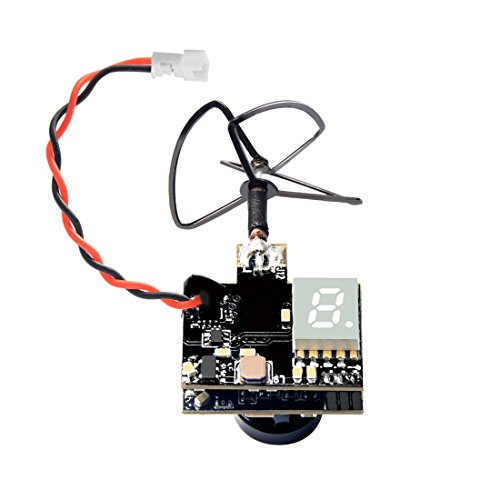
The Wolfwhoop WT03 is a micro FPV camera designed for ultra-light builds. It features a compact form and plug-and-play readiness, aiming for easy integration with a range of RX systems. The package emphasizes a simple, lightweight approach for tiny airframes and DIY projects.
Best for: DIY micro builds and pilots who value a simple, plug-and-fly configuration with minimal weight.
Why selected: Its ultra-light footprint helps preserve flight performance on very small drones where every gram matters.
Caution: The camera’s small size may limit mounting flexibility; ensure you have a secure mount to prevent vibration issues during high-speed maneuvers.
MEIVIFPV Caddx Ant FPV Camera

The MEIVIFPV Caddx Ant camera delivers 1200TVL resolution with a 165° FOV and a 1.8mm lens. It emphasizes Global WDR and low-light performance, making it suitable for racing and cinewhoop applications where a wide field of view is beneficial. The camera is ultralight at about 2g.
Best for: Racing and cinewhoop microquads that need wide coverage without adding significant weight.
Why selected: The combination of 165° FOV and WDR helps pilots maintain situational awareness in dynamic scenes.
Caution: Some pilots may prefer a slightly narrower FOV for aiming precision in tight courses; balance FOV with pilot style.
Buying Guide: How to Choose the Right FPV Board Camera
What should you consider when selecting an FPV board camera? Weight, sensor type, resolution, FOV, and compatibility with your VTX and quad frame are key factors.
Sensor and resolution: A 1/3″ CMOS sensor with 1200TVL is common in racing-grade cameras. Higher TVL can improve detail in motion, but may slightly increase latency depending on the model. Global WDR helps maintain visibility in backlit or mixed lighting.
Lens and FOV: Lenses around 1.8–2.1mm give wide angles, ideal for micro quads or Cinewhoops. Ultra-wide FOV (over 160°) provides broad awareness but can distort edges; consider your flight style and how you frame shots.
Weight and size: Micro builds benefit from cameras weighing a few grams. Lighter cameras reduce the minimum required lift, improving efficiency and flight times on small drones.
Latency and output: Lower latency improves flight control responsiveness. Most FPV cameras use CVBS analog output; ensure your VTX supports the camera’s signal format and your goggles are compatible.
Compatibility and mounting: Some cameras are designed to match specific micro frames or RX systems. Verify that your camera fits your frame, VTX, and mounting hardware. OSD and easy wiring can simplify installation on tight builds.
Frequently Asked Questions
- What is FPV camera latency and why does it matter? Latency is the delay between what the camera captures and what you see in goggles. Lower latency improves real-time responsiveness, especially in racing.
- Is a higher TVL always better? Higher TVL can improve detail, but latency and sensor performance matter too. Choose a camera whose latency and signal quality fit your flight style.
- Do I need an all-in-one transmitter with a camera? For minimal wiring and weight on micro builds, an all-in-one Spotter-style kit can simplify installation. For custom setups, separate transmitter modules offer flexibility.
- How important is FOV for FPV? A wide FOV helps you see more of the environment, which is helpful in speed and obstacle avoidance but can distort perspective. Balance FOV with target practice and control feel.
- Which camera is best for indoor micro drones? Cameras like BETAFPV C03 or similar ultra-light models are well-suited for indoor flight due to their low weight and wide FOV, reducing the chance of clipping walls while maintaining visibility.
- Can I mix cameras and VTX brands? Yes, but ensure the camera’s output matches the VTX input and that electrical specs align to prevent signal loss or interference.