When choosing a best FM antenna for stereo, prioritize models that boost signal strength, reduce static, and fit your setup’s connectors. This guide highlights five top options suited for common home stereo receivers, tuners, and AV systems. Whether you need a compact indoor dipole, a magnetic-base mast, or a versatile 75/300 ohm adapter-equipped antenna, these picks target different listening environments. The buyer profiles below explain who benefits most from each antenna. A quick summary table at the top helps you compare compatibility, length, and connection types at a glance.
| Product | Best For | Key Benefit | Connector Type |
|---|---|---|---|
| BINGFU FM Radio Dipole Antenna | Indoor music systems and stereo receivers | 10 ft coax; universal connectors | F-Type / adapters |
| AEDIKO FM Radio Antenna | Compact setups needing ease of use | Portable, simple install | F-Type Male Plug |
| Ancable 300 Ohm T Shape Dipole | Tabletop or cabinet receivers | Long coax extension for better reception | 300 Ohm / 300Ω |
| CHHLIUT FM Antenna | Home theater and media rooms | Retractable with magnetic base | Coaxial; 5 m cable |
| eifagur 75 Ohm / 300 Ohm Antenna | Versatile stereo systems | Magnetic base; dual impedance | 75 Ω / 300 Ω adapters |
BINGFU FM Radio Dipole Antenna for Stereo Receiver Indoor

The BINGFU dipole antenna is designed for indoor use with a 75-ohm unbalanced system. It ships with a 10-foot coaxial extension and multiple adapters, making it versatile across many brands such as Yamaha, Onkyo, Pioneer, and Bose. Best for users seeking a straightforward installation with flexible compatibility in a living room or home office. A potential limitation is that performance can depend on room layout and EMI from nearby devices.
AEDIKO FM Radio Antenna 75 Ohm FM Antenna

The AEDIKO solution offers a 4.9-foot 150 cm lead with an F-Type Male Plug and an AM loop option. It is a portable, easy-to-install choice for indoor use, suitable for home, garage, or office environments. Best for compact setups that need a quick upgrade without heavy mounting. A drawback is that performance may vary with receiver sensitivity and room interference.
Ancable 300 Ohm FM Antenna T Shape Dipole
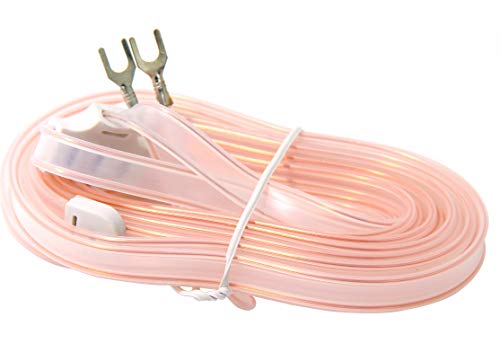
This T-shaped dipole uses 300-ohm impedance and includes a long 5.9-foot coax cable to reach better reception across desks, shelves, or stand setups. It’s well-suited for Yamaha, Denon, Marantz, and similar vintage or modern stereo tuners. Choose this if you want a plug-and-play upgrade with extended reach. A limitation is that 300-ohm compatibility is not universal; verify your device’s connector standard first.
CHHLIUT FM Antenna for Stereo Receiver

CHHLIUT emphasizes enhanced FM reception with a retractable design and a strong magnetic base for stable placement on metal surfaces. It includes a 5-meter coaxial cable for flexible placement in living rooms or home theaters. Best for users who value stable mounting and clear signal with minimal setup. A consideration is that magnetic bases may affect placement near certain electronics or metallic surfaces.
eifagur 75 Ohm / 300 Ohm Magnetic Base Antenna
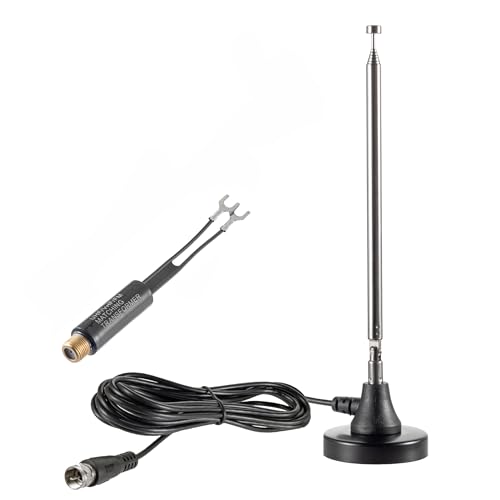
This antenna is designed for versatility, supporting both 75-ohm and 300-ohm connections with a magnetic base for stable mounting. It comes with a 10-foot coaxial extension and a dual-impedance adapter (F-Type to 300 ohm). Best for users who want one antenna to work with multiple receiver types. A limitation is that some receivers may require precise alignment for optimal 300-ohm performance.
Bingfu FM Dipole Antenna 300 Ohm
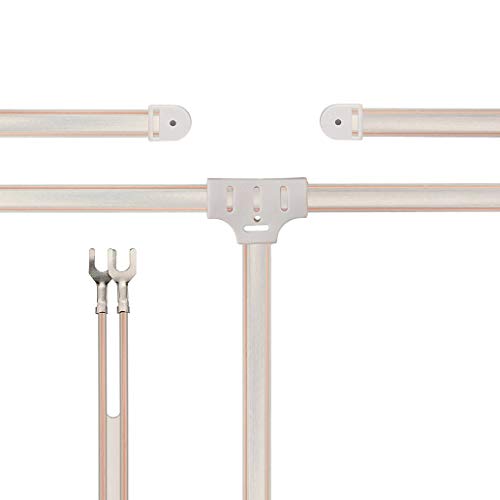
This 300-ohm dipole uses two bare wires to connect to compatible receivers, offering a straightforward upgrade for desktop or shelf setups. Best for users with 300-ohm inputs seeking a simple installation and extended reception. A caution: ensure your device supports 300-ohm connection, as modern units may default to 75-ohm inputs.
Buying Guide: How To Choose The Right FM Antenna For Your Stereo
- Connector compatibility: Check whether your receiver uses 75 ohm F-Type, 300 ohm twin-lead, or a mixed input. Some antennas include adapters to bridge different standards.
- Impedance matching: 75 ohm is common for many modern receivers; 300 ohm is typical for vintage gear. If in doubt, pick a model offering both options or an adapter kit.
- Placement and mounting: Magnetic bases help with metal surfaces, while tall, active placement (away from EMI sources) improves reception. Consider room layout and furniture movement.
- Cable length: Longer coax cables extend reach to optimal positions but may introduce slight signal loss. Balance length with signal quality goals.
- Retractable and portable options: If you move the setup between rooms, retractable designs simplify storage and positioning.
- Durability and build: Brass or copper elements, sturdy connectors, and robust housings contribute to lasting performance in indoor environments.
FAQ
- What is the main difference between 75 ohm and 300 ohm antennas?
– 75 ohm antennas are common for modern receivers, while 300 ohm antennas are often used with older equipment. Choose based on your device’s impedance input or use an adapter kit if available. - Can these antennas improve every FM station?
– They can improve reception for many stations, but effectiveness depends on location, antenna placement, and local signal strength.
Note: This article provides objective, model-based guidance. For best results, verify your exact receiver input and whether adapters are needed for your chosen antenna.