Choosing a reliable field monitor is essential for accurate focus, exposure, and framing on location shoots. This guide highlights five strong options that balance brightness, color accuracy, and workflow features. Each entry includes key specs drawn from listed features to help you compare at-a-glance.
| Product | Display | Key Features | Power |
|---|---|---|---|
| NEEWER F700 (First) | 7″ 1920×1080, 2000 nit | 3D LUT, 4K HDMI loop, peak focus, HDR waveform | Battery not included |
| FEELWORLD FW759 | 7″ 1280×800 | 4K HDMI input, slim design | Battery not included |
| NEEWER F700 (Second) | 7″ 1920×1080, 2000 nit | 3D LUT, auto backlight, 4K loop in/out | Battery not included |
| FEELWORLD S55 V3 | 6″ 1920×1080 | 4K HDMI in/out, tilt arm | Battery included |
| FEELWORLD FW568 | 6″ 1920×1080 | Waveform, LUTs, real-time preview | Battery not included |
NEEWER F700 7″ Field Monitor With 2000nit Brightness

The NEEWER F700 offers a large 7-inch IPS panel with 1920×1080 resolution and industry-leading 2000 nit brightness for harsh outdoor lighting. It includes a 180° adjustable bracket and a touch screen with auto backlight control, providing quick access to a full feature set with an intuitive interface. The monitor supports 4K HDMI loop in/out and multiple video formats, enabling smooth on-set signal management while monitoring audio via a 3.5mm jack. Advanced monitoring tools include False Color, Zebras, Histogram, and Vectorscope, plus HDR and Peak Focus for precise exposure and focus.
Key features include 15 preloaded 3D LUTs and up to 60 custom LUT uploads, with firmware upgrades possible via SD card. This model is well-suited for documentary or run-and-gun shoots where daylight visibility and quick LUT adjustments matter. Power options include two NP-F style batteries on some variants, though this listing notes different configurations between models.
FEELWORLD FW759 7 Inch Field Monitor
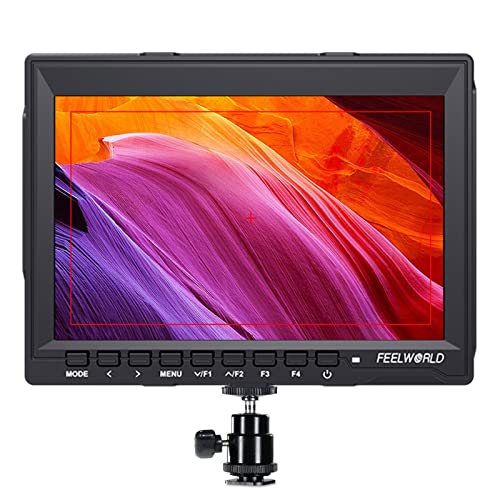
The FEELWORLD FW759 focuses on portability without sacrificing essential monitoring features. It provides a 7-inch display at 1280×800 with a broad color gamut and 400 cd/m² brightness for reliable on-set viewing. Its ultra-slim profile (about 17mm) weighs roughly 300 grams, making it ideal for stabilizers and gimbals. It supports 4K HDMI input and AV input, enabling compatibility with most DSLRs and camcorders. The FW759 is a practical choice when you need a lightweight companion for quick-look verification and exposure checks in tight spaces.
NEEWER F700 7″ Field Monitor (Battery Not Included)

This variant emphasizes automatic backlight control and ambient-sensing brightness adjustments, ensuring readability in changing light. It maintains the 2000 nit brightness and 1920×1080 IPS touchscreen with 160° viewing. It supports 4K HDMI loop in/out with a broad range of resolutions and frame rates, alongside the same professional monitoring suite: False Color, Zebras, Histogram, Full Waveform, Vectorscope, HDR, and Peak Focus. The screen quality and interface are designed for quick, accurate exposure decisions in the field.
FEELWORLD S55 V3 6 Inch Field Monitor

The FEELWORLD S55 V3 packs a compact 6-inch IPS display with 1920×1080 resolution and a 160° viewing angle. It supports 4K HDMI input/output, and its lightweight form factor makes it a strong choice for handheld shooting or gimbal work. The monitor emphasizes a user-friendly design with tilt-arm compatibility to optimize viewing angles, plus power options compatible with NP-F batteries and a DC output for camera power. It includes three quick-access keys to streamline common functions in the field.
FEELWORLD FW568 6 Inch Monitor With LUTs
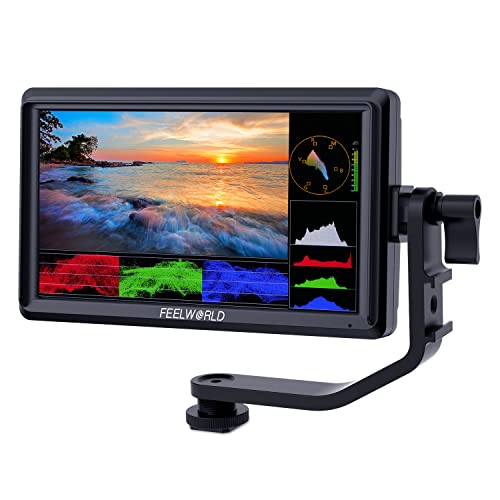
FEELWORLD FW568 delivers a compact 6-inch solution with 1920×1080 resolution and Rec.709 color accuracy. It provides built-in LUT support and waveform monitoring for exposure assessment. While the FW568 offers a robust feature set, some listings note differences between versions, including waveform and LUT availability depending on the model. The 4K HDMI input/output support ensures compatibility with a wide range of cameras, making it a versatile option for on-set monitoring in smaller rigs.
Buying Guide: Key Purchase Considerations
- Display size vs. portability: Larger screens (7″) are easier to judge focus and exposure on, but add weight. For stabilizers and run-and-gun shooting, 6″ to 7″ models are a common balance.
- Brightness and outdoor readability: Higher nit ratings improve visibility in sunlight. If you often shoot outdoors, prioritize 1000+ nit or higher with good sun-hood compatibility and ambient light awareness features.
- Color accuracy and LUTs: Look for Rec.709 calibration and LUT support. Built-in waveforms, histogram, and vectorscope help ensure correct exposure and color, especially when matching multiple cameras.
- HDMI loop in/out: Loop-through helps you monitor on the external display while sending clean signals to recorders or multicam rigs. Verify supported formats and frame rates (4K, 1080p, etc.).
- Power options: Many field monitors use NP-F batteries; some bundles include battery kits while others do not. Check whether a charger or external DC input is included or needed for your setup.
- Build and ergonomics: Adjustable brackets, tilt arms, and weight distribution affect on-set usability. Consider mounting options (cold shoe, tripod, or monitor arm) based on your rig.
- Firmware and expandability: LUT uploading, SD card firmware updates, and compatibility with third-party LUTs can extend the monitor’s life as cameras evolve.
- Price-to-feature ratio: Compare whether advanced tools like HDR, advanced waveform tools, and cross-compatibility justify the cost for your production type.
The selections above emphasize field monitors that balance brightness, LUT support, and practical on-set workflows. For outdoor filmmaking, prioritize higher brightness and robust exposure tools; for studio or controlled environments, LUT flexibility and color calibration may take precedence. Consider your camera system, typical shooting conditions, and how you plan to monitor audio and waveform data to choose the best fit.