Answering the common shopper question: which external CD/DVD drive best suits a PC setup in 2026? This guide highlights top, widely compatible options designed for laptops and desktops. The best picks target users who need reliable reading, writing, and media playback with minimal setup. Ideal buyers include students, professionals transferring disc-based data, and home theater enthusiasts who still rely on optical media. Below is a quick product snapshot and a deeper comparison to help you decide.
| Product | Brand | Best For |
|---|---|---|
| Amicool External DVD Drive | Amicool | Great all‑rounder for Windows, Mac, and Linux users needing USB-C or USB 3.0 connectivity |
| Rioddas External CD/DVD Drive | Rioddas | Plug‑and‑play simplicity with strong backing on desktops and laptops |
| ORIGBELIE External CD DVD Drive (Ultra Slim) | ORIGBELIE | Slim design, broad OS support, good choice for ultra-portable setups |
| ORIGBELIE External CD DVD Drive (USB 3.0 & 4 Ports) | ORIGBELIE | Multifunction hub plus optical drive for busy desks |
| BPAKDU External CD/DVD Drive (8‑in‑1) | BPAKDU | Multi‑port utility with USB hub and card readers for data transfer |
Amicool External DVD Drive USB 3.0 USB C – Slim & Portable
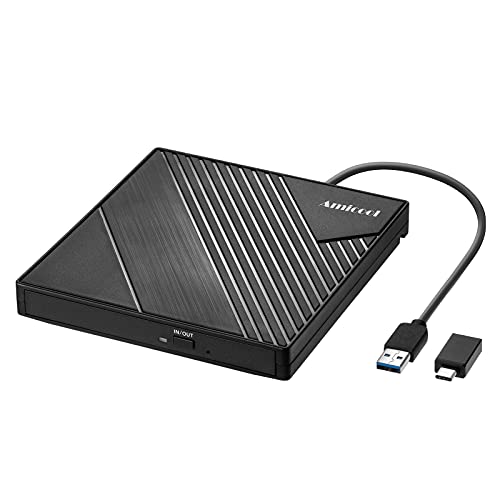
The Amicool drive uses dual interfaces (USB 3.0 and Type-C) for faster data transfer up to 5 Gbps. It supports DVD+R, DVD-R, CD-R, and CD-RW with a maximum reading speed of 8x and CD writing at up to 24x. It is best for Windows, Linux, and macOS systems, including Intel and Apple Silicon Macs, when you need a compact, ready‑to‑run solution. Pros: straightforward plug‑and‑play, direct connection recommended for power stability. Cons: not compatible with DVD‑RAM or Blu‑ray formats, and may require a powered USB port for certain setups. Suitable for: students, remote workers, and media archivists who want a simple, no‑hassle external drive.
Rioddas External CD/DVD Drive – USB 3.0 Portable
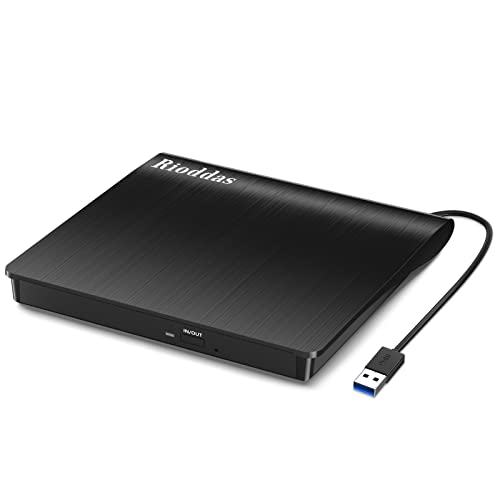
The Rioddas model emphasizes plug‑and‑play use with USB power. It works well on desktops via a rear USB port and on laptops with USB 3.0 (backwards compatible with USB 2.0). Its strengths lie in reliability and ease of use, minimizing freezes and errors during disc operations. Best for: users who want a dependable drive that requires no driver installation and works across Windows, macOS, and Linux. Limitation: occasional USB port switching may be needed if the device isn’t recognized immediately.
ORIGBELIE External CD DVD Drive – Ultra Slim 13mm
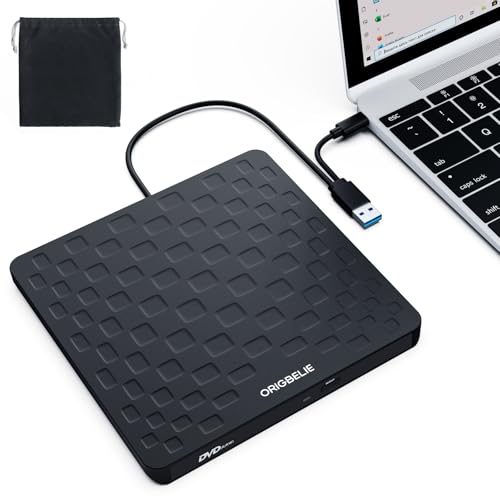
ORIGBELIE’s ultra‑slim drive offers USB 3.0 with Type‑C options, supporting max 8x DVD read/write and 24x CD read/write. It is broadly compatible with Windows, macOS, and Linux. It’s best for users who value portability without sacrificing performance. Choose this if you want a compact, travel‑friendly option for frequent moves between locations. Limitation: some Mac users may need to read the disc first before the device icon appears on macOS, depending on the OS version.
ORIGBELIE External CD/DVD Drive – 2 USB Ports & Card Slots
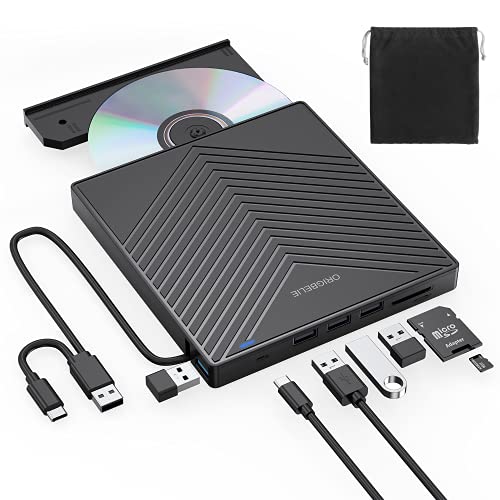
This ORIGBELIE model adds two USB ports plus TF/SD card slots to the external drive itself, acting as a compact hub for file transfers while handling standard CD/DVD burning tasks. Best for: users who need quick data transfers from cards and discs in one device. Limitation: not compatible with some tablets, TVs, or gaming consoles; desktop users should connect to a rear USB port for best performance.
BPAKDU External CD/DVD Drive – 8‑in‑1 USB 3.0 Hub

The BPAKDU device stands out as an 8‑in‑1 external drive, combining a CD/DVD reader/writer with a USB 3.0 hub, plus SD/TF card readers and a USB‑C port. It targets busy users who want an all‑in‑one data transfer and disc solution. Best for: users who frequently move data from cameras and memory cards to a PC while maintaining disc capabilities. Caution: the manufacturer notes potential power issues on some laptops; use a powered USB port if the drive isn’t recognized.
Buying Guide
What to consider when choosing an external CD/DVD drive for PC
Compatibility matters most. Look for USB 3.0 or USB‑C interfaces for faster transfers and broad OS support (Windows, macOS, Linux). If you have a desktop, a rear USB port often provides more stable power than front panels or hubs. Consider whether you need extra features like USB hubs or memory card readers, which some models offer. Slim designs are convenient for travel, but may sacrifice some durability. If you frequently burn or read DVDs, verify that the drive supports the formats you use (CD‑R, CD‑RW, DVD±R/RW, etc.).
Performance and reliability
Dual-interface models (USB 3.0 and Type‑C) give flexibility across devices. When possible, connect directly to the computer rather than through a hub to minimize power and data transfer issues. If a drive is not detected initially, trying a different USB port—especially a high‑power port on the back of a desktop—can resolve recognition problems.
Usage scenarios
Light archival tasks and media playback benefit from drives with reliable errata correction and consistent read/write speeds. Professionals handling large data transfers from memory cards will appreciate models that include card readers. Gamers or TV enthusiasts should avoid drives that are explicitly not compatible with Blu‑ray or certain consoles, as noted by the manufacturers.
FAQ
- Do external CD/DVD drives require drivers? Most listed drives are plug‑and‑play and require no extra drivers on modern Windows, macOS, or Linux systems.
- Can these drives work with USB hubs? Best results come from direct connections to the computer; USB hubs can cause power or recognition issues on some setups.
- Are these drives compatible with both Windows and Mac? Yes, the majority advertise broad OS compatibility, including Windows, macOS, and Linux.
- Will they play Blu‑ray discs? Most drives listed do not support Blu‑ray playback; confirm format support if Blu‑ray is required.
- Is power supplied via USB, or is an external adapter needed? All listed models are USB‑powered via the computer; some desktops may benefit from a powered USB port, and a few multi‑function models include extra hub features.
- What’s the best choice for travel? A slim, lightweight model with USB‑C compatibility (like the ultra‑slim ORIGBELIE option) is ideal for portable use.