Answering buyers seeking an entry level video drone: these models offer beginner-friendly controls, stable flight, and built-in HD or 2K/4K cameras to capture aerial moments without overwhelm. The top picks below are suited for new pilots, students learning to fly, families exploring hobby photography, and travelers who want a compact, forgiving drone. Each product section explains who it’s best for, why it was chosen, and a practical limitation to consider. A quick summary table highlights core features to compare at a glance.
| Product | Key Camera | Flight Time | Best For |
|---|---|---|---|
| Drone with Camera – Beginner Friendly | 1080P HD | Two Batteries | First-time flyers who want a built-in screen |
| Drone with 1080P Camera for Beginners | 1080P HD | Multiple speeds | Budget-friendly learners exploring gestural control |
| Drone with Camera for Adults (2K) | 2K HD | Two Batteries | Casual photography and stable beginner flying |
| GPS Drones with Camera for Adults 4K | 4K Ultra HD | 46 Minutes (two batteries) | Better stability and GPS-assisted features |
| GPS Drone with Camera for Adults (2K) | 2K HD | Varies with flight plans | GPS-assisted creative shooting and safe returns |
Drone With Screen On Controller For Beginners

The PK01 drone is designed for quick learning and immediate visual feedback. Its remote includes a built-in screen, so you don’t need a separate phone to monitor live HD footage or flight stats. This feature is especially useful for first-time pilots who want a straightforward, all-in-one experience. The drone uses tough brushless motors for reliable performance and supports one-key takeoff/landing, headless mode, and 360° flips to simplify novice flight. A key caveat is that saving images or videos requires an SD card (not included), so plan to add one if you want to archive flights.
Best for: absolute beginners who want a ready-to-fly setup with a dedicated screen. The self-contained display reduces setup friction and helps learners stay focused on control and stability. Choose this if you prefer not to pair a phone or tablet with the drone during practice.
Drone With 1080P Camera For Beginners

This entry-level model emphasizes gesture selfies and simple operation, making it a strong pick for hobbyists who want to capture quick aerial memories without complex controls. It features 1080P HD video, altitude hold, one-key takeoff/landing, and a headless mode to simplify orientation for new pilots. The app-enabled real-time transmission supports viewing footage as you fly. A limitation to note is that some advanced flight modes may depend on app control, which can reduce reliance on physical buttons during practice.
Best for: learners who want a straightforward drone with gesture control and a built-in tilt-free flight experience. Choose this if you want a gentle transition from beginner to more capable aerial photography.
Drone With Camera For Adults, 2K HD
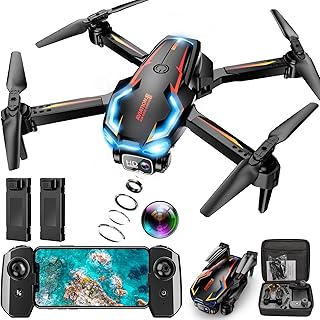
This model targets casual photographers who want better-than-basic footage without sacrificing ease of use. It features a 2K HD camera with a 90° adjustable angle, enabling flexible framing of landscapes and moments. The drone supports real-time viewing via a connected device, plus altitude hold and gravity sensing for stable flights. Gesture-based selfies and a single-button start improve the learning curve. A potential drawback is that some advanced settings may require app interaction, so expect to use both the controller and the app during flights.
Best for: beginner to intermediate users who want clearer video and more angles without complex controls. Choose this if you want sharper media while maintaining beginner-friendly features.
GPS Drones With Camera For Adults 4K

The 4K GPS drone emphasizes precise navigation and advanced flight modes to enable more ambitious aerial shots. It integrates GPS Auto Return, Follow Me, Waypoint Flight, and Circle Fly, offering a safer, more automated flight experience. The 4K camera captures ultra-high-definition footage, complemented by a 120° wide-angle lens and a 90° adjustable angle. Running on 5GHz FPV transmission, it provides smoother video streaming to a connected device. The larger broadcasting range and GPS features make this a strong option for confident beginners who want reliable recalls and more cinematic possibilities. A limitation is that its feature set can be more complex to master for total beginners.
Best for: beginners who want GPS-assisted safety features plus 4K video capabilities. Choose this if you’re ready to leverage automated flight features for stable, cinematic footage.
GPS Drone With Camera For Adults, 2K HD
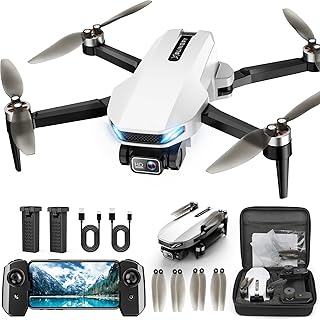
This 2K camera-focused drone adds robust GPS features and a host of user-friendly shooting modes. The camera angle is 90° adjustable, enabling flexible framing for landscapes, sports, and travel moments. It offers built-in shock absorption and 5GHz FPV transmission for smoother video and easier sharing to social platforms. Features like Follow Me, Waypoint Flight, and Gesture Selfie expand creative possibilities while the GPS Auto Return provides safety for learners who may drift or lose signal. A consideration is that the app-based controls can be essential for accessing some modes, which may require extra setup.
Best for: new pilots who want reliable GPS-assisted filming and hands-free creative options. Choose this if you want advanced yet approachable GPS features alongside solid image quality.
Buying Guide: Key Considerations For Entry Level Video Drones
- Camera quality and stability: For beginners, 1080P is enough to learn framing and composition. If you plan broader experimentation, consider 2K or 4K cameras and adjustable angles.
- Flight stability features: Altitude hold, headless mode, optical flow positioning, and GPS return help maintain control in varied conditions and reduce crashes.
- Control options: Decide between a built-in screen on the controller, app-based controls, or a hybrid. A screen can reduce setup steps for new pilots, while apps offer advanced features for growth.
- Safety features: One-key takeoff/landing, emergency stop, and auto-return help prevent crashes and lost drones, particularly in indoor or beginner outdoor use.
- Battery life and spare power: Two batteries or longer flight times provide more practice sessions and a better learning curve.
- Portability and folding design: Foldable bodies save space in backpacks; consider weight if FAA registration is a concern in your region.
- Usage context: If you intend to travel or shoot family moments, look for compact size, easier setup, and reliability in real-time transmission.
Frequently Asked Questions
- What should I look for in an entry level drone for beginners?
Key factors are easy takeoff/landing, stable hover, intuitive controls, a reliable camera, and safety features like GPS return or emergency stop.
- Is 2K or 4K camera worth it for a first drone?
For beginners, 2K can provide crisper footage with manageable file sizes. 4K is beneficial if you plan high-detail aerials or future-proofing your library, but it may demand more bandwidth and careful handling.
- Do I need GPS on an entry level drone?
GPS can significantly improve safety and flight stability, enabling features like Follow Me and Auto Return. It’s a recommended option for learners who fly outdoors.
- Are built-in screen controllers better than phone-controlled drones?
Built-in screens reduce setup steps and phone interference, but phones often provide more responsive apps and updates. Choose based on your comfort with devices and desired features.
- How important is flight time for beginners?
Longer flight times allow more practice per session, but shorter flights can be safer for beginners who want frequent returns and quick lessons on control and correction.
- Can I upgrade later or add accessories?
Many entry level drones support extra batteries, prop guards, and microSD cards for recording. Check compatibility before shopping for accessories.