Answering the buyer’s search for an electronic blood pressure cuff, this guide highlights five reliable upper arm monitors, chosen for accuracy, ease of use, memory capacity, and smartphone compatibility. Ideal for seniors, caregivers, and everyday users who want quick readings and trend tracking at home. Each entry includes who it’s best for, plus practical cautions to watch for. A quick summary table is provided below to help you compare key features at a glance.
| Product | ||||
|---|---|---|---|---|
| iHealth Track Smart Upper Arm | Smartphone users who want Bluetooth data syncing | Wide range cuff; color-coded display | 99 readings on device; unlimited on phone | Standard to Large |
| Sinocare Blood Pressure Monitor | Simple, reliable at-home use | One-button operation; large 3.6″ screen | Two users | 8.6″–16.5″ |
| Oklar Blood Pressure Monitor (2×120) | Elderly or visually inclined readers | One-button, large LED display | 240 readings total (120 per user) | 8.7″–15.7″ |
| AILE Blood Pressure Monitor | People needing large cuff and clear readouts | Large LED screen; 3 mmHg accuracy | 2 users | 8.7″–16.5″ |
| Omron Iron Blood Pressure Monitor | Serious home monitorers seeking clinician-grade tech | Advanced accuracy; irregular heartbeat detection | Stored readings vary by model | Upper-arm cuff size standard |
Note: All products listed are upper-arm monitors designed for home use. Each option offers different memory capacities, cuff sizes, and display features. Consider cuff range, ease of use, and whether you want Bluetooth or app compatibility when choosing the best fit for you or a loved one.
iHealth Track Smart Upper Arm Blood Pressure Monitor
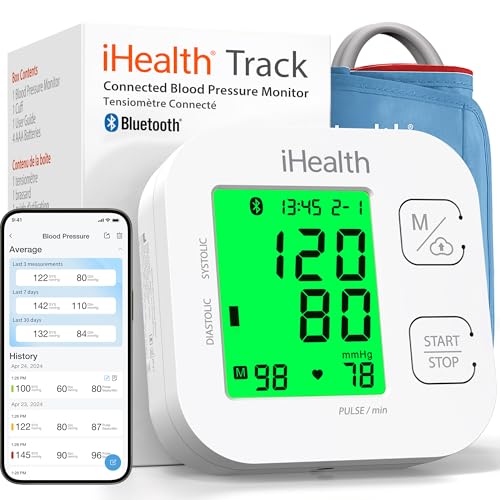
The iHealth Track offers clinically accurate readings with a simple two-button operation. It features a large, backlit display with color-coded indicators (GREEN/YELLOW/RED) to quickly convey whether readings are in the normal range. The cuff fits standard to large adult arms, and data can be shared via iHealth’s free mobile apps. Best for users who want easy, on-device history and seamless smartphone syncing. A caveat: Bluetooth setup requires a compatible device and operating system.
Sinocare Blood Pressure Monitor

This upper-arm model uses a straightforward one-button interface and a large 3.6-inch display for easy reading. It provides clinically reliable results with a cuff accuracy rated at ±3 mmHg and a pulse accuracy within ±5%. Two power options ensure flexibility at home or on the go. Best for buyers who want a simple, dependable unit without smartphone syncing. Use caution if you need extensive cloud storage or multi-device sharing, as memory is relatively basic.
Oklar Blood Pressure Monitor 2×120
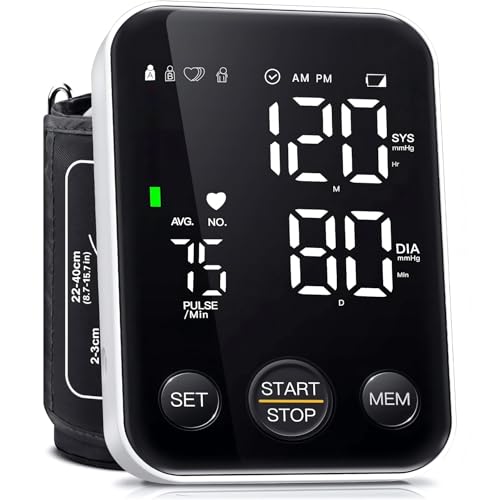
Oklar’s model features a one-button operation and a large LED display for quick readings, with memory for 240 readings across two users. It’s a strong pick for families that want to track two individuals and keep a simple, quick-check workflow. Best for households needing clear, fast readings without heavy app integration. Consider that some users may prefer more advanced data sharing or cloud-backed history beyond the device memory.
Oklar Blood Pressure Monitors for Home Use Rechargeable Wrist

This wrist monitor provides up to 240 measurements for two users and completes readings in about 35 seconds. A voice broadcast helps users with poor eyesight, and it includes a carry case for travel. Best for individuals who prefer wrist measurements or need audible guidance. Not ideal for those with smaller wrists or if you require high-precision cuff-based measurements for clinical use.
Blood Pressure Monitor, AILE Upper Arm 8.7–16.5″
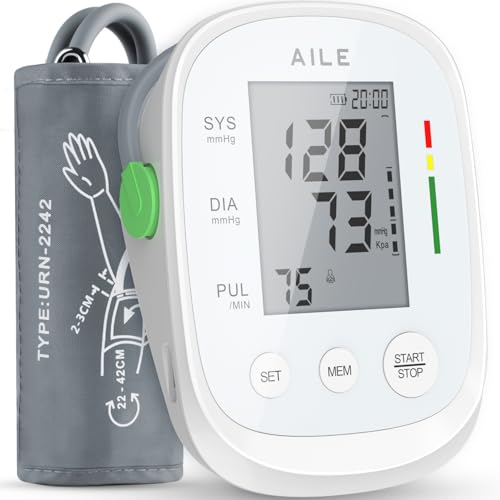
The AILE cuff supports a wide range up to 16.5 inches, with a large LED display and fast 30-second measurements. It emphasizes accuracy within 3 mmHg and 5% pulse error, making it suitable for daily monitoring. Best for users needing a large cuff and clear, legible readings. A limitation is that setup and data transfer may be less streamlined if you require extensive app integration.
yuwell Blood Pressure Monitor
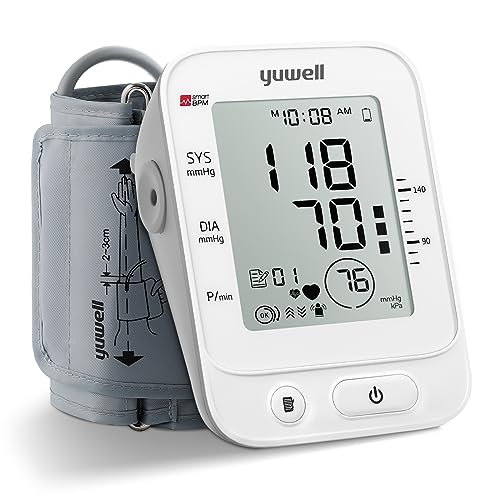
yuwell offers a large upper-arm cuff with a voice broadcasting feature and a store of readings. It aligns with users who value audible guidance and a straightforward, single-device measurement process. Best for visually impaired or elderly users who benefit from spoken instructions. Consider that some users may rely more on app history or cloud syncing for long-term trend analysis.
Buying Guide
What cuff size do you need?
Choose a cuff that fits your arm circumference. Most upper-arm monitors list a cuff range; ensure your measurement falls within it. A cuff that is too small or too large can skew readings.
Do you want Bluetooth or app integration?
If you prefer tracking readings on your phone, pick a model with Bluetooth and a companion app. This helps build long-term trends and share data with healthcare providers. If you only need quick readings, a non-Bluetooth device may be simpler and cheaper.
How many users and memory do you need?
Two-user devices with multi- Reading memory help families monitor both a patient and a caregiver. If you track multiple family members or require many stored readings, select models offering higher storage capacity per user or unlimited cloud storage.
Display readability and accessibility
Backlit displays, large digits, and color-coded results improve readability for seniors and those with vision impairment. Audio guidance is a plus if you need verbal readings or alerts.
Clinical accuracy and validation
Look for models that advertise clinically validated accuracy and features like irregular heartbeat detection. This can improve confidence in home monitoring and communication with clinicians.
Maintenance and power options
Consider whether you prefer battery operation or rechargeable options, along with included power adapters. Ensure that spare batteries or charging accessories are available and compatible with your device.
Limitations to consider
Home monitors vary in precision, cuff fit, and data sharing capabilities. Some models require app setup or cloud services, which may not suit all households. Always follow cuff placement guidelines for accurate results.
Quick comparison at a glance
- Best for smart syncing: iHealth Track
- Best for simplicity: Sinocare
- Best for two-person households: Oklar 2×120
- Best for large cuff and clarity: AILE
- Best for clinician-grade features: Omron Iron
Frequently Asked Questions
- What is a normal blood pressure range for adults? Answer: Normal ranges vary by age and health conditions. A typical target is systolic 90–120 mmHg and diastolic 60–80 mmHg, but individual targets should be discussed with a clinician.
- Do all blood pressure monitors require calibration? Answer: Many modern upper-arm monitors do not require user calibration, but follow the manufacturer’s setup instructions for best results.
- Can I share data from a Bluetooth monitor with my doctor? Answer: Yes, many Bluetooth-enabled monitors can export or share data via companion apps or cloud accounts, depending on the model.
- Which cuff size is best for accuracy? Answer: A cuff that matches your arm circumference improves accuracy; an ill-fitting cuff can skew results.
- Are wrist monitors as accurate as upper-arm monitors? Answer: Upper-arm monitors are generally considered more accurate and reliable for home use; wrist devices can be convenient but may be less precise.
- What should I do if readings are consistently high? Answer: Re-check readings using proper technique, and consult a healthcare professional if high readings persist or if symptoms occur.