Finding the right starter keyboard means balancing key feel, learning features, and future growth. The following selections focus on portability, teaching aids, and sound options ideal for newcomers. Each option supports learning modes, light-up keys, and built-in tutorials to help new players build confidence. Use this guide to compare entry-level models that pair well with lessons, apps, and practice routines.
| Product | Keys | Best For | Notes |
|---|---|---|---|
| RockJam 61 Key Keyboard Piano Kit | 61 | Structured learning | Includes stand, bench, apps, and teaching tools |
| Best Choice 61-Key Beginner Complete Set (Blue) | 61 | All-in-one starter | Lighted keys, LCD, teaching modes |
| JIKADA 61 Key Light-Up Keyboard | 61 | Interactive practice | Three teaching modes, memory function |
| Donner 61 Key Keyboard Kit | 61 | Comprehensive starter kit | Includes stand, bench, microphone |
| Alesis 88 Key Beginner Keyboard | 88 | Progression to full piano | Rich library and MIDI/USB |
The selections above emphasize 61-key models for early learning due to their balance of playable range and affordable features, while the 88-key entry from Alesis provides a direct pathway to acoustic piano familiarity. Each product features learning aids like LED/lit keys, teaching modes, and bundled accessories to support a classroom or home practice routine.
RockJam 61 Key Keyboard Kit With Stand And Accessories
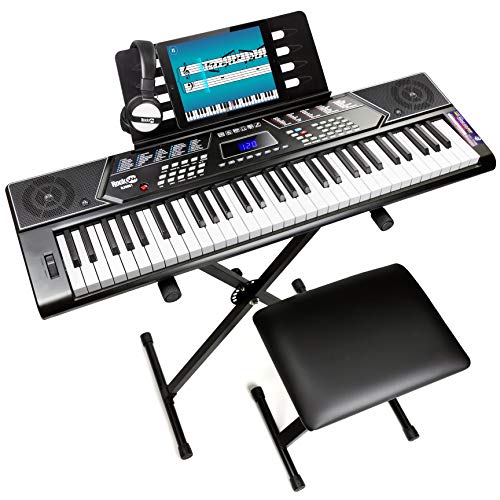
The RockJam 5061 package centers on a 61-key keyboard with a portable design suitable for beginners. It supports mains or battery power and includes a LED panel that displays 200 rhythms and tones, 30 demo songs, and a teaching function. The kit offers record and playback capabilities to build layered sounds, plus an aux input for practicing along with favorite tracks. Its bundled stand, bench, and headphones create a complete practice setup, making it a solid starter choice for learners who want a compact, all-in-one solution.
Best Choice Products 61-Key Beginners Complete Electronic Keyboard Set (Blue)
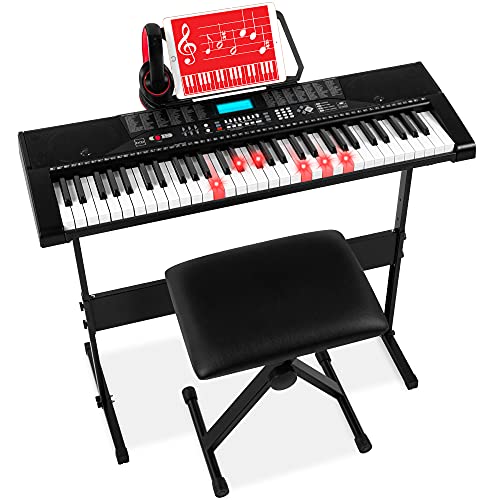
This 61-key bundle is designed as a full starter kit with lighted keys and an LCD screen. It includes an H-style keyboard stand, music stand, padded stool, and more, offering a convenient learning environment. Three teaching modes—One-Key, Follow, and Ensemble—help new players read notes, practice timing, and build rhythm awareness. The LCD display and piano note stickers support easy initiation into reading music and following along with lessons or accompanying tracks.
JIKADA 61 Key Light-Up Keyboard Piano

The JIKADA keyboard focuses on teaching versatility with three teaching modes and a memory function that saves tone or tempo changes for quick transitions during practice. It includes built-in speakers, a microphone input, and an auxiliary input for playback or singing along. The full-size 61 keys, along with note stickers, provide a structured path for grasping scales, finger positions, and basic music theory while practicing with real-time feedback from the light-up keys.
Donner 61 Key Keyboard Kit With Stand And Microphone

The Donner DEK-610S offers a complete kit with an adjustable stand, bench, music stand, microphone, and power adapter. With 32-note polyphony, 249 voices and rhythms, and three teaching modes, it supports expressive practice and basic band-style playing. The built-in LCD displays current functions for straightforward operation. This model fits learners who want an all-inclusive package that covers setup, practice, and performance, while still remaining budget-friendly.
Alesis 88 Key Beginner Keyboard

The Alesis option provides a more piano-focused path with 88 full-size, touch-sensitive keys and built-in speakers. It offers 480 sounds and a sizable library, plus USB/MIDI compatibility for computer-based lessons or DAW practice. The keyboard is designed for beginners who plan to grow into more advanced repertoire, with features that support practice, recording, and performance preparation. Bundled accessories and ease of transport make it a practical long-term starter instrument.
Buying Guide
- Key count and touch: Beginners typically start with 61 keys for affordability and portability, but 88-key models align with traditional piano technique as skills grow.
- Teaching features: Look for light-up keys, dedicated teaching modes, LCD displays, and song/lesson presets to guide early reading and rhythm practice.
- Power and portability: Consider models that can run on batteries or a power supply for flexibility in practice spaces like living rooms or classrooms.
- Sound library and polyphony: A larger number of voices and higher polyphony allow more complex arrangements and sustained notes without crowding the sound.
- Connectivity: USB-MIDI, aux inputs, and Bluetooth compatibility can support practice apps, recording, and lessons from tablets or computers.
- Included accessories: Stands, benches, headphones, and microphones can create a complete, distraction-free practice environment.
- Expansion path: For beginners planning to advance, ensure the keyboard supports lesson apps, MIDI recording, and cross-compatibility with future gear.
- Budget vs. features: Bundled sets with stands and stools are cost-effective, but verify core instrument quality before prioritizing extras.
When choosing, align features with your or a learner’s goals: rapid basics with visual aids, a broad library for variety, or a path toward authentic piano technique. These five selections provide a range of entry points—bundled beginner kits for immediate setup, interactive teaching tools, and the option to graduate to an 88-key keyboard for advanced practice. Each model balances affordability with practical features that can support steady, structured practice and gradual mastery.