Choosing a capable drone radio controller can dramatically improve flight stability, responsiveness, and overall piloting confidence. This guide highlights five top-rated options, spanning beginner-friendly simulators, ELRS-enabled long-range controllers, and feature-rich transmitters for hobbyists and professionals alike. Each entry includes core specs, compatibility notes, and what makes it stand out for different flight styles.
| Product | Brand | Model | Key Strength |
|---|---|---|---|
| Radiomaster Pocket ELRS Remote Controller | STARDRONE | Pocket ELRS | Low latency, EdgeTX ready, portable design |
| STARDRONE S8 RC Flight Simulator Controller | STARDRONE | S8 | Realistic FPV simulation, mode 2 grip |
| BETAFPV LiteRadio 2 SE ELRS V3 | BETAFPV | LiteRadio 2 SE | Open-source configurator, broad simulator support |
| APEX G-129 RC Transmitter | APEX | G-129 | Dual protocol options, FPV simulator compatibility |
| Radiolink AT10II | Radiolink | AT10II | Telemetry, long range, 12 channels |
Note: The featured products cater to a range of needs—from portable travel-friendly units to robust, feature-packed transmitters suitable for sim racing and serious FPV flying. All items support FPV drones, RC airplanes, boats, and multirotors in various configurations. Battery availability and firmware updates can expand compatibility and performance over time.
Radiomaster Pocket ELRS Remote Controller
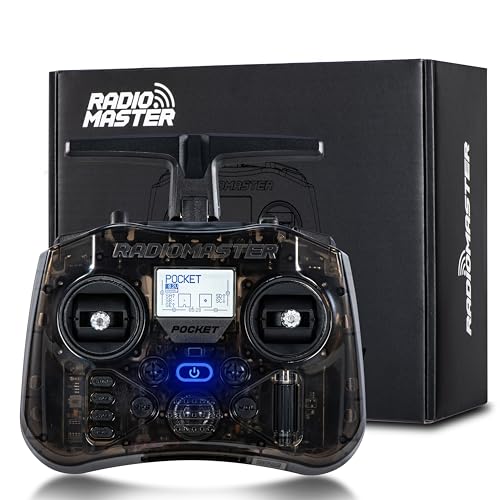
The Radiomaster Pocket ELRS remote is designed for serious pilots who need reliable, low-latency control in a compact package. It ships preloaded with EdgeTX firmware, enabling plug-and-play setup and extensive customization. It offers ExpressLRS capability for extended range and reduced latency, benefiting FPV drone pilots, RC cars, boats, and multirotors. Note that batteries are not included; owners should pair the unit with two appropriate 18650 cells. The 16-channel output and Hall-effect gimbals support precise, drift-free control, essential for freestyle and precision flying. The device also accommodates Lua scripting, screen customization, and Crossfire compatibility, broadening system integration for advanced setups.
Target users: Intermediate to advanced FPV pilots, hobbyists seeking a highly configurable transmitter with long-range potential. Pros include edgeTX-friendly customization, excellent gimbal feel, and versatile compatibility. Potential considerations include battery selection and ensuring firmware updates align with personal flight software preferences.
STARDRONE S8 RC Flight Simulator Controller

The STARDRONE S8 is tailored for FPV beginners and trainees who want a realistic practice environment. It supports popular FPV simulators and can connect to desktops, Android devices, and tablets, turning training time into productive skill-building. Its non-centered throttle design mirrors real flight controls, helping pilots develop muscle memory for precise throttle management. While primarily a simulator controller, it serves as a cost-effective training device that complements real-radio practice. Users should consider whether this model fits their training goals or if a hardware-focused transmitter is needed for outdoor flights.
BETAFPV LiteRadio 2 SE ELRS V3

The LiteRadio 2 SE ELRS V3 from BETAFPV emphasizes configurability via the BETAFPV Configurator V2, with firmware updates available to unlock new features and performance improvements. It supports FPV simulators and can function as a USB joystick for training across Windows, macOS, and Linux platforms. The open-source configurator and cross-platform compatibility make it a strong pick for pilots who value ongoing customization and simulator-based practice. Users should ensure firmware is up to date to enjoy the latest features and compatibility with their preferred flight software.
APEX RC Radio Transmitter G-129

The APEX G-129 offers flexible protocol options, including ELRS 2.4G and an autonomous TX protocol, enabling pilots to switch configurations to suit their drone and flight simulator needs. A built-in high-frequency head and optional pairing guidance help new users navigate setup for FPV simulators and real-world flights. The device supports PC and Android FPV simulators via USB or OTG connections and aims to bridge practical control with virtual practice. As with other ELRS-enabled transmitters, users should verify drone compatibility and synchronize ground station settings for reliable operation.
Radiolink AT10II 12 Channels

Radiolink AT10II is a 12-channel RC transmitter offering DSSS and FHSS communications, a high-gain antenna, and telemetry-ready capabilities. Its real-time information display and compatibility with optional telemetry modules make it a solid choice for pilots who want to monitor voltage, RSSI, altitude, and other flight parameters directly from the radio. The AT10II supports a wide range of RC aircraft and includes dual/multi-rate settings, throttle lock, and end-point adjustments, making it versatile for diverse flying styles. Pros include strong telemetry features and robust interference resistance; considerations involve ensuring the right receiver pairing for specific aircraft types.
Buying Guide
Key purchase considerations help you match a radio controller to your flying goals and budget. This guide covers five dimensions: compatibility, firmware and configurability, telemetry and data, ergonomics and durability, and ecosystem and future-proofing.
- Compatibility and ecosystem: Check if the transmitter supports ELRS, Crossfire, iBUS, PPM, or SBUS depending on your receivers. Consider whether you’ll use FPV simulators, and verify desktop, mobile, or tablet compatibility. A broad ecosystem can simplify upgrades and integration with existing gear.
- Firmware and configurability: Open-source firmware like EdgeTX or BETAFPV Configurator V2 unlocks extensive customization. Ensure easy access to firmware updates, Lua scripting, and screen layout changes to tailor controls to your flying style.
- Telemetry and data visibility: Some models offer real-time telemetry on the radio, including voltage, RSSI, altitude, and distance. If you rely on telemetry for flight safety or training, prioritize transmitters with clear, accessible data readouts.
- Ergonomics and build quality: Look for gimbal quality (Hall-effect vs standard), grip comfort, weight, and button layout. Ergonomics influence long sessions, training, and precision in complex maneuvers.
- Future-proofing: Consider the availability of new firmware, compatibility with upcoming simulators, and whether the transmitter supports future protocols (ELRS versions or new cross-compatibilities). A modular approach or manufacturer updates can extend the device’s usable life.
For buyers prioritizing travel convenience and portability, Pocket-style transmitters with ELRS can deliver strong performance in a compact form. For serious pilots who value simulator training and step-up capabilities, models with comprehensive configurability and robust telemetry provide meaningful long-term benefits. Finally, a well-supported ecosystem and active firmware development can dramatically influence the overall value and satisfaction of your investment in a drone radio controller.