Access to reliable GPS modules is essential for precision flying, stable navigation, and safe returns in FPV racing and aerial photography. This guide highlights five top options, covering compatibility with common flight controllers, compass integration, and robust satellite tracking. Each product is chosen for versatility, ease of integration, and performance in challenging environments.
| Product | Brand | Key Benefit |
|---|---|---|
| HGLRC M100-5883 Compass Module | HGLRC | 10th gen chip with multi-constellation tracking |
| HGLRC M100 Pro GPS QMC5883L Compass | HGLRC | Expanded channel reception for FPV fixed-wing |
| Deegoo-FPV GPS Compass Module + NEO-M8N | Deegoo-FPV | Flexible compatibility with AP systems and I2C |
| BZGNSS BZ-181 FPV GPS Module | SPEEDY BEE | Dual protocol support for UBX and NMEA |
| AERO SELFIE M10G-5883L | AERO SELFIE | 10 Hz update, multi-satellite tracking |
The following sections review each module’s strengths, supported features, and ideal use cases. While all options deliver GPS positioning, some excel in low-signal environments, while others prioritize ease of integration with popular flight controllers. Consider your drone size, controller compatibility, and whether you need dual-band positioning or a built-in compass when choosing.
HGLRC M100-5883 Compass Module

The HGLRC M100-5883 uses an upgraded 10th generation chip with integrated compass and multi-constellation support. It is designed to pair with FPV fixed-wing UAVs, offering quick satellite search across GPS, Galileo, and BeiDou. The ceramic antenna and external expansion PCB optimize signal reception for stable navigation in varied flight conditions. This module aims for rapid positioning and reliable environmental performance, making it suitable for pilots who require dependable fix times and robust tracking during long flights or delicate maneuvers.
HGLRC M100 Pro GPS QMC5883L Compass

The M100 Pro expands the receiving channels to 120, leveraging a new 10th generation chip and QMC5883L compass. This configuration is suited for FPV fixed-wing platforms that demand fast, reliable satellite acquisition and broad signal reception. The higher channel count can enhance lock speed in urban canyons or areas with multipath reflections, helping pilots maintain precise positioning through diverse flight profiles.
HGLRC Mini M100 GPS Module for UBLOX

This mini module targets compact FPV drones, supporting 2–7 inch frame setups with a ceramic antenna and external PCB expansion. It offers a flexible power input range of 3.3V–5V, aiding compatibility with a variety of flight controllers. Its compact form factor makes it ideal for lightweight builds or micro drones that still require reliable GPS positioning and navigation data without adding significant weight.
Deegoo-FPV GPS Compass Module + NEO-M8N

The Deegoo-FPV module combines a robust U-Blox source with a BDS/GLONASS-compatible design and a built-in compass. It supports APM, PIX, PX4, and other flight controllers through direct APM serial and I2C ports, enabling plug-and-play integration. The module emphasizes accuracy with 2.5 m average auto-positioning and SBAS-assisted positioning. Its high-precision timing and WGS-84 reference help ensure reliable navigation in diverse flight apps, from RC planes to fixed-wing UAVs.
BZGNSS BZ-181 FPV GPS Module
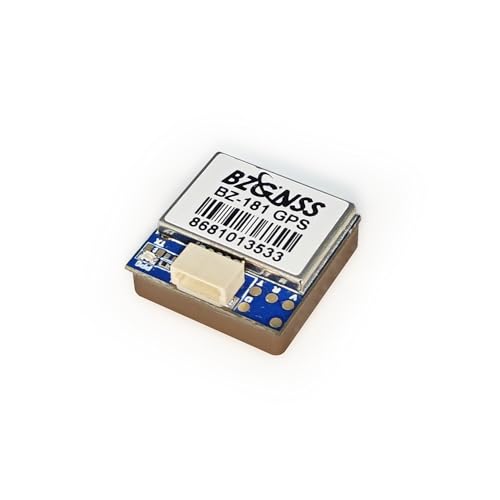
The BZ-181 module from SPEEDY BEE delivers dual-protocol support, compatible with both UBX and NMEA. This versatility makes it suitable for various flight controllers and hobby setups. It emphasizes accurate positioning and simple installation due to its compact form factor. Pilots can rely on dependable localization while integrating with diverse control ecosystems or upgrading a mid-range FPV configuration without sacrificing performance.
AERO SELFIE M10G-5883L GPS Module

The AERO SELFIE M10G-5883L focuses on high-precision navigation with an upgraded 10th generation M10 chip and a 10 Hz update rate. It tracks up to 32 satellites across GPS, GLONASS, Galileo, and BeiDou, delivering robust positioning data for drones requiring reliable guidance in dynamic environments. The built-in magnetic compass (QMC5883L) enhances orientation, while the high-gain antenna improves reception in obstructed settings, supporting consistent flight control and motion tracking.
Buying Guide
Key considerations when choosing a drone GPS module include compatibility, accuracy, update rate, and environmental resilience. For FPV racing or fixed-wing pilots, a higher channel count and multi-constellation support can reduce lock times and improve positioning in challenging urban or rural areas.
- Flight controller compatibility: Ensure the module supports common interfaces (I2C, UART) and matches your controller’s voltage levels and connectors.
- Positioning accuracy: Look for SBAS, GLONASS, BeiDou, and BeiDou support if you fly in areas with weak GPS signals.
- Update rate: Modules with 10 Hz or higher update rates provide smoother navigation and more stable hovering and waypoint accuracy.
- Compass integration: Built-in compass reduces drift and improves orientation during complex maneuvers.
- Physical fit: Check the module’s size and weight to ensure compatibility with your frame and payload constraints.
- Power options: Confirm 3.3V–5V input ranges or dedicated power rails to avoid overloading flight controllers.
- Ease of installation: Prefer plug-and-play options with clear wiring diagrams or direct ports for faster setup and fewer configuration steps.
In practice, for a compact micro-drone, the Mini M100 or a lightweight module with UBLOX compatibility may deliver the best balance of weight and performance. For larger FPV fixed-wing builds, the M100-5883 or M100 Pro offer faster lock times and more robust multi-constellation reception. If you need FAA-regulation features or locate-while-flying tracking, the Ruko R111S option may be worth considering, though it sits outside the five modules reviewed here for this guide.
When evaluating modules, compare charts and user feedback for real-world performance in your typical flight environment. Consider simulating a few flight scenarios—takeoff, waypoint navigation, and return-to-home—to assess how each GPS module impacts stability and reliability during critical moments.