Answer: For buyers seeking dependable, portable audio capture, these five digital portable audio recorders offer strong balance between ease of use, storage, noise reduction, and playback. They’re ideal for students, journalists, professionals, and researchers who need clear recordings on the go. The top picks emphasize long battery life, large memory, automatic noise reduction, and practical one‑button operation. Below is a quick comparison to help you choose.
| Product | Memory | Key Strength | Best For |
|---|---|---|---|
| Tonfarb 136GB Digital Voice Recorder | 136GB total (8GB built‑in + 128GB TF) | Long recording time, strong noise reduction | Long lectures, interviews with back‑to‑back sessions |
| Tonfarb 64GB Digital Voice Recorder | 64GB + built‑in storage | High capacity with long battery life | Lectures, meetings, field work |
| Digital Voice Recorder 16GB (Sunlan) | 16GB | Simple operation with playback controls | Beginner use, quick recording tasks |
| Innioasis PR1 AI Voice Recorder | 64GB | Offline AI transcription and summaries | Professionals needing note automation and privacy |
| EVISTR 64GB Digital Voice Recorder | 64GB | High‑quality PCM and long playback | Students and writers needing reliable playback |
Tonfarb 136GB Digital Voice Recorder with Playback
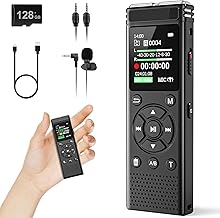
Features: PCM recording at up to 1536 kbps, dual noise reduction microphones, voice-activated recording, and a built‑in 1100mAh battery that can support up to 68 hours of continuous recording. It includes an 8GB built‑in memory plus a 128GB TF card to reach up to 9775 hours of MP3 or WAV recordings. USB‑C facilitates fast transfer to a computer. One‑click recording and saving allows quick capture even when powered off. This model is best for long lectures, conferences, and interviews where silence‑heavy environments persist and long session continuity matters. Limitation: larger file sizes from high‑quality PCM can require more storage and faster transfer hardware.
Who it’s best for: Journalists, researchers, and students needing extended capture with minimal interruptions. Why selected: It combines high‑capacity storage, extended battery life, and robust noise reduction for clear transcripts and playback.
Tonfarb 64GB Digital Voice Recorder with Playback

Features: 64GB of memory via built‑in TF card, 600mAh battery with up to 48 hours of continuous MP3 playback, and PCM recording with automatic noise reduction at up to 1536 kbps. One‑click recording and saving are emphasized along with easy playback. This device is suitable for meetings, classes, or fieldwork where quick operation and reliable playback are needed. Caution: smaller battery life relative to larger units means more frequent recharging in long sessions.
Who it’s best for: Students and professionals who value quick start‑up and straightforward controls. Why selected: It offers a compact footprint with long playback time and clear PCM capture for everyday use.
Digital Voice Recorder 16GB with Playback (Sunlan)

Features: Simple one‑button operation for recording, stop, and playback; built‑in voice activation to start recording when sound is detected; compact USB rechargeable design with a built‑in speaker for quick reviews. It is best for quick notes, on‑the‑go interviews, and classroom use where a lightweight, easy device matters. Limitation: smaller memory capacity and fewer advanced features than higher‑end models.
Who it’s best for: Beginners, students, or professionals needing a do‑it‑now recorder without setup complexity. Why selected: Simplicity and immediate usability are the primary advantages for fast capture and playback.
Innioasis PR1 AI Voice Recorder

Features: Offline on-device AI transcription with no monthly fees, supports 70+ languages with up to 95% accuracy, built‑in AI “AI‑Do” engine for automatic summaries and mind maps, and the option to use backup recording to ensure data security. Best for professionals, lawyers, journalists, and students who need structured notes and privacy. Caution: reliant on local processing; may require adequate on‑device resources for complex tasks.
Who it’s best for: Professionals needing secure transcription without cloud dependency, and anyone who wants quick meeting summaries. Why selected: On‑device processing avoids subscription charges while delivering actionable notes and translations.
64GB EVISTR Digital Voice Recorder

Features: 64GB memory expansion, 7 levels of gain, dynamic noise reduction with PCM up to 1536 kbps for stereo sound, metal build, and A‑B repeat, playback, and variable speed options. It supports WAV/MP3 formats and a 500mAh battery with USB Type‑C charging. This model suits students and writers who need a sturdy, high‑quality device with flexible playback and long playback times. Limitation: higher quality audio can consume more power and storage if used at maximum settings.
Who it’s best for: Students, researchers, and writers who require robust recording quality and durable construction. Why selected: The combination of PCM quality, rugged build, and flexible playback features makes it a solid all‑around option.
Buying Guide: How to Choose a Digital Portable Audio Recorder
- What recording format do you prefer? PCM/WAV offers higher fidelity at larger file sizes; MP3 saves space and may be adequate for many tasks.
- How much storage do you need? Consider total expected recording hours and whether you need a model with expandable memory (TF card) for future growth.
- How important is noise reduction? If you record in noisy environments, look for devices with dual mics and automatic noise reduction.
- Battery life and charging options matter for long sessions. Check battery capacity and whether USB Type‑C charging is available.
- One‑button recording and playback features can reduce setup time in lectures, interviews, or meetings. Ergonomic controls help in fast operation.
- Privacy and transcription needs: offline on‑device AI can be valuable for secure notes, while cloud features offer convenience but require connectivity and trust in data handling.
FAQ
- Q: Do these recorders require a computer to transfer files? A: Most models offer USB‑C or USB 2.0 transfer to a computer for quick file management.
- Q: Is noise reduction always beneficial? A: It helps in noisy environments but may slightly affect natural voice tone in some cases.
- Q: Which recorder is best for long field sessions? A: Models with large internal memory and extended battery life are preferable for long sessions without frequent recharges.
- Q: Can these devices transcribe audio automatically? A: Some models offer on‑device AI transcription or offline processing; others may require external software.
- Q: Are these suitable for interviews? A: Yes, especially units with clear one‑button controls, good mic quality, and reliable playback.
- Q: Do these include privacy features? A: Some devices emphasize offline transcription and local storage to protect privacy; check product claims for data handling.