Response-ready and performance-focused, these desktop network cards cover wired and wireless needs for gaming, streaming, and heavy data transfers. This guide highlights five top picks, clarifying who each is best for and why it stands out. If you’re upgrading a desktop, you’ll find options for 2.5 Gbps, 10 Gbps, and Wi‑Fi 6 to suit both wired and wireless setups. The buyer’s table below helps compare core specs at a glance.
| Product | Speed / Type | Best For | Notes |
|---|---|---|---|
| TP-Link TX201 | 2.5 Gbps PCIe Ethernet | Gamers and power users needing faster wired LAN | Backwards compatible with 1 Gbps and 100 Mbps |
| TP-Link TX401 | 10 Gbps PCIe Ethernet | High-demand data transfers and internal LANs | Backwards compatible with multiple speeds |
| TP-Link TG-3468 | Gigabit Ethernet PCIe | Budget wired upgrade for older desktops | Supports Wake-on-LAN and Auto-Negotiation |
| TP-Link TX3000E | Wi‑Fi 6 PCIe Card | Wireless upgrade with MU‑MIMO/OFDMA | Supports Windows 11/10; 2.4 GHz and 5 GHz bands |
| BrosTrend 2.5Gb Network Card | 2.5 Gbps PCIe Ethernet | Faster wired networking on a budget | Low-profile bracket available |
TP-Link TX201 2.5G PCIe Network Card

The TX201 is a 2.5 Gbps PCIe Ethernet card designed for desktops that need faster wired performance. It uses 2.5G Base-T technology to reach up to 2.5 Gbps, which is notably faster than standard gigabit adapters. It’s best for users who want a straightforward upgrade to higher wired speeds for gaming, large file transfers, or LAN environments. The card automatically negotiates between 2.5 Gbps, 1 Gbps, and 100 Mbps connections to maximize compatibility. QoS features help prioritize gaming traffic to reduce latency during intense sessions.
Who it’s best for: gamers and power users seeking a simple, reliable wired boost without changing existing network infrastructure. Why selected: strong balance of speed, compatibility, and QoS for latency-sensitive tasks. Caution: actual throughput depends on network hardware and cabling; ensure Cat5e for lower speeds or Cat6/6a for full 2.5 Gbps potential.
TP-Link TX401 10G PCIe Network Card
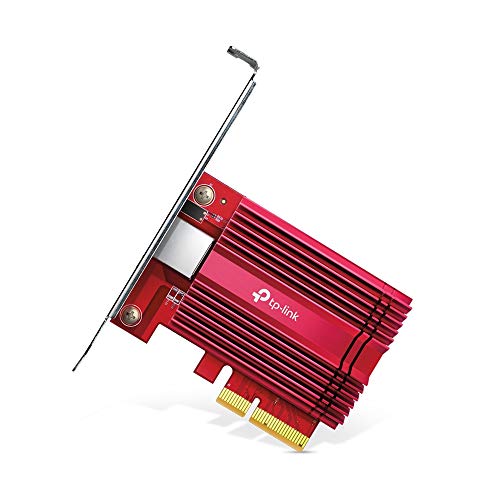
The TX401 delivers 10 Gbps PCIe performance, making it ideal for extreme data transfers, high-speed storage backups, and fast internal LAN operations. It’s backwards compatible with lower data rates, automatically negotiating to the best available connection. QoS support helps ensure prioritization for demanding applications like large file moves and real-time collaboration. It’s best for users who frequently copy large datasets between devices or require ultra-low latency in local networks.
Who it’s best for: IT professionals and enthusiasts who run bandwidth-heavy tasks locally. Why selected: offers a dramatic speed increase and flexible compatibility with existing networks. Caution: installation in compact desktops may require adequate space and a PCIe slot capable of handling higher data throughput; ensure drivers and BIOS support 10G operation.
TP-Link TG-3468 10/100/1000Mbps PCI Express Network Card
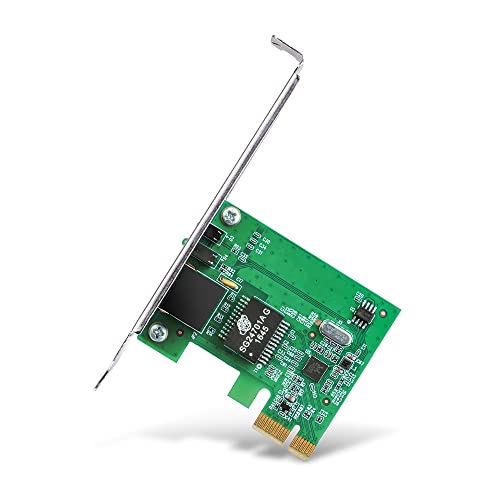
The TG-3468 is a cost-effective wired upgrade that supports 10/100/1000 Mbps, bringing Gigabit Ethernet capabilities to compatible desktops. It features Auto-Negotiation and Auto MDI/MDIX, simplifying setup and ensuring stable connections. It’s best for users needing a straightforward, affordable solution to boost Ethernet performance on older or budget-focused systems.
Who it’s best for: budget-conscious buyers or older desktops needing a reliable wired upgrade. Why selected: dependable Gigabit performance with simple, automatic negotiation. Caution: older PCIe form factors or driver limitations may apply on very new operating systems; verify OS support before purchase.
BrosTrend 2.5Gb Network Card

The BrosTrend 2.5Gb card delivers 2.5 Gbps speeds with 2.5GBASE-T support, offering a strong uplift over traditional Gigabit Ethernet. It’s well-suited for gamers and home offices that require faster local transfers and smoother streaming. The inclusion of a low-profile bracket helps in compact chassis builds. Best for affordable, higher-than-Gigabit wired performance.
Who it’s best for: budget-conscious users who want a noticeable wired speed bump without moving to higher-end gear. Why selected: competitive 2.5 Gbps performance with practical form factor choices. Caution: real-world gains depend on cable quality (Cat5e vs Cat6/6a) and the rest of the network path; ensure end devices support higher speeds to see full benefits.
Buying Guide: Key Considerations for Desktop Network Cards
Choosing the right network card depends on your use case, existing hardware, and required throughput. Below are practical factors to evaluate when deciding between wired and wireless PCIe network cards for a desktop setup.
What speed do you really need?
Identify your current internet plan, typical local transfers, and gaming requirements. If your internet plan is under 1 Gbps, a 2.5 Gbps card can still improve peak transfers and future-proof your build. For internal LAN-heavy tasks, a 10 Gbps option like the TX401 makes sense.
Wired vs. wireless needs
Wired cards deliver stable, predictable performance with low latency, ideal for gaming and streaming. Wireless cards add flexibility but may experience interference. A Wi‑Fi 6 card like the TX3000E suits rooms with crowded networks and multiple devices, while wired upgrades stay predictable in performance.
Compatibility and installation considerations
Ensure PCIe slot compatibility (x1, x4, etc.) and confirm driver support for your operating system. Some higher-speed cards may require updated BIOS or additional drivers. Also consider case space and cooling in compact desktops, especially for 10 Gbps NICs.
Quality of Service and latency sensitivity
QoS features help prioritize gaming and real-time traffic over general downloads. If you have a busy home network, select cards that explicitly advertise QoS or traffic prioritization to minimize latency during concurrent tasks.
Backwards compatibility and cabling
Most high-speed Ethernet adapters auto-negotiate between speeds. For true 2.5 Gbps or 10 Gbps performance, ensure you use appropriate cabling (Cat6/6a or better) to avoid bottlenecks along the path.
Security and standards
Wireless cards should support current security protocols (WPA3, etc.). Always apply the latest drivers and firmware updates to maintain security and performance.
FAQ
- What is the advantage of a 2.5 Gbps NIC over a Gigabit NIC? A 2.5 Gbps NIC can handle higher throughput, improving large transfers and multi-device streaming when paired with a network that supports higher speeds.
- Do I need new cables for 2.5 Gbps or 10 Gbps? For full 2.5 Gbps or 10 Gbps operation, use quality Ethernet cables (Cat6 or Cat6a or better). Cat5e may limit speeds to under their potential.
- Are Wi‑Fi 6 cards backward compatible with older routers? Yes, Wi‑Fi 6 cards are designed to work with older routers, but you may not reach the maximum speeds or features without a Wi‑Fi 6 router.
- Is a 10 Gbps NIC worth it for a typical home setup? It’s most beneficial for users transferring large datasets locally, running network storage, or building fast internal networks. For standard internet browsing, the gains may be less noticeable.
- Do these cards require drivers to function? Most PCIe network cards need drivers, especially for Windows 10/11 and newer. Check the manufacturer’s site for the latest versions.
- Can I mix wired and wireless NICs in the same system? Yes. A system can use both wired and wireless adapters simultaneously, but performance will depend on network configuration and routing.