Choosing a desktop graphics card can transform gaming, creative work, and everyday tasks. This guide highlights five strong options for American readers, detailing capabilities, interfaces, and key features. Whether you need solid 1080p gaming, compact form-factor options for small builds, or a budget-friendly upgrade, these picks cover a range of use cases without overspending. Below is a quick summary of the featured products to help you compare at a glance.
| Product | Brand | Memory | Key Strength | Amazon |
|---|---|---|---|---|
| ASUS Dual RTX 3050 OC | ASUS | 6GB GDDR6 | Strong 1080p performance, robust cooling | Link |
| PNY RTX 5060 Epic-X | PNY | 8GB GDDR7 | DLSS/AI features, PCIe 5.0 | Link |
| MSI GT 1030 4GD4 LP OC | MSI | 4GB DDR4 | Low-power, compact for SFF builds | Link |
| GIGABYTE GV-N710D3-2GL | GIGABYTE | 2GB DDR3 | Low profile, simple upgrade | Link |
| Glorto GT 730 4G | Glorto | 4GB DDR3 | Entry-level, multi-output | Link |
Note: This article presents objective specifications and product features to help you compare options. Prices are not included and can vary by seller. Always confirm compatibility with your motherboard, power supply, and case dimensions before purchasing.
ASUS Dual RTX 3050 6GB OC Edition

The ASUS RTX 3050 OC Edition delivers modern Ampere architecture with improved throughput and efficiency. It features NVIDIA Ampere Streaming Multiprocessors, 2nd Gen RT Cores, and 3rd Gen Tensor Cores for DLSS and AI-assisted performance. This card targets solid 1080p gaming with ray tracing and DLSS support, while remaining suitable for mid-range builds. The 6GB GDDR6 memory provides ample bandwidth for many current titles at high settings. Axial-tech cooling and a 2-slot design help balance thermals in standard ATX cases.
- NVIDIA Ampere SM architecture for enhanced FP32 throughput
- 2nd Generation RT Cores with concurrent shading
- 3rd Generation Tensor Cores with DLSS AI features
PNY RTX 5060 Epic-X ARGB OC

The PNY RTX 5060 Epic-X ARGB OC combines high-end graphics capabilities with modern cooling and lighting. It leverages NVIDIA architecture advantages, including advanced tensor cores and RT cores for ray tracing. The 8GB GDDR7 memory configuration supports higher resolutions and textures, while PCIe 5.0 compatibility helps future-proof the system. ARGB lighting adds a visual flair for gamers who enjoy customizable aesthetics. This card targets enthusiasts seeking strong performance with efficiency and eye-catching design.
- DLSS and Ray Tracing capabilities with modern tensor cores
- 8GB GDDR7 memory for higher-detail gaming
- ARGB lighting and PCIe 5.0 readiness
MSI GT 1030 4GD4 LP OC
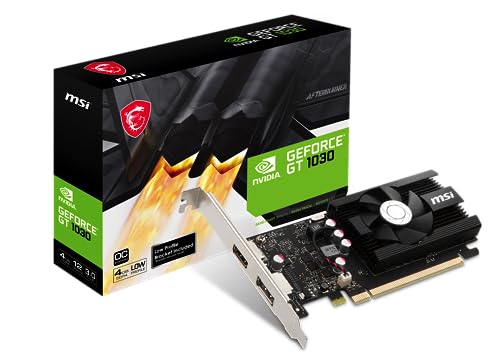
The MSI GT 1030 4GD4 LP OC is a compact, low-power option ideal for small form factor systems or media centers. It uses a 40nm GeForce GT 1030 GPU with 4GB DDR4 memory and a single-fan cooling solution. While not built for cutting-edge gaming, it delivers smooth entry-level performance for general desktop tasks, older titles, and light gaming. The compact, low-profile design ensures compatibility with SFF builds, HTPCs, and compact desktops without sacrificing essential display outputs.
- Low power consumption and single-fan cooling
- 4GB DDR4 memory suitable for basic gaming and multimedia
- Low-profile design for tight cases
GIGABYTE GV-N710D3-2GL DDR3
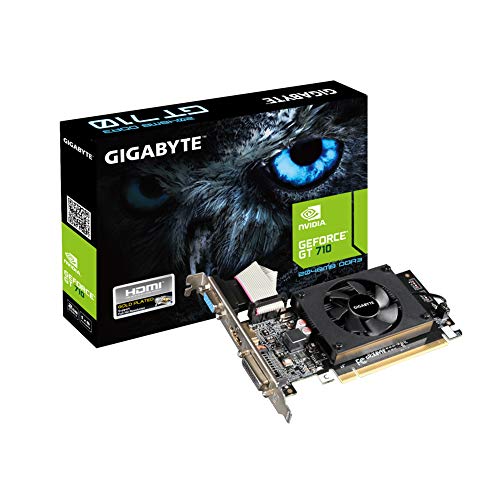
The GV-N710D3-2GL from GIGABYTE is a low-profile option built around the NVIDIA GT 710. It provides a modest upgrade for older systems or builds requiring simple display outputs. With a 2GB DDR3 memory configuration and a compact 2-slot form factor, it is suitable for basic desktop acceleration, multiple monitor setups, or media center tasks. While not designed for modern gaming, it can improve GUI responsiveness and multi-tasking on legacy platforms.
- Low-profile, 2-slot design
- Dual display outputs include HDMI, DVI-D
- Simple, budget-friendly upgrade
Glorto GT 730 4G

The Glorto GT 730 4G is an entry-level card suited for basic graphics tasks and light gaming. Its 4GB DDR3 memory and low-profile design make it a practical option for small form factor builds and home theater PCs. It supports multiple outputs, including HDMI and DisplayPort, enabling flexible monitor setups. This card is best viewed as an upgrade for non-gaming workloads or older systems needing improved display capabilities without heavy power requirements.
- Entry-level performance with multiple outputs
- Low-profile form factor suitable for HTPC and SFF builds
- Decent stability and basic acceleration for everyday tasks
Buying Guide: Key Purchase Considerations
When selecting a desktop graphics card, consider the following factors to ensure you get the best value for your needs.
- Intended use: Determine whether you need 1080p gaming, light gaming, media tasks, or basic desktop acceleration. Higher-end models offer ray tracing and AI features, while entry-level options focus on general performance and expansion capabilities.
- Memory and bandwidth: More memory (6GB–8GB) benefits higher textures and future titles. Memory type (GDDR6 vs GDDR7) and bus width influence bandwidth and performance at various resolutions.
- Power and cooling: Check your PSU wattage, connector availability, and case airflow. Some cards are dual-slot and require substantial cooling, while others are compact and low-power suitable for SFF builds.
- Form factor and compatibility: Ensure your case can accommodate the card’s length, height, and slot profile. SFF and low-profile options exist for tighter builds, but check clearance with CPU cooler and motherboard layout.
- Output options: Verify the monitor connections you need (HDMI, DisplayPort, DVI). For multi-monitor setups, make sure the card supports the required outputs and resolutions.
- Driver and software support: Modern GPUs are supported by up-to-date drivers on Windows and sometimes Linux. Consider how frequently drivers are updated and whether features like DLSS or RTX ray tracing are important to you.
- Future-proofing vs. budget: Higher-performance cards offer longer relevancy, but can be overkill for older systems. Balance current needs with potential upgrade plans.
- Marketplace considerations: Brand reliability, warranty, and seller reputation matter. Read reviews and confirm return policies if buying used or refurbished.