Lyft drivers face varied road conditions and unpredictable passenger interactions. A reliable dash cam can capture critical footage, aid in disputes, and support insurance claims. This article highlights five top dash cams favored by rideshare drivers, balancing front, interior, and all-around coverage with easy setup, night vision, and Parking Mode. Read on for objective comparisons and practical buying guidance tailored to Uber and Lyft fleets.
Summary of Selected Products
| Product | Brand | Key Feature | Link |
|---|---|---|---|
| COOAU Dual Dash Cam 2.5K+1080P | COOAU | Front & Inside dual lens, IR night vision, GPS, 24H Parking | View |
| Neideso Dash Cam 4K 4 Channel | Neideso | 4K+1080P, AI Driver Monitoring, 5G WiFi, GPS | View |
| HUPEJOS AI Dash Cam Front Rear Inside with DMS | HUPEJOS | 360° coverage, Driver Monitoring System, 24H Parking | View |
| COOAU D20 Dual Dash Cam | COOAU | 256GB card, 2.5K+1080P, night vision, GPS | View |
| BOTSLAB 4K+2K Dual Dash Cam | BOTSLAB | 4K/2K front/rear, ADAS alerts, voice control | View |
Note: The above products focus on reliability, clear evidence capture, and driver safety features essential for rideshare drivers. Each model supports a mix of front and interior view, with parking modes designed for extended on-vehicle recording during idle periods.
COOAU Dual Dash Cam 2.5K Front And Inside

The COOAU Dual Dash Cam combines front and interior recording with 2.5K front resolution and a 1080p interior view. It features a wide 170-degree front field and a 150-degree cabin view to clearly capture license plates, road signs, and passenger interactions. Built-in GPS logs speed and routes, helping establish context in a dispute. Night vision is enhanced by a 1.5-inch display and an infrared interior camera with four IR LEDs. The compact design minimizes driver distraction while delivering reliable evidence in Uber and Lyft scenarios.
Neideso Dash Cam 4K 4 Channel With Driver Monitor
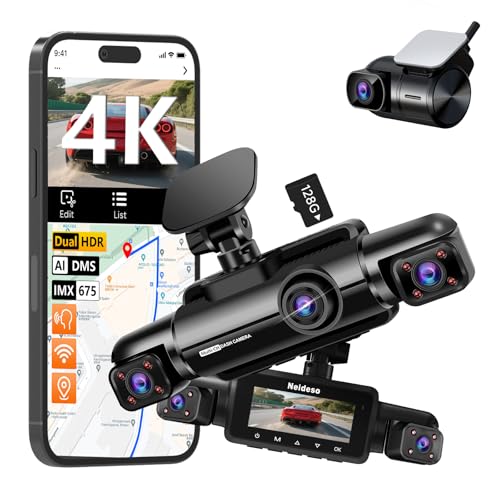
The Neideso N900-4CH offers four-channel recording in 4K front, 1080p rear, and interior views, providing a 360-degree coverage with detailed imagery ideal for rideshare contexts. Its AI Driver Monitoring System helps detect fatigue, distraction, and other driver-status indicators. Built-in GPS tracks location and speed, while 5G WiFi enables quick video transfer to a connected device. A 128GB SD card offers ample local storage, and 24-hour parking mode supports ongoing surveillance when the vehicle is parked.
HUPEJOS 4K Dash Cam With Driver Monitoring System

The HUPEJOS V8Pro delivers 360-degree coverage via a 150° four-camera array, enabling front, interior, and rear monitoring. It supports multiple recording modes up to 4K front with 1080p interior and rear feeds. The built-in Driver Monitoring System enhances safety by identifying fatigue and distracted driving. The camera operates with parking mode to safeguard footage when the vehicle is stationary and can be configured for event-triggered locking to prevent overwriting critical clips.
COOAU D20 Dual Dash Cam With 256GB Card

The D20 model ships with a generous 256GB micro SD card and a plug-and-play setup. It records in 2.5K front and 1080p interior simultaneously, maintaining sharp details for license plates and road signs. The interior has four IR lights and an F1.8 aperture to improve low-light performance, while a WDR system maintains color accuracy across lighting contrasts. Night vision and 24-hour parking mode make it suitable for rideshare operations during late hours.
BOTSLAB 4K+2K Dual Dash Cam With Voice Control

BOTSLAB’s model provides a true 4K front and 2K rear/inside capture, with a 360-degree interior view through a rotating rear camera. ADAS alerts help drivers stay aware of pedestrians, lane departures, and fatigue signs. A built-in microphone supports voice control for hands-free operation, while 24/7 Parking Monitor and 5.8GHz WiFi enable remote access and quick video transfer. This setup is designed to reduce disputes and improve safety for rideshare work.
Buying Guide For Lyft Drivers: What To Look For
- Video quality and coverage: For rideshare drivers, front and interior cameras are essential. Look for 4K or 2.5K front recording with a wide field of view, and an interior lens with IR night vision for low light rides.
- Field of view and 360° coverage: Some models offer 360° or 5-channel setups to monitor front, cabin, rear, and sides. This helps capture interactions inside the car as well as road behavior outside.
- Driver monitoring and safety features: AI-based Driver Monitoring Systems (DMS) detect fatigue, distraction, and other risky behaviors, contributing to safer driving and stronger evidence in disputes.
- Parking mode and event recording: A reliable 24H or continuous parking mode stores footage during idling or when a vehicle is parked; look for buffered recording and automatic event locking to protect important clips.
- GPS and data transfer: Built-in GPS logs location and speed; apps or WiFi connectivity should enable easy downloading of footage to a phone or computer for sharing with insurers or authorities.
- Storage and reliability: A large pre-included microSD card helps avoid immediate upgrades. Ensure the card type and capacity are compatible with the dash cam’s recording format and loop cycle.
- Ease of use and mounting: Compact, discreet designs with straightforward menus reduce driver distraction. Consider glare resistance and a display size that is not visually intrusive.
Comparisons And Practical Considerations
When choosing a dash cam for rideshare driving, reliability and evidence quality trump flashy features. Look for AI driver monitoring if you frequently handle passenger interactions, but confirm software updates and support are available. If you drive in busy urban areas, a wide-angle front camera (170° or more) helps capture plate details across multi-lane roads. Night visibility inside the cabin is equally important for late-night shifts. A robust Parking Mode that records after an impact or motion event provides important coverage while your vehicle is parked.
Warranty, Support, And Customization
Most rideshare-focused dash cams include a one-year warranty or longer and offer desktop or mobile apps for reviewing footage. Check whether the model supports firmware upgrades, cloud features, or remote access. Some brands also provide dedicated apps for easier transfer to your phone and simple sharing with customers or insurers. Compatibility with a wide range of SD cards and a straightforward reset option can save time during busy shifts.
Installation And Best Practices
Install your dash cam away from the direct sunlight and ensure the power cable is neatly tucked along the windshield gasket or headliner to avoid obstruction of airbags. Use the supplied adhesives or mounting brackets for a secure fit. Regularly format the memory card and back up footage after long shifts. Label important clips for quick access in case of an incident. Finally, test the camera after any software updates to confirm continued recording integrity.
Buying Guide (Expanded)
To optimize protection for Lyft drivers, consider a model that balances front and interior coverage with reliable night vision and robust parking features. Two-channel or four-channel designs can offer comprehensive recording without complicating operation. Evaluate battery life, whether the device requires continuous power from the vehicle, and the ease of removing or exporting footage for insurance claims. For fleets, look at models that support centralized management, faster video export, and consistent firmware updates.