Choosing the right dash cam for a fleet means balancing real-time monitoring, cloud access, driver safety, and easy installation. The following five products emphasize fleet-friendly features like 4G LTE remote viewing, cloud backup, GPS tracking, and multi-channel recording. This guide compares capabilities to help fleet managers and safety teams decide which dash cam fits their needs.
| Brand / Model | Key Fleet Features |
|---|---|
| LAMTTO 4G LTE Cellular Car Security Camera | 4G LTE remote access, front and inside dual cameras, cloud backups, real-time alerts, GPS location, two-way talk |
| Garmin Dash Cam 67W | Compact design, 1440p video, GPS tagging, extended FOV, voice control, Garmin Clarity HDR |
| Global View The Eagle | 4G LTE live streaming, dual front & cabin cameras, GPS tracking, geofence alerts, app support |
| Meiqils 1080P 3-Channel Dash Cam | Front, inside, and rear options, 170° wide, G-sensor, night vision, loop recording |
| Garmin Dash Cam 47 | 1080p, 140° FOV, GPS, voice control, portable and discreet, Garmin Clarity HDR |
Note: This article uses five selected products that align with fleet safety, remote monitoring, and data security goals. Each section below provides concise specifications and practical considerations for fleet deployment.
LAMTTO 4G LTE Cellular Car Security Camera
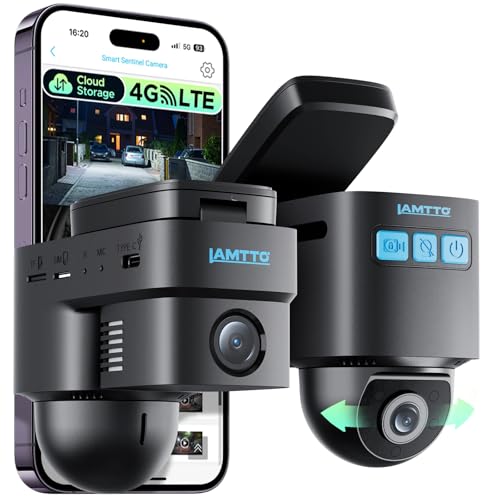
The LAMTTO system uses 4G LTE for remote access and live viewing via the UBoxPro app. It supports dual cameras—front and interior—to capture activity inside and outside the vehicle. Real-time alerts and a G-sensor help monitor for tampering or theft, while GPS location tracking provides fleet-wide visibility. A cloud backup option ensures footage remains accessible even if the device is compromised. An OBD power supply enables continuous parking monitoring in all weather conditions.
Key considerations for fleets include ensuring reliable cellular coverage, configuring geofencing or alert rules for sensitive areas, and validating cloud storage capacity during busy operations. The product’s remote talk feature can aid in on-site coordination, driver communication, and incident validation.
Garmin Dash Cam 67W

This compact dash cam records in high detail with 1440p video and a wide 180-degree field of view. It includes GPS data for location tagging and time stamps, plus Garmin Clarity HDR optics for clearer footage in various lighting. Voice control supports hands-free operation, enhancing driver safety and ease of use for fleet crews.
Fleet planners should evaluate how well this model scales in a multi-vehicle environment, including how GPS data integrates with fleet management software. The device’s discreet form factor reduces distractions, while the wide angle helps capture incident context from multiple angles.
Global View The Eagle Live Streaming Dash Cam

The Eagle provides 4G LTE live streaming with an all-inclusive kit for quick installation. It offers GPS tracking and geofence alerts, plus a live video feed accessible via desktop or mobile apps. A subscription plan is required, with multiple data tiers and priority support to fit different fleet sizes. Real-time streaming enables remote oversight, essential for dispatch and roadside operations.
Considerations include evaluating data plan costs, latency in live streams, and how streaming quality impacts bandwidth. Compatibility with existing fleet software and user access controls are also important for security and governance.
Meiqils 1080P Dual Dash Camera

This dual-channel dash cam records at 1080p front and inside, with a 170-degree wide angle to capture comprehensive scene context. The built-in G-sensor locks important clips when motion or impact is detected, preventing overwriting of critical footage. The installation is straightforward, using the windshield mount and car power supply, with loop recording to manage storage.
For fleets, the key questions involve how quickly events can be accessed after an incident, and whether the device supports remote data retrieval or cloud options. The model’s night vision and WDR help maintain legible evidence under variable lighting conditions inside vehicles.
Garmin Dash Cam 47

The Garmin Dash Cam 47 emphasizes discretion and portability with 1080p recording and a 140-degree field of view. GPS tagging and date/time stamps provide reliable incident data, while voice control supports hands-free operation. Its compact design makes it suitable for fleets that require minimal windshield intrusion without sacrificing evidence quality.
Fleet operators should assess how this model integrates with Garmin’s ecosystem and whether its size meets interior vehicle standards. The combination of GPS data and HDR optics helps deliver actionable footage for claims, safety reviews, and driver coaching.
Buying Guide: Key Purchase Considerations For Fleet Dash Cams
- Video quality and sensor performance: Higher resolution and wide dynamic range improve incident clarity, which aids investigations and insurance claims.
- Multi-channel recording: Front, interior, and rear options capture comprehensive coverage. Consider preferred channel count based on vehicle type and risk exposure.
- Connectivity and remote access: 4G/LTE or cloud-backed systems enable live streaming, remote playback, and quick incident sharing with managers or insurers. Evaluate data plans and coverage areas.
- GPS and geofence capabilities: Location tagging supports fleet tracking and incident verification. Geofence alerts help monitor restricted areas or routes.
- Storage and data management: Cloud storage reduces on-device memory reliance, but require reliable connectivity. Look for automatic backups, encryption, and easy retrieval of clips.
- Power and installation: OBD power or cigarette-lighter adapters ease installation. Ensure compatibility with fleet vehicle electrical systems and parking mode features.
- Security and tamper resistance: G-sensors and quick-lock video prevent loss of critical footage. Consider privacy controls and access permissions for driver privacy.
- Cost and scalability: Compare upfront hardware costs, monthly subscription plans, and the total cost of ownership across a growing fleet.
- Vendor support and updates: Check firmware updates, technical support responsiveness, and compatibility with existing fleet software or management platforms.