Answering the search for cool air fans, this guide highlights five top options that balance strong airflow with low noise. These models are best for: quiet bedrooms, living rooms, home offices, and multi-room setups where consistent cooling is needed without disruption. The top picks include tower and bladeless designs, all chosen for clear feature sets, easy controls, and reliable performance across common indoor spaces.
| Product | Brand | Key Benefit | Device Type |
|---|---|---|---|
| DREO 2026 Upgraded DC Tower Fan | DREO | High velocity with quiet operation | Tower Fan |
| LEVOIT Tower Fan, 25ft/s | LEVOIT | Wide cooling coverage with smart responsiveness | Tower Fan |
| DREO 40″ Oscillating Floor Fan | DREO | Powerful airflow across a large room | Standing Floor Fan |
| DREO Whole-Room Upgraded Air Circulator | DREO | Whole-room circulation up to 90 ft | Air Circulator |
| Arctic Air Pure Chill 2.0 | Arctic Air | Portable evaporative cooling, low energy | Evaporative Cooler |
DREO 2026 Upgraded DC Tower Fan

The DREO 2026 Upgraded DC Motor Tower Fan combines TurboWind technology with a brushless DC motor to deliver up to 28 ft/s wind speed and project air up to 34 ft. This model emphasizes ultra-quiet operation at about 20 dB, making it suitable for bedrooms and workspaces. It offers 8 speeds and 4 modes (Normal, Natural, Sleep, Auto). A remote control and touch screen help personalize airflow settings. The design supports 90° oscillation for broader room coverage and a quiet profile suitable for nighttime use. Best for: sleepers and remote workers who need strong, customizable airflow without noise. Limitation: higher velocity can be perceptibly stronger in very small spaces, so placement matters to avoid direct gusts on occupants.
LEVOIT Tower Fan for Bedroom

LEVOIT emphasizes a soft, natural breeze with a curved inlet and multi-blade design to deliver a curtain-like airflow. It provides 25 ft/s wind speed, 90° oscillation, and a 12-hour timer. The fan is designed for larger spaces and uses a smart sensor approach to adjust airflow based on room temperature, offering dynamic cooling without overheating. Best for: people who want a quiet, sensor-informed cooling experience in living rooms or home offices. Limitation: higher feature complexity may require a brief setup to optimize smart sensing settings.
DREO 90° Oscillating 40″ Standing Fan
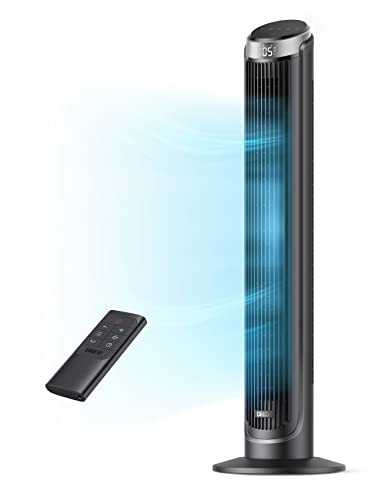
This DREO model focuses on a balance of quiet operation and powerful cooling, using TurboSilent technology to keep noise to about 28 dB. It features 5 speeds and 4 modes (Normal, Natural, Auto, Sleep), with a 90° wide-angle oscillation to distribute air across a larger area. It also includes a timer (1–12 hours). Best for: bedrooms and home offices where a quiet, controllable breeze is essential. Limitation: large footprint may require more floor space in compact rooms.
DREO Whole-Room Upgraded Air Circulator
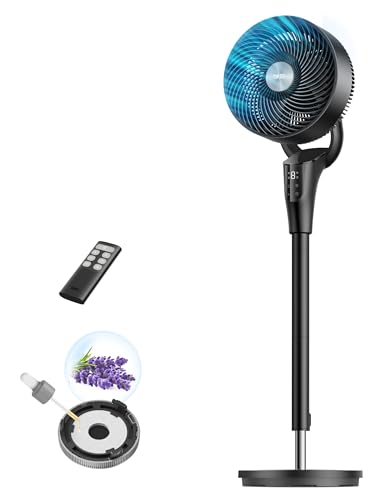
The 2026 upgraded air circulator expands effective airflow up to 90 ft, delivering up to 1000 CFM to move air efficiently through a room. It features ultra-quiet DC motor operation at 20 dB and a large horizontal sweep with a 105° pivoting head and adjustable height (38″–42″). A remote and timer (up to 8 hours) support hands-free control. Best for: multi-room cooling where uniform air distribution matters. Limitation: the power of airflow may be less noticeable in rooms with high ceilings unless positioned strategically.
Arctic Air Pure Chill 2.0 Evaporative Cooler

Arctic Air Pure Chill 2.0 uses Hydro-Chill evaporative cooling to lower air temperature with minimal energy use. It is lightweight and portable, designed for desks, nightstands, or small rooms. It provides multi-directional airflow with adjustable vents, making it suitable for personal cooling in offices, bedrooms, or living spaces. Best for: small rooms or personal cooling in hot, dry climates. Limitation: evaporative cooling effectiveness depends on ambient humidity and may require water refills.
Buying Guide
What room size should guide your choice?
For small bedrooms or home offices, compact tower fans with strong but focused airflow work well. For large living rooms, consider bladeless or whole-room circulators, which distribute air more evenly. If you need portable, personal cooling, evaporative or handheld options offer flexibility without heavy power draw.
Which features matter most for quiet operation?
Seek models with low decibel ratings, especially those marketed as “sleep” or “quiet” modes. DC motors typically run quieter than traditional AC motors, and blade designs like Coanda-inspired in LEVOIT can reduce noise while maintaining airflow.
How important is oscillation and airflow reach?
90° or 105° oscillation plus a pivoting head helps cover more area. For whole-room cooling, look for higher CFM (airflow) ratings and adjustable height to align airflow with occupants’ positions.
What about energy use and timers?
Fans with timers prevent unnecessary runtime and save energy. DC-motor models usually consume less electricity than older AC-motor designs, offering longer operation at lower power usage.
Are smart features worth it?
Smart features, such as temperature-based airflow adjustments and remote control, add convenience. Ensure compatibility with your space and comfort preferences, and verify whether the features align with your daily routine.
What should I watch for in installation and placement?
Place the fan where airflow can reach the central living area without blowing directly on you at night. Avoid obstructing air intake or exhaust paths, and consider the effect of room layout and furniture on airflow distribution.
FAQ
- Which fan is best for a quiet bedroom? Models with low dB ratings and Sleep mode, such as the DREO and LEVOIT options, are well-suited for quiet nighttime cooling.
- What is a bladeless or circular airflow advantage? These designs often reduce noise while maintaining smooth, even air distribution, helpful in living rooms and offices.
- Can a tower fan cool a whole large room? Yes, when paired with 90° oscillation and sufficient CFM, a tower fan can help circulate air across a spacious area.
- Do evaporative coolers actually cool like air conditioning? Evaporative coolers lower air temperature by evaporating water; effectiveness depends on humidity and airflow needs, making them ideal for dry environments.
- Is it better to choose a remote or touch controls? Remote controls offer convenience from a distance; touch controls provide direct access. Either option can be effective depending on user preference.
- How do I decide between a handheld personal fan and a full-size stand fan? Choose a handheld for portability and personal cooling; choose a stand fan for broader room coverage and higher airflow.