Choosing a consumer graphics card can shape gaming, content creation, and multimedia productivity. This guide highlights five practical GPUs from reputable brands, focusing on balance between performance, power, and compatibility. Each section provides a concise overview, key features, and direct access to the product page for quick comparison. The buying guide below helps you weigh memory, bandwidth, form factor, and driver support to fit your needs.
| Product | Brand | Memory | Notable Feature |
|---|---|---|---|
| ASUS Dual NVIDIA GeForce RTX 3050 6GB | ASUS | 6 GB GDDR6 | Ampere architecture, DLSS capable |
| MSI Gaming GeForce GT 1030 4GB | MSI | 4 GB DDR4 | Low-profile, DirectX 12 |
| Glorto GeForce GT 730 4G | Glorto | 4 GB DDR3 | Low-profile, multi-output |
| Glorto GeForce GT 610 2G | Glorto | 2 GB DDR3 | Compact form factor, HDMI/VGA |
| SOYO GT 740 Low Profile | SOYO | 4 GB DDR3 | Quad monitor ready with HDMI/DVI/VGA |
ASUS Dual RTX 3050 6GB OC Edition

- Brand: ASUS
- Core Architecture: NVIDIA Ampere
- Memory: 6GB GDDR6
- Interfaces: HDMI 2.1, DisplayPort 1.4a
- Cooling: Axial-tech fan design with 0dB technology
MSI Gaming GeForce GT 1030 4GB
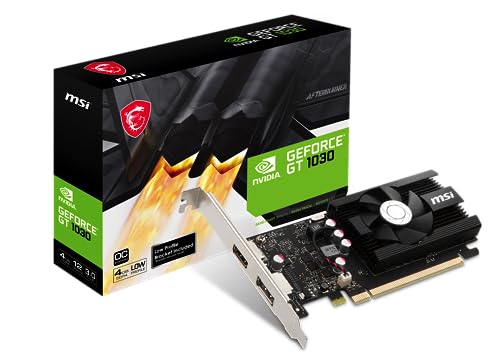
- Brand: MSI
- Chipset: NVIDIA GeForce GT 1030
- Memory: 4GB DDR4
- Bus: 64-bit
- Boost Clock: 1430 MHz
- Power: Low power, DirectX 12 support
Glorto GT 730 4G Low Profile

- Brand: Glorto
- Chipset: NVIDIA GeForce GT 730
- Memory: 4GB DDR3
- Bus: 64-bit
- Output: 2x HDMI, DP, VGA
- Target: Entry-level PC, SFF builds, Windows 11 compatible
ARDIYES GT 740 4GB GDDR5
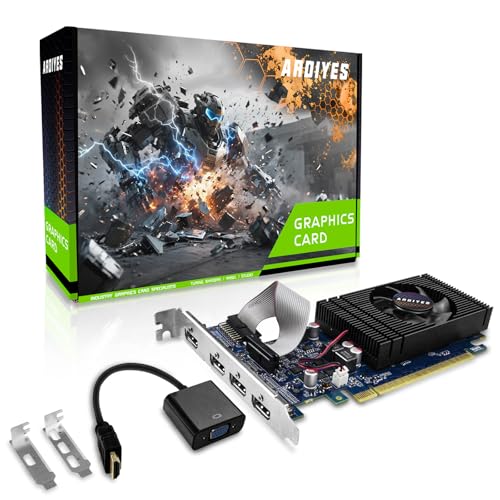
- Brand: ARDIYES
- Memory: 4GB GDDR5
- Display Outputs: 4 HDMI ports for quad-monitor setup
- PCIe 3.0 x16
- Cooling: Silent cooling design
GeForce GT 610 And Other Low-Profile Options
The GeForce GT 610 and similar low-profile options provide basic acceleration for everyday tasks, video, and light gaming. When choosing such GPUs, consider memory size, shader units, and driver support for Windows versions. These cards are suited for compact cases, HTPCs, or office machines where size and power efficiency are priorities.
Buying Guide: Key Purchase Considerations
Performance And Purpose
Match the GPU to your typical workloads. For light gaming and multimedia, entry-level cards like GT 610/ GT 730 or GT 740 variants can suffice. For modern games at modest settings, the RTX 3050 family delivers better real-time ray tracing and AI upscaling capabilities. If your workload is GPU-accelerated content creation, prioritize memory capacity and bandwidth.
Memory Type, Size, And Bandwidth
Memory type (DDR3 vs GDDR5/GDDR6) and size (2–6 GB or more) impact texture handling and scene complexity. Higher bandwidth supports smoother frame rates in graphic-intensive tasks. For compact builds, consider low-profile or single-slot designs to fit in smaller cases.
Bus Width And PCIe Version
A wider memory bus (64-bit, 128-bit) and PCIe compatibility influence data transfer between the GPU and system. Modern cards use PCIe 3.0 or 4.0; ensure your motherboard supports the version you select for optimum performance.
Display Connectivity
Check the available outputs (HDMI, DisplayPort, VGA, DVI) to match your monitor setup. Multi-monitor configurations require multiple outputs and sometimes a card with DisplayPort or HDMI compatibility across ports.
Power, Cooling, And Form Factor
Consider power supply capacity and connector requirements. Low-profile and single-fan designs fit small cases, but may run hotter under load. Noise levels are a factor in quiet environments like offices or living rooms.
Software And Driver Support
Driver updates influence compatibility with the latest games and operating systems. NVIDIA-based cards generally receive regular driver updates, while older GPUs may have limited support on newer Windows builds.
Price-To-Performance Tradeoffs
Evaluate the price-to-performance ratio. While high-end cards offer more headroom, a mid-range or entry-level card paired with upscaling features can deliver better long-term value for casual gaming and media tasks.