For many Americans, a reliable consumer-grade 3D printer opens doors to rapid prototyping, customized gifts, and small-batch production. The following selections balance speed, build volume, multi-material capability, and user-friendly features. Each model is suitable for hobbyists and professionals who want consistent results without enterprise-level costs. Read on to compare five top options and find a printer that fits your workshop, classroom, or home studio.
| Product | Brand | Printing Size | Key Strength |
|---|---|---|---|
| QIDI MAX3 3D Printer | R QIDI TECHNOLOGY | 325 × 325 × 315 mm | High-speed, auto leveling, industrial-grade stability |
| Bambu Lab P1S 3D Printer | BAMBULAB | 500 mm/s max print speed | Enclosed design, multi-color/multi-material, auto bed leveling |
| Bambu Lab A1 Mini 3D Printer | BAMBULAB | Compact form, multi-color capable | High speed, full auto calibration, quiet operation |
| Creality K2 Pro Combo 3D Printer | Creality | 300 × 300 × 300 mm | Multicolor with CFS, auto leveling, large build area |
| Creality K2 Plus Combo 3D Printer | Creality | 350 × 350 × 350 mm | Multi-color, 600 mm/s high-speed, advanced extrusion |
QIDI MAX3 3D Printer Review

The QIDI MAX3 combines a large format with fast speeds and robust construction. It features a fully automatic bed leveling system, a sturdy all-metal frame, and a Klipper firmware-backed CoreXY system for stable, accurate prints. The 325 × 325 × 315 mm build volume supports sizable prototypes, while the direct-drive extruder expands material options, including premium filaments. With high-speed capabilities and a chamber capable of 65°C, it favors long, consistent prints for professionals and dedicated hobbyists alike.
Bambu Lab P1S 3D Printer

The P1S offers a fully enclosed design and support for up to 16 colors or multiple materials, ideal for vibrant models and functional parts. It delivers up to 500 mm/s printing with strong acceleration, and automatic bed leveling enhances reliability. While connectivity and material handling are streamlined, AMS integration (or AMS Lite) expands color and material options for complex projects. The enclosure also helps with print quality on advanced filaments.
Bambu Lab A1 Mini 3D Printer

The A1 Mini emphasizes speed and precision in a compact footprint. It features full-auto calibration, active flow rate compensation, and rapid acceleration with minimal noise. Multi-color printing is supported via AMS Lite, enabling vibrant prints without complex setup. This model is suited for desktop studios, classrooms, and personal workshops seeking high reliability in a small package.
Creality K2 Pro Combo 3D Printer
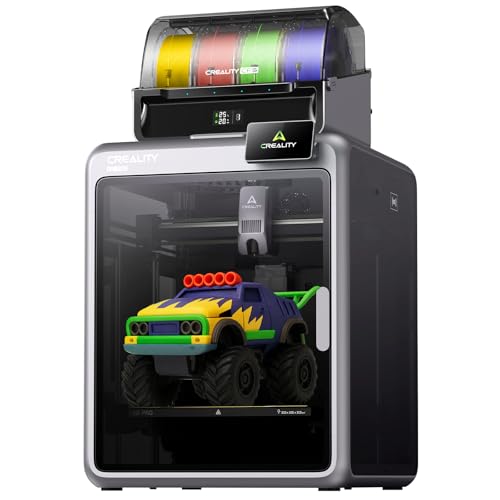
The K2 Pro Combo focuses on multicolor workflows with the CFS system and an auto-leveling bed. It supports up to 600 mm/s high-speed printing and includes a large build volume, making it suitable for visual prototyping and batch creation. Its dual features of rapid color changes and reliable auto-calibration make it a strong option for educators and makers who want speed without sacrificing color detail.
Creality K2 Plus Combo 3D Printer
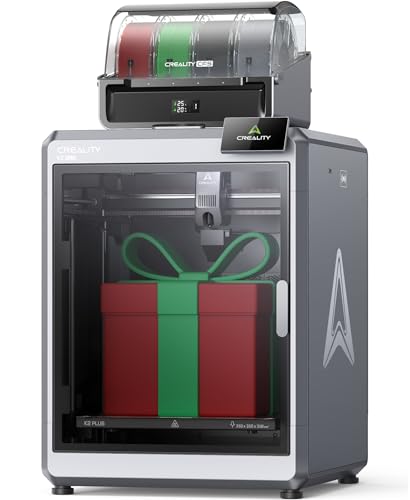
The K2 Plus Combo expands color capability with four CFS units and a larger 350 × 350 × 350 mm build area. It supports 600 mm/s high-speed printing and dual auto-leveling, along with advanced filament handling and RFID-assisted loading. The combination of large volume and rapid multi-color print capability makes it well-suited for studios and product development teams seeking efficient color prototyping.
Buying Guide
Key purchase considerations help buyers select the right consumer-grade 3D printer for their needs:
- Print quality and speed: Look for machines with solid layer resolution, stable motion systems, and accelerations that balance speed with accuracy.
- Build volume: Choose a size that fits typical projects, while allowing room for multi-part assemblies or batch printing.
- Filament handling: Multi-material or multi-color capability can add complexity; ensure reliable filament feeding and easy filament swaps.
- Auto-leveling and calibration: Auto bed leveling saves setup time and improves first-layer success across sessions.
- Enclosure and safety: Fully enclosed designs help with print consistency on various filaments and reduce noise in shared spaces.
- Software and compatibility: Compatibility with common slicers, firmware options (like Klipper), and ease of slicing is important for workflow.
- Maintenance and reliability: A robust frame, quality components, and accessible spare parts influence total cost of ownership.
- Future expandability: Consider additional peripherals (color modules, auto filament systems) and whether they fit your growth plan.
Overall, the five models highlighted balance consumer friendliness with professional capabilities. For users prioritizing speed and color versatility, multi-color systems with automatic calibration offer faster iteration. If max build volume is a priority, larger-volume options provide more flexibility for prototyping. Enclosed designs generally enhance print reliability for diverse materials and reduce workspace noise. Evaluate your typical projects, available workspace, and preferred materials to choose the best fit.