Answering the question “What condenser mic works best for guitar?” this guide highlights five suitable options and explains who each mic suits best. Perfect for project studios, home setups, and live recording scenarios, these condensers offer precision, detail, and controlled pickup patterns to capture guitar tones with minimal noise.
Buyer-friendly summary table
| Product | Best For | Key Benefit |
|---|---|---|
| Phenyx Pro PDM35 | Hi-hat, percussion, and string instruments | Wide frequency response with cardioid pattern for isolation |
| TAKSTAR CM-60 | Studio guitar recordings | Gold-plated diaphragm and high SPL handling |
| HEIMU Professional Condenser Microphone | Live guitar amps and studio tones | Unidirectional, low noise, strong feedback rejection |
| PROAR Condenser Microphone | Podcasting, voice-over, and guitar miking | Cardioid pattern with versatile boom arm kit |
| Overheads and acoustic guitar capture | Three capsules for flexible pickup patterns |
Phenyx Pro PDM35 Overhead Condenser Microphone

Features include a wide frequency range for crisp high-frequency detail and a smooth, balanced response. The cardioid pickup pattern helps isolate cymbals, percussion, and string instruments, reducing off-axis noise. It’s easy to drive with high sensitivity and low impedance, ensuring reliable performance with various mixers and interfaces. Best for overhead guitar micing, guitar-like percussion, and intimate string instrument capture.
Best for: studio-like overhead recording of guitar-related percussion and cymbals where you want detailed high-end response. Choose this if you need controlled isolation in a concert or studio environment. Caution: not a close-miking solution for a loud guitar amp; position to minimize bleed from nearby loud sources.
FIFINE USB Microphone K669B

This USB condenser mic offers plug-and-play convenience with a full metal construction for durability. It includes a volume knob and a 5.9-foot USB cable for easy setup with computers, laptops, and streaming platforms. It’s best for home studios, vocal and instrument recording, and quick demos. Best for: guitarists who want a simple, desk-friendly option for direct guitar input via a computer and streaming. Caution: not compatible with Xbox or some mobile devices without adapters.
TAKSTAR CM-60 Condenser Microphone
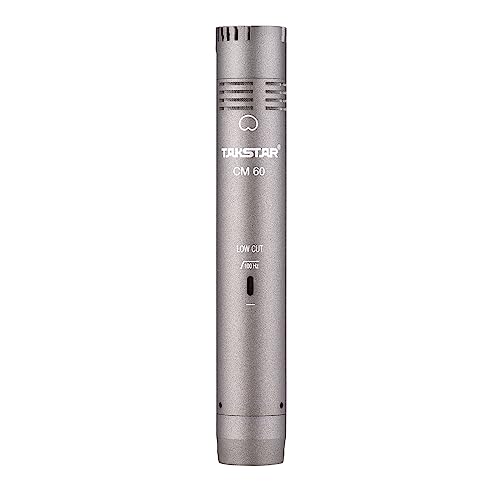
The CM-60 uses a gold-plated diaphragm and a precise cardioid pattern to deliver pure, delicate sound. It offers a wide frequency response and high sensitivity, suitable for studio and live instrument recording with a peak SPL handling of 130 dB. Best for: guitar tracking that requires detailed midrange presence and minimal off-axis noise. Caution: high sensitivity means it can pick up room reflections; consider acoustic treatment for best results.
HEIMU Professional Condenser Microphone

This unidirectional condenser mic focuses on the source signal, reducing background noise and feedback—ideal for guitar amps and live vocal applications. It offers an ultra-wide frequency response and integrated pop filter for clearer guitar tracks and vocal blends. Best for: studio guitar tones and live amplification where directivity matters. Caution: unidirectional pattern can be less forgiving in very bright rooms with multiple sound sources.
PROAR Condenser Microphone

This XLR condenser mic kit emphasizes professional sound quality with a large 14mm capsule and cardioid pickup. It includes a sturdy boom arm and windscreen, making it versatile for studio recording, podcasting, streaming, and guitar tracking. Best for: home studios needing a complete mic and arm setup. Caution: ensure compatibility with your audio interface and adequate on-stand distance to avoid proximity effect.
LyxPro SDPC-2 Stereo Pair
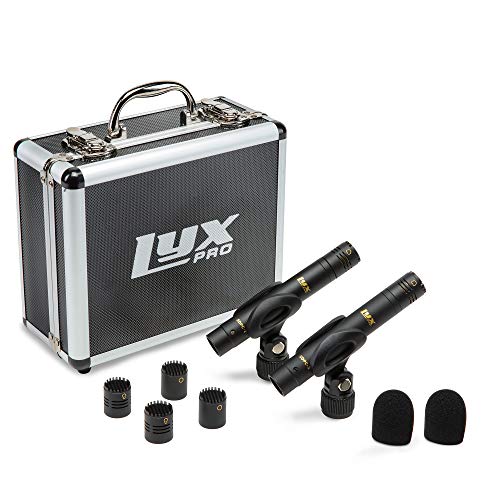
The LyxPro SDPC-2 provides a stereo pair with interchangeable Omni, Cardioid, and Super Cardioid capsules. This flexibility is ideal for overhead guitar miking, acoustic guitars, and woodwinds, enabling you to tailor coverage to the room and instrument. Best for: creative guitar applications where stereo capture and capsule selection matter. Caution: may require careful placement to avoid phase issues in small rooms.
Buying Guide
- Purpose and placement: For guitar amps, consider cardioid or super-cardioid condensers to minimize bleed. For overhead guitar percussion, wider patterns or stereo pairs can help capture room ambience.
- Signal chain: Condenser mics are sensitive. Pair with a good preamp or audio interface and proper gain staging to avoid noise and distortion.
- Diaphragm size and pattern: Large-diaphragm mics tend to deliver fuller low-end and presence, while small-diaphragm pencil mics excel at transient detail and accuracy for guitar tones.
- Polar pattern: Cardioid is common for guitar recording; omni can be used for ambient picks in controlled rooms; super-cardioid suits tight stage setups.
- Durability and build: USB mics offer convenience, but XLR mics generally provide higher fidelity and longer-term versatility in professional rigs.
FAQ
- What is a condenser mic best used for with guitar? – Condenser mics capture detailed high frequencies and transient dynamics, making them ideal for acoustic guitar mics, mic’ing guitar amps in close or ambient positions, and overheads for overall guitar sound.
- Should I choose USB or XLR condensers for guitar recording? – USB condensers are convenient for quick setups and demos, while XLR mics paired with an interface offer higher fidelity and flexibility for professional recording and processing.
- Is a cardioid pattern better for guitar than omni? – For close-miking guitar amps, cardioid reduces room reflections. Omni can be useful for ambient guitar recording in treated rooms or orchestral contexts.
- Can I use a pencil condenser for guitar? – Yes. Pencil condensers excel at capturing subtle details and stereo field when used in overhead or stereo pair configurations for acoustic guitars or percussive elements around a guitar setup.
- Do I need a pop filter with a condenser mic for guitar? – A pop filter helps with vocal tracks and close guitar vocal blends, particularly when recording vocal-guitar combinations or close-miked guitar amps with high SPL.