Find the right condenser microphone for drum overheads with confidence. This guide highlights five high-value options that deliver clear cymbal detail, good transient response, and reliable performance in studio or live settings. Each mic is suited for overheads, hi-hat, cymbals, and other percussion, with notes on ideal use cases and any limitations. Use the quick-reference table to compare at-a-glance features and suitability for different recording goals.
| Product | Best For | Key Strength |
|---|---|---|
| Phenyx Pro PDM35 Overhead Condenser Microphone | Studio overheads and percussion | Wide frequency range and focused cardioid |
| TAKSTAR CM-60 Condenser Microphone | Studio and live instruments | Gold-plated diaphragm, high sensitivity, wide range |
| CAD Audio GXL1200 Cardioid Condenser | Drum overheads and piano/guitar | Externals biased design with solid build |
| LyxPro SDPC-2 Stereo Pair | Overheads and stereo capture | Interchangeable capsules for pattern variety |
| Audix f9 Small-Diaphragm | Overheads and cymbals | Versatile, clear, quick transient response |
Phenyx Pro PDM35 Overhead Condenser Microphone

The Phenyx Pro PDM35 is a cardioid condenser mic designed to capture cymbals, hi-hat, percussion, and string instruments with clarity. Its wide frequency response helps bring out high-frequency detail while maintaining a balanced overall sound. The cardioid pattern helps isolate overheads from background noise, making it suitable for studio drum kits and percussion setups. It is easy to drive, performing reliably with a range of mixers and audio interfaces. Best for: studio drum overheads that require precise cymbal articulation.
Caution: While the PDM35 offers strong high-end detail, it may require careful positioning to avoid off-axis leakage in untreated rooms.
TAKSTAR CM-60 Condenser Microphone
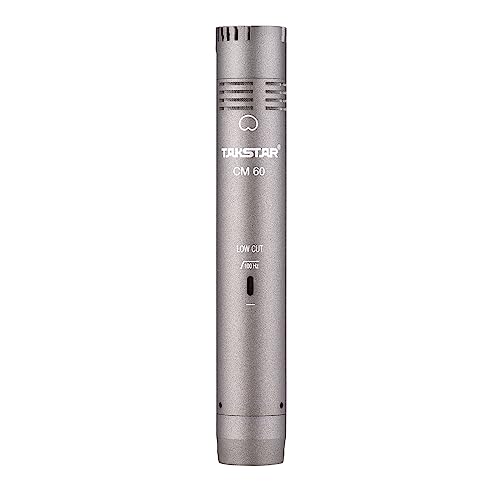
The TAKSTAR CM-60 features a gold-plated diaphragm and a precise cardioid pattern, delivering pure and delicate sound for drum overheads and general studio use. Its wide frequency range (30 Hz–18 kHz) supports clear cymbal detail and subtle transients. The mic is suited for studio tracking, stage performances, and instrument recording. Best for: overheads where a smooth, natural cymbal balance is desired. Limitation: high-sensitivity mics may pick up room ambiance in untreated spaces.
CAD Audio GXL1200 Cardioid Condenser Microphone

The CAD Audio GXL1200 is a cardioid condenser designed for versatile capture of drums, piano, or guitar. It uses an externally biased design requiring phantom power, which provides clean gain and headroom for overhead use. Best for: studios seeking a robust, focused overhead that can also handle other instruments. Caution: external bias and phantom power requirements mean proper interface compatibility is needed.
LyxPro SDPC-2 Stereo Pair
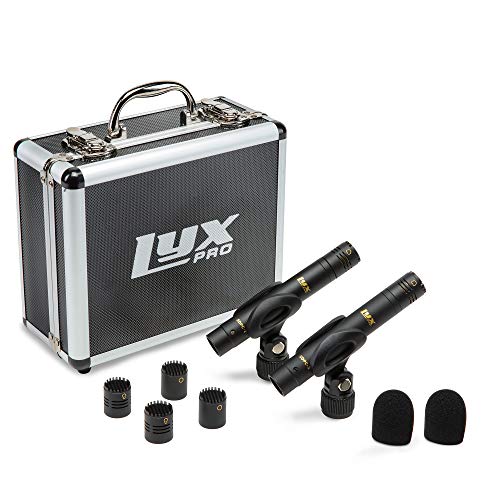
The LyxPro SDPC-2 stereo pair provides two pencil condenser mics with interchangeable Omni, Cardioid, and Super Cardioid capsules. This versatility makes it well-suited for overheads, acoustic instruments, and woodwinds. Best for: flexible overheads with the option to tailor pickup patterns for different drum configurations. Caution: ensure proper capsule handling to maintain consistent polar patterns across both mics.
AUDIX f9 Small-Diaphragm Condenser

The Audix f9 is a budget-friendly option for drum overheads and various acoustic applications. It offers a clear and precise response with a quick transient response suitable for cymbals, hi-hat, and other percussion. Best for: budget-conscious studios needing reliable overheads with solid clarity. Limitation: may not deliver the same level of high-frequency air as higher-end models in very demanding sessions.
Buying Guide: Key Considerations For Drum Overheads
- Polar pattern: Cardioid mics help isolate overheads from room noise, but you may consider omni or super-cardioid capsules (where available) for wider room sound or tighter off-axis rejection.
- Frequency response: Look for a mic with extended high-frequency response to capture cymbal shimmer without harshness. A flat or gentle presence boost around 6–12 kHz can help cymbals pop in a mix.
- Self-noise and sensitivity: Higher sensitivity is helpful for quieter rooms, while low self-noise matters in untreated spaces to avoid hiss and noise.
- Phantom power and impedance: Confirm that your audio interface or mixer provides phantom power (48V) and has compatible input impedance for the chosen mic.
- Durability and build: Overhead mics should tolerate room setups and occasional bumps. A metal housing and rigid mounting are beneficial.
- Positioning and technique: Experiment with height, distance from cymbals, and stereo widening to achieve the desired balance between crash, ride, and hi-hat.
FAQ
- Q: Are small-diaphragm condensers better for overheads than large-diaphragm mics? A: Yes, small-diaphragm condensers typically offer faster transients and more accurate cymbal capture, which is ideal for overheads.
- Q: Do I need a matched stereo pair for overheads? A: Stereo pairs can improve the source image and depth in drum recordings, but you can also use two matched single mics placed for a faux-stereo setup.
- Q: Should I prefer omni capsules for room sound? A: Omni capsules capture more room ambiance, which can be desirable in live rooms or larger spaces; cardioid offers more isolation.
- Q: Is phantom power required for all these mics? A: Most condenser mics require phantom power, but verify the specific model’s requirements and your interface capabilities.
- Q: How should I place overhead mics relative to the drum kit? A: A common approach is to position mics above the kit at shoulder height, equidistant from snare and kick, angled slightly toward the drummer’s right and left, then adjust for stereo balance.
- Q: Can these mics be used for other instruments besides drums? A: Yes, many of these condensers are suitable for cymbals, hi-hats, percussion, piano, guitar amplifiers, and woodwinds depending on the chosen pattern and position.