For users building or upgrading compact, space-constrained systems, choosing a compact graphics card that fits a small form factor (SFF) case is essential. The following five options emphasize low-profile designs, quieter cooling, and solid performance within the constraints of smaller PCIe slots. This guide highlights each card’s strengths, ideal use cases, and what to consider when shopping for a compact GPU.
| Product | Brand | Key Benefit |
|---|---|---|
| MSI Gaming GeForce GT 1030 4GD4 LP OC | MSI | Low-profile form factor with modest power needs |
| Glorto GeForce GT 730 4G | Glorto | Dual HDMI/DP, compact and budget-friendly |
| GIGABYTE GV-N710D3-2GL Rev2.0 | GIGABYTE | Low-profile, dual-output options |
| SAPLOS GT 730 4GB | SAPLOS | Low power, multiple outputs for multi-monitor setups |
| QTHREE GeForce GT 210 | QTHREE | Very compact entry-level GPU with easy install |
MSI Gaming GeForce GT 1030 4GD4 LP OC
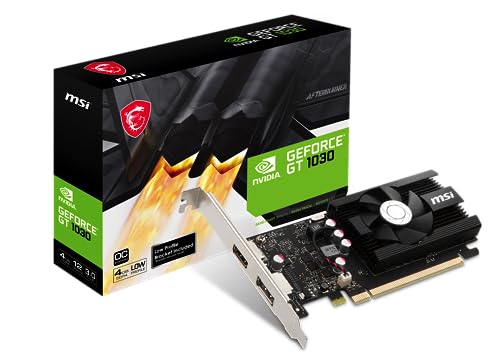
The MSI GT 1030 4GD4 LP OC is a compact graphics card designed for small form factor builds. It uses the GeForce GT 1030 chipset with 4GB DDR4 memory and a 64-bit bus, offering adequate performance for everyday graphics tasks, media playback, and light gaming. The low-profile design fits slim cases, and a single fan keeps the card cool while maintaining relatively quiet operation. This card is suitable for HTPCs, compact workstations, and budget-conscious builds where space and power supply headroom are limited. Its boost clock reaches around 1430 MHz, providing a tangible boost over reference GT 1030 options.
Key considerations:
– Power and cooling: Low power consumption means easier compatibility with compact PSUs and minimal chassis airflow.
– Display options: Supports HDMI and DisplayPort outputs for modern monitors.
– Use case suitability: Best for light gaming, multimedia, and general acceleration rather than demanding AAA titles.
Glorto GeForce GT 730 4G Low Profile

The Glorto GT 730 4G offers a low-profile design with 4GB of DDR3 memory and a 28nm GK208 core. It features multiple outputs (HDMI, DP, and VGA) and a 64-bit memory interface, which makes it a practical option for compact desktops, SFF builds, and home theater PCs. The card emphasizes stability and broad compatibility, including Windows 11 support and automatic driver installation. While not built for gaming at high resolutions or high frame rates, it excels in providing a cost-effective upgrade for basic graphical tasks, 3D acceleration for older titles, and multiple monitor setups in space-limited cases.
Key considerations:
– Output flexibility: Dual DP/HDMI plus VGA enable diverse display configurations.
– Energy and space: Low-profile form factor keeps inside tight cases.
– Performance tier: Suitable for light gaming, media tasks, and general GPU acceleration rather than modern AAA titles.
GIGABYTE GV-N710D3-2GL Rev2.0
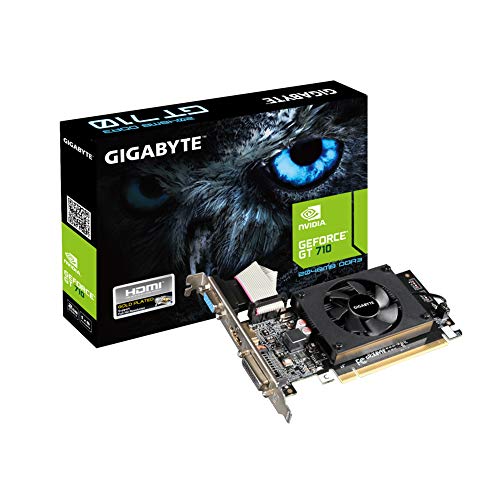
The GIGABYTE GV-N710D3-2GL Rev2.0 is a low-profile PCIe graphics card featuring the GT 710 lineage with 2GB or more, depending on model, and a 64-bit memory bus. It’s designed for compact desks and HTPC setups that require a discrete GPU without high power demand. The card is primarily suited for basic graphical workloads, older titles, and multi-monitor productivity tasks where space and noise are concerns. Its low-profile design and dual-output graphics capabilities make it a practical upgrade option for small rigs that need improved video output and accelerated tasks without a heavy gaming focus.
Key considerations:
– Performance tier: Entry-level; not intended for modern, demanding games.
– Form factor: Clearly aimed at SFF builds; uses a small PCIe slot and low power envelope.
– Connectivity: Dual-output options facilitate multi-monitor configurations in compact setups.
SAPLOS GT 730 4GB Graphics Card

The SAPLOS GT 730 4GB is another low-profile, power-efficient option built around the Kepler-era GT 730 architecture. It provides 4GB of DDR3 memory and multiple outputs, including HDMI, DisplayPort, and VGA, enabling up to four displays in some configurations. Its single-slot, low-power design supports compact builds and SFF chassis. While not aimed at gaming performance, it improves general desktop acceleration, video rendering, and older title compatibility. The card also emphasizes easy setup with lower thermal and space demands, making it suitable for multimedia centers and budget-friendly upgrades in tight cases.
Key considerations:
– Multi-monitor potential: Versatile outputs cater to productivity and media centers.
– Power and heat: Suitable for small form factors with limited cooling.
– Application scope: Best for light gaming, video processing, and daily GPU tasks rather than high-end workloads.
QTHREE GeForce GT 210

The QTHREE GeForce GT 210 is an ultra-compact entry-level GPU ideal for ultra-small builds or budget-friendly upgrades. It features a 589MHz core clock, 1024MB DDR3 memory, and PCI Express 2.0 x16 compatibility with a low power footprint. The card includes HDMI and VGA outputs, supporting simple setups and basic display expansion. It’s intended for light tasks, basic multimedia acceleration, and users seeking an inexpensive card to add discrete graphics to a compact system without drawing significant power or space. This option is best for basic office tasks, multimedia playback, and entry-level gaming at low settings.
Key considerations:
– Cost-effective entry point: Affordable GPU upgrade for small desktops.
– Output versatility: HDMI and VGA outputs enable straightforward monitor connections.
– Performance ceiling: Suitable for non-gaming workloads and legacy software.
Buying Guide: Compact Graphics Card Considerations
When selecting a compact graphics card, consider these critical factors to align choice with your system and tasks:
- Case size and motherboard clearance: Measure the available space and ensure the card’s length, height, and cooler profile fit your chassis. Low-profile brackets may be required for certain builds.
- Power delivery: Check your PSU’s available PCIe power connectors and total wattage. Many compact cards use minimal power, but some variants may require additional headroom.
- Output needs: Confirm that the card provides the necessary display outputs for your monitors (HDMI, DisplayPort, VGA) and supports features like multiple monitors if needed.
- Use case differentiation: Distinguish between tasks like light gaming, media playback, or productivity acceleration. Entry-level GT 210/GT 730 options are fine for basic needs, while GT 1030-class cards handle modest gaming and acceleration better.
- Driver and compatibility: Verify compatibility with your operating system and ensure drivers are readily available and stable for your hardware configuration.
- Future-proofing within constraints: If you anticipate upgrades, choose a card that maximizes efficiency within your case’s space and power limits, rather than chasing high-end performance that may not fit.
- Acoustic profile: For quiet environments, consider cards with efficient cooling solutions or 0dB technology in the card’s design family to minimize fan noise during daily tasks.
In summary, compact graphics cards prioritize form factor compatibility, energy efficiency, and practical performance for small desktops. Choose based on the balance between size, outputs, and the level of gaming or acceleration you require, ensuring the solution harmonizes with your case, power supply, and monitor configuration.