For homes and small offices, a reliable external or NAS-driven hard drive setup can act as a versatile cloud-like storage solution—easy access, simple backups, and scalable capacity. This guide highlights top high-capacity options, emphasizing durability, transfer speeds, and compatibility with Windows, Mac, and networked environments. Read on to compare five strong picks and learn key buying considerations to fit your data strategy.
| Product | Brand | Capacity | Type | Connectivity |
|---|---|---|---|---|
| Seagate Expansion 22TB External HDD | Seagate | 22TB | External | USB 3.x |
| Seagate Expansion 16TB External HDD | Seagate | 16TB | External | USB 3.x |
| WD 20TB Elements Desktop | WD | 20TB | External | USB 3.x |
| Seagate IronWolf 8TB NAS HDD | Seagate | 8TB | NAS Internal | SATA |
| Seagate Backup Plus Hub 8TB | Seagate | 8TB | External | USB 3.x |
Seagate Expansion 22TB External HDD

The Seagate Expansion 22TB adds enormous capacity for personal backups, media libraries, and desktop storage. It’s designed for simple plug-and-play use, with a power adapter and USB connection included. With USB 3.3 transfer speeds, large files and archives can be moved efficiently, and drag-and-drop functionality makes onsite backups straightforward. This drive is well-suited for users who want a straightforward, high-capacity solution that integrates with Windows and Mac systems after initial setup.
Key considerations include portability of desktop form factors, the importance of a reliable power supply, and ensuring your computer accepts USB 3.x interfaces for maximum throughput. While not a network-attached solution, its large storage envelope makes it a practical “cloud-like” repository for media, backups, and project archives.
Seagate Expansion 16TB External HDD

Seagate’s 16TB Expansion drive emphasizes ease of use and quick setup. Plug in the power, connect via USB, and you’re ready to begin transferring files. USB 3.0 compatibility ensures fast data movement, and the drag-and-drop functionality simplifies initial backups and ongoing storage expansion. This model is ideal for users seeking large-capacity storage without any complex configuration, making it a reliable body for mass media libraries and backup repositories.
Considerations include compatibility with existing USB ports, potential needs for reformatting to work with non-Windows systems, and the value proposition of a straightforward desktop solution that minimizes setup friction for non-technical users.
WD 20TB Elements Desktop External HDD

The WD Elements Desktop brings substantial capacity with a focus on plug-and-play operability. This drive is ready for Windows environments, with straightforward transfer and backup capabilities. For Mac use, reformatting is typically needed, but Windows-based workflows remain fast and dependable. The 20TB size makes it suitable for expanding media libraries, backups, and shared work folders on a local network or single-user desktop setup.
Buying considerations include cross-platform needs, backup frequency, and the role of this drive in a multi-device ecosystem. If you frequently move large video files or mature backups, the sheer storage headroom can provide a robust local “cloud-like” store without cloud fees or subscription requirements.
Seagate IronWolf 8TB NAS Internal HDD

The Seagate IronWolf 8TB NAS HDD is engineered for multi-user NAS environments requiring steady performance and reliability. As an internal drive, it’s designed for 24/7 operation with NAS-optimized firmware and cache up to 256MB, enabling efficient file sharing across multiple users. It suits home or small-business networks that require dependable raid-ready storage for backups, media streaming, and collaborative projects.
Key considerations include NAS enclosure compatibility, vibration control, and the drive’s behavior in RAID configurations. Users aiming to build a robust home server or small office storage pool should weigh these drives against external options for centralized access and redundancy.
Seagate Backup Plus Hub 8TB
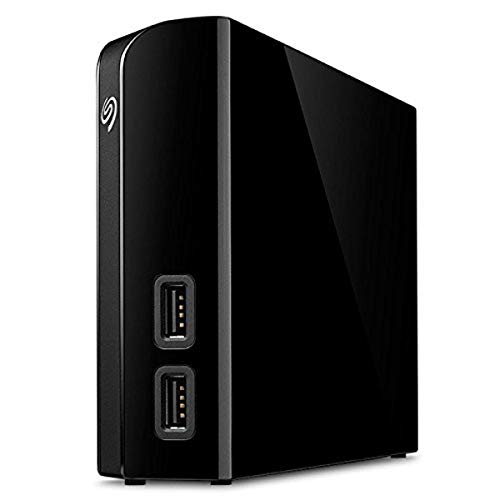
The Seagate Backup Plus Hub blends high-capacity storage with convenient USB hub functionality. With up to 8TB, it serves as a centralized repository for photos, documents, and media. The built-in USB ports enable charging and data transfer for connected devices like cameras, while the NTFS driver enables seamless cross-platform use between Windows and Mac. This drive is well-suited for users who want an external solution that doubles as a peripheral hub for a busy desk.
Key considerations include the efficiency of drive-to-device transfers, hub usefulness in daily workflows, and ease of integrating with existing backup software. For users managing multiple devices, this model provides a compact, all-in-one option with practical data accessibility.
Buying Guide: Cloud Storage Drive Considerations
- Use case: Home backups, media libraries, or NAS-based sharing require different form factors. External drives are simple, while NAS drives enable multi-user access and centralized backups.
- Capacity vs. budget: Higher capacities reduce the need for frequent upgrades but come with higher upfront costs. Match capacity to your data growth rate and archive strategy.
- Connectivity: USB 3.x and USB-C offer fast transfers, while NAS or network-enabled drives require wired Ethernet (or Wi‑Fi in some cases). Consider your computer and router capabilities.
- File system and compatibility: Windows, macOS, and Linux compatibility may require formatting changes. If you plan to Time Machine or use cross-platform backups, verify formatting needs.
- Backup strategy: Do you want automatic daily backups, or manual backups on a schedule? Some drives support built-in software, while others rely on OS-level tools.
- Reliability and warranty: Look for drives with robust MTBF ratings, vibration resistance, and a solid warranty to minimize downtime and data risk.
- Redundancy: For NAS setups, consider RAID configurations to protect against drive failure. For external drives, keep multiple copies in different locations when possible.
- Portability vs. permanence: Desktop externals offer large capacities but remain stationary. Portable drives suit on-the-go needs, though they typically offer less storage than desktop models.
In summary, the best cloud-like storage solution depends on whether you prioritize sheer capacity, network sharing, or plug-and-play backups. The selections above cover a spectrum from massive external drives to NAS-optimized internal options, each offering distinct advantages for safeguarding and organizing digital assets.