When shopping for a clip-on saxophone microphone, the best picks balance secure attachment, natural tone, and reliable wireless or wired operation. This guide highlights five top options tailored for saxophone players, teachers, and performers seeking clear sound with minimal setup. Each product is evaluated for who it’s best for, its main strengths, and a practical limitation to consider.
Product Comparison Snapshot
| Product | Type | Best For | Notes |
|---|---|---|---|
| Live performers needing precise isolation | |||
| Teachers and small gigs | |||
| Outdoor or street performances | |||
| Sax players seeking freedom from wires | |||
| Multi-device versatility |
Audio-Technica PRO 35 Cardioid Condenser Clip-on Microphone

The Audio-Technica PRO 35 is a cardioid condenser mic designed for on-instrument use with a UniMount clip. It emphasizes isolation by rejecting sounds from the sides and rear, making it well-suited for stage environments where bleed is an issue. Its extended frequency response captures subtle tonal details of a sax performance, protecting the sound source from handling and movement noise. Best for players prioritizing accurate isolation in live settings.
Who it’s best for: Live performers or educators who need reliable, isolated sound with straightforward mounting.
Why chosen: The UniMount clip and cardioid pattern help keep the sax tone clean during busy performances.
Limitation to consider: Wired system may require careful placement to avoid shock or grip noise during intense playing.
Lefiko 2.4G Wireless Saxophone Microphone System

The Lefiko system is a versatile wireless clip-on that targets brass and saxophones. It highlights a 2.4GHz wireless link with automatic frequency hopping and low latency (about 12ms), which supports teaching, practice, and small gigs without noticeable lag. The 360° adjustable gooseneck provides tailored sound pickup for different playing positions. Best for educators and performers who want a flexible, easy-to-position wireless solution.
Who it’s best for: Students, teachers, and small-venue players who value ease of setup and stable wireless performance.
Why chosen: The flexible gooseneck and anti-interference features help maintain consistent tone across sessions.
Limitation to consider: It may require a careful fit on very tight instrument hardware, and some users prefer more compact mics for stealth on-stage use.
Wireless Saxophone Microphone by XIAOKOA

This UHF wireless system focuses on stable signal transmission and long range, with a built-in high-sensitivity condenser microphone for clear tone. It features an LED digital screen showing frequency, battery, and volume, and includes a silicone shock-proof clip to minimize vibrational noise. It’s best for players who need visibility into the system status and a robust wireless link for street or stage environments.
Who it’s best for: Saxophonists who perform in larger spaces or outdoor venues and want a straightforward wireless setup.
Why chosen: The long-range capability and visual status indicators aid quick adjustments during performances.
Limitation to consider: Not designed for Mac/PC compatibility in some configurations; plan to operate primarily as a standalone wireless mic.
NUX B-6 Saxophone Wireless System

The NUX B-6 is a saxophone-focused wireless system that emphasizes freedom of movement with a compact design and an included gooseneck condenser mic. It provides three EQ scenes to accommodate different saxophone types, aiding tone shaping in varied playing styles. This choice is best for players who want a tailored on-instrument mic with flexible tonal options in a wireless package.
Who it’s best for: Players who want a ready-to-use sax-specific wireless setup with tonal options.
Why chosen: The dedicated saxEQ scenes help optimize sound for altos, tenors, and baritones.
Limitation to consider: The system’s performance can depend on proper pairing with compatible receivers and may require familiarization with the EQ presets.
MICVISTA Wireless Clip-On Saxophone Microphone System

The MICVISTA system offers a clip-on transmitter with a rubber pad and shock absorber spring for instrument-safe mounting and easy removal. It emphasizes easy plug-and-play setup with stable, interference-free connections. The microphone is designed to reduce environmental noise exposure and deliver clear tone with good anti-interference performance over longer distances.
Who it’s best for: Players who want quick setup and reliable wireless operation with minimal fiddling.
Why chosen: Ultra-easy installation and robust anti-noise performance support rapid setups for rehearsals and gigs.
Limitation to consider: Some users may prioritize higher-end preamps or more precise tone control for studio-like environments.
HEIMU Clip On Instrument Condenser Microphone
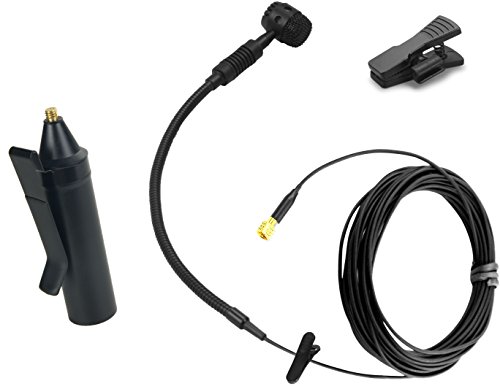
The HEIMU clip-on condenser offers a compact, discreet design with a flexible mounting approach and gentle adhesion to the instrument. It is designed for secure placement without obstructing playing or movement. This option is attractive for players seeking a subtle, non-intrusive clip-on solution with straightforward setup.
Who it’s best for: Players who prefer a low-profile mic that won’t interfere with playing style.
Why chosen: One-handed mounting and discreet size facilitate quick setups during performances or practice.
Limitation to consider: The data does not specify wireless capabilities, so check compatibility if a wireless system is desired.
Buying Guide: How to Choose the Right Clip-On Sax Mic
- Cardioid mics excel at isolating the primary instrument, while omnidirectional variants may capture more ambient sound. Choose based on stage setup and the amount of bleed you tolerate.
- Wireless systems offer freedom of movement, essential for live performances, while wired mics provide reliability in crowded spaces with potential interference.
- Look for clip-on designs with shock protection and flexible goosenecks to fine-tune tone without marring the instrument.
- Ensure the mic’s connectivity matches your mixer, interface, or wireless receiver. LED displays and easy pairing can simplify live sound management.
- Some systems include tunable EQ or instrument-specific presets. These features help tailor the sax sound to different venues and styles.
- Clip strength and clip material affect long-term use, especially for students and teachers handling multiple sessions weekly.
FAQ
- What is the main difference between cardioid and wireless mics for sax? Cardioid mics focus on rejecting side and rear noise, providing clearer sax tone. Wireless mics remove cords and offer mobility for performances.
- Which mic is best for teaching in a classroom? A 2.4G wireless system with a stable connection and easy setup is ideal for classrooms, such as Lefiko, which supports teaching and small gigs.
- Do clip-on mics damage the instrument? Reputable clip-ons are designed to minimize impact by using padded or shock-absorbing mounts, but proper fit is still important.
- Can I use these mics with a standard PA mixer? Yes, most clip-on sax mics are designed to feed standard mixers or wireless receivers; always verify input compatibility.
- Are longer-range wireless systems better for street performance? Longer range helps in open spaces, but wind and environment can affect signal quality; choose a system with reliable interference handling for outdoor use.
- Is a gooseneck mic beneficial for sax players? A gooseneck provides precise positioning, improving tone pickup for different sax angles and playing styles.