Tracking energy use and dialing in home comfort can be affordable with budget-friendly smart thermostats. This guide highlights five cost-effective options that offer essential smart functions, voice control, and energy-saving features. Each pick is compatible with common ecosystems and designed to fit a range of HVAC setups, from traditional single-stage systems to more advanced configurations.
Summary of chosen products:
| Product | Brand | Key Benefit |
|---|---|---|
| Amazon Smart Thermostat – Save money and energy | Amazon | Easy upgrade, rebates, Alexa integration |
| Smart WiFi Thermostat – Touchscreen, app & voice | Generic | User-friendly control, durable build, year-round balance |
| Vine Smart Thermostat for House | vine | Compatibility checks, widespread system support, voice control |
| Meross Smart Thermostat for Home | meross | Matter integration, flexible scheduling |
| Google Nest Thermostat | Energy savings, compatibility, no C-wire required in many setups |
Amazon Smart Thermostat – Save Money and Energy

Amazon Smart Thermostat provides a straightforward upgrade path from traditional thermostats. It supports Alexa and Ring ecosystems and uses occupancy awareness to adjust heating and cooling. The device emphasizes energy savings and can generate rebate information after purchase, helping users offset costs. The integration with select Echo devices allows zone-based comfort planning without substantial wiring changes. A C-wire is required for most setups. This option is suitable for households already invested in Amazon’s smart home environment.
Smart WiFi Thermostat – Touchscreen, App & Voice Control

This budget-friendly thermostat offers a touchscreen display and app-based control with voice integration. It supports hands-free operation and is built with durable ABS material designed to withstand daily use. It emphasizes year-round temperature balance by dynamically managing heating and cooling modes during seasonal transitions, aiming to maintain comfort while conserving energy. Suitable for homes seeking an easy install and reliable remote management via a mobile app or voice assistant.
Vine Smart Thermostat for House

Vine’s smart thermostat targets compatibility across a broad range of 24V systems, including gas, oil, electric, boilers, and heat pumps. It requires a C-wire for most installations and supports remote and voice control via Vine, Smart Life, Alexa, and Google Assistant. The device emphasizes easy compatibility checks before purchase and offers flexible scheduling options. It’s a practical option for households upgrading from a basic thermostat who want reliable smart features without overspending.
Meross Smart Thermostat for Home
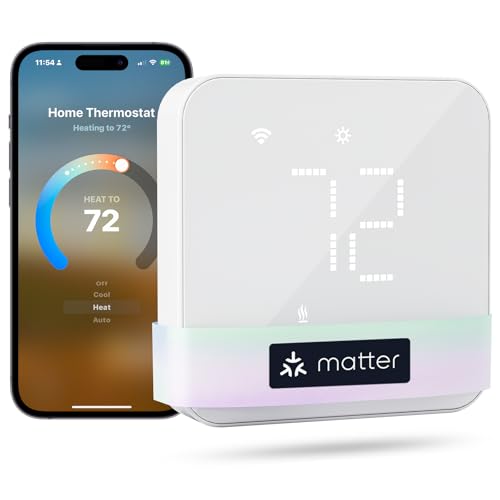
Meross smart thermostat is designed for broad compatibility, including heat pumps, air conditioners, and furnaces, with Matter integration for seamless cross-platform control. It supports Apple Home, Alexa, Google, and Samsung SmartThings, enabling flexible scheduling and energy tracking. A C-wire is required in some configurations, so compatibility checks are advised. The schedule features let users tailor routines around daily activities, helping optimize energy use while maintaining comfort.
Google Nest Thermostat
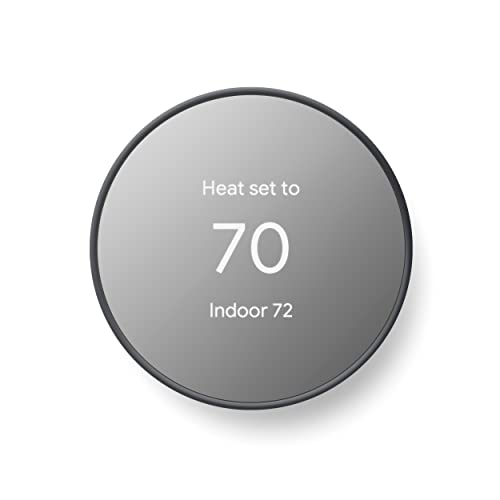
The Nest Thermostat is ENERGY STAR certified and designed to help reduce energy use while maintaining comfort. It supports Wi-Fi connectivity and can operate without a C-wire in many homes, though some systems may require one or a power accessory. Nest emphasizes learning user patterns to optimize scheduling and energy savings. It integrates with Google Assistant and supports compatibility checks to ensure it works with existing HVAC setups, making it a strong choice for Android-centric or Google-powered smart homes.
Buying Guide
Key purchase considerations for budget-friendly smart thermostats:
- System compatibility: Verify 24V cooling/heating systems, gas, oil, electric furnaces, heat pumps, and boiler compatibility. Some models exclude line-voltage or hydronic systems.
- C-wire needs: Many smart thermostats require a C-wire for constant power. If you lack a C-wire, check compatibility or consider the Nest’s C-wire alternatives.
- Voice assistants and ecosystems: Choose a thermostat that aligns with your preferred ecosystem (Alexa, Google Assistant, Apple HomeKit, or Samsung SmartThings).
- Installation difficulty: DIY-friendly models typically feature universal sub-bases and clear wiring terminals. Some may require professional help for complex systems.
- Energy-saving features: Look for occupancy sensing, geofencing, adaptive schedules, and compatibility with energy rebates or utility programs.
- Interoperability: Matter support and compatibility with other smart devices can simplify automation across platforms.
- Privacy and data usage: Consider how data is collected and shared, particularly with devices that integrate with cloud services.
Comparative considerations
- Rebates and incentives: Some models or retailers offer rebates or energy program benefits; verify eligibility in your area.
- Display and usability: A touchscreen or clear app interface can impact everyday use, especially for guests or first-time smart home users.
- Future-proofing: Look for models with ongoing software updates and compatibility with evolving smart home standards.