Looking for an affordable DSLR viewfinder to improve outdoor framing and precise focusing? This guide highlights budget-friendly options that help you see your camera’s LCD clearly in bright light. Each product is evaluated for who it’s best for, with practical pros and a straightforward caution. Ideal buyers include hobbyists seeking easier composition, travelers needing compact gear, and professionals who want a light, inexpensive magnifier for field use.
| Product | Brand | Best For | Why Picked |
|---|---|---|---|
| Kamerar CVF-2 LCD Viewfinder 3X Magnifier | Kamerar | Outdoor shooters with 3.0–3.2″ LCDs | 3x magnification; light-blocking eyecup; versatile eye placement |
| Mcoplus ST-1 Collapsible LCD Viewfinder | mcoplus | Budget-conscious DSLR users | 3x magnification; left/right eye adaptability; widely compatible |
| Astromania Right Angle Viewfinder | Astromania | Macro and precise framing at odd angles | 1x–2.5x magnification; diopter adjustment; multiple adapters |
| Tydeux Right Angle Viewfinder | Tydeux | Ergonomic framing for long shoots | 360° rotation; 1x–2.5x magnification; versatile mounting |
| Hoodman HLVKIT Live View Kit | Hoodman | Bright sun outdoor videography | Glare-free live view; diopter adjustment; stability |
These selections emphasize affordability, compatibility with common DSLR LCD sizes, and practical design for outdoor or bright-light use. The list avoids advanced or expensive pro accessories while still offering clearer framing and better focus checks in daylight.
Kamerar CVF-2 LCD Viewfinder 3X Magnifier

The Kamerar CVF-2 fits most 3.0″ and 3.2″ LCD screens in a 16:9 ratio, blocking excess light for high-contrast viewing in bright sun. It provides 3x magnification for edge-to-edge sharpness. The eyecup works for either eye and with eyeglasses, making it versatile for prolonged sessions. Best for photographers who need a reliable, compact magnifier with strong light-blocking capability. Caution: ensure your camera LCD is within the 3.0″–3.2″ range for compatibility.
Mcoplus ST-1 Collapsible LCD Viewfinder
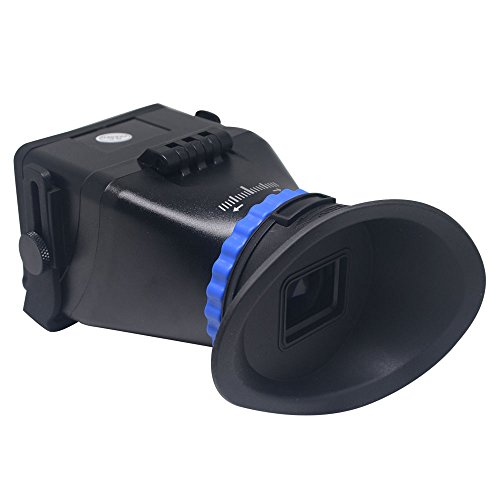
The Mcoplus ST-1 is a universal, collapsible 3x magnification viewfinder designed for 3.2″ LCD screens. It supports a wide range of Canon and Nikon DSLRs, offering stable viewing in bright light. Best for budget-minded shooters who want a flexible, left/right eye eyeshade option and quick switching between shooting styles. Limitation: compatibility notes list many models, but accuracy depends on your exact camera model and LCD size.
Astromania Right Angle Viewfinder

The Astromania model offers 1x to 2.5x magnification with six mounting adapters, suitable for Canon, Nikon, Pentax and others. It is designed to keep subject position accurate at different angles, aiding macro and studio work. Best for users who frequently shoot at unconventional angles or require precise framing during macro work. Caution: higher magnification is best used with careful eye placement to maintain edge-to-edge clarity.
Tydeux Right Angle Viewfinder

The Tydeux model includes 1x and 2.5x magnification with 360° rotation and multiple adapters for Canon, Nikon, Pentax, and more. Choose this if you want flexible shooting angles and easy switching between left/right eye perspectives. Best for field reporters or travel shooters who value ergonomic framing. Limitation: some users may find setup and alignment steps lengthy when matching to specific camera bodies.
Hoodman HLVKIT Live View Kit

The Hoodman HLVKIT is designed for glare-free live view in bright sunlight, featuring glass optics and a ±3 diopter adjustment for sharpness. It improves stability during handheld shooting and enhances contrast in sunny conditions. Best for photographers and videographers who need reliable live view clarity outdoors. Caution: heavier setup compared to compact magnifiers, which may impact portability.
Buying Guide: How To Choose A Cheap DSLR Viewfinder
What should you consider when selecting a budget viewfinder? Start with compatibility: confirm your camera’s LCD size (usually 3.0″ or 3.2″) and aspect ratio. Magnification level matters: 3x magnification helps in quick focusing, but higher magnification can reduce the field of view. Eye relief and eyecup design affect comfort, especially for eyeglass wearers. Durability and materials matter for outdoor use, as does heat and bright-light performance.
How does angle and mounting affect use? Right-angle viewfinders excel for low or odd-angle shooting, macro work, and tripod use, but may add size and weight. Consider whether you need left/right eye compatibility and whether the device can be mounted on your tripod or a support rig. For macro or studio work, higher magnification paired with diopter adjustment can yield sharper focus checks.
What about portability and ease of use? If you travel or shoot on the go, favor compact, foldable designs with straightforward diopter controls. If you primarily shoot in fixed setups, a sturdier, larger viewfinder with better light-blocking capability may be worthwhile. Finally, assess the risk of compatibility claims by trying to match the exact camera model and LCD dimensions to avoid fit problems.
Quick Comparison of Key Features
- Best for bright sun: Hoodman HLVKIT (glare-free viewing, strong diopter support).
- Best for flexible angles: Astromania and Tydeux (right-angle design, good magnification options).
- Best overall balance: Kamerar CVF-2 (3x magnification, universal LCD compatibility).
- Best budget choice: Mcoplus ST-1 (3x zoom, wide compatibility, left/right eye option).
FAQ
- What is a DSLR viewfinder used for? It helps you frame and focus by magnifying the camera’s LCD and blocking ambient light for clearer viewing in daylight.
- Do these work with mirrorless cameras? Some models specify compatibility with mirrorless LCD sizes; check your model’s screen dimensions before buying.
- Is 3x magnification enough for precise focusing? For many users, 3x provides adequate detail, though macro work may benefit from higher magnification if available.
- Can I mount these on tripods? Many designs offer 1/4″ or 3/8″ screw holes for tripod mounting; verify mounting options in the product listing.
- Are right-angle viewfinders harder to use? They can be slightly bulkier but are preferred for angled shooting and macro work when used correctly.
- Do these affect autofocus? Viewfinders do not change autofocus performance; they mainly aid composition and manual focus checks.