Discover budget-friendly audio interfaces that deliver solid studio sound for recording, streaming, and podcasting. Here are five affordable options with features suited to guitar, vocals, and multi-instrument setups. The table below highlights quick specs to compare at a glance.
| Product | Brand | Key Benefit |
|---|---|---|
| MAONO PS22 Lite | MAONO | 24-bit/192kHz, strong mic preamp, USB interface |
| M-AUDIO M-Track Solo | M-AUDIO | Compact, XLR/Instrument, easy monitoring |
| M-AUDIO M-Track Duo | M-AUDIO | Dual inputs, versatile for two-person setups |
| XTUGA USB Audio Interface | XTUGA | Low latency, direct monitoring, XLR input |
| Mackie Onyx Artist 1X2 | Mackie | Trusted preamps, sturdy build, two inputs |
Below are five budget-friendly interfaces chosen for general music creation, voice work, and streaming. Each entry includes a concise look at why it can fit a budget-conscious setup, plus practical considerations for choosing the right model.
Maono Ps22 Lite USB Audio Interface

The MAONO PS22 Lite is designed for recording enthusiasts and streamers seeking clear, high-fidelity capture. It supports 24-bit/192kHz recording and boasts a healthy dynamic range of 106dB. Its XLR input can handle condenser or dynamic mics with up to 56 dB of preamp gain and 48V phantom power. This interface is suitable for vocals, guitar, podcasts, and voiceovers, delivering warm, detailed sound without breaking the bank.
M-AUDIO M-Track Solo USB Audio Interface
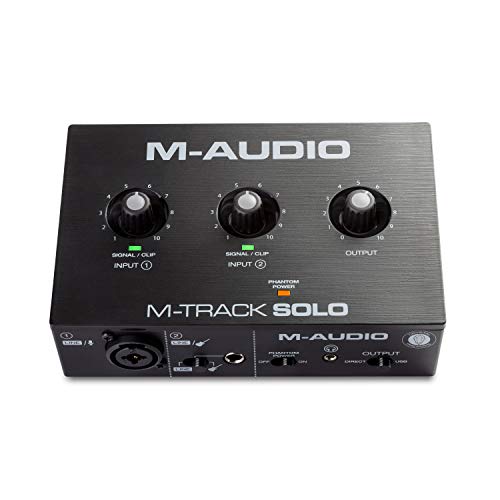
The M-Track Solo emphasizes simplicity and portability. It provides a single XLR/line input with phantom power and a dedicated instrument input, making it ideal for solo singers or guitar players. It supports 48 kHz recording for clean, straightforward sessions. The interface includes a zero-latency monitoring option via a direct/USB blend switch, helping you monitor takes without delay.
M-AUDIO M-Track Duo USB Audio Interface

The M-Track Duo offers dual inputs for two sources, making it a flexible option for small duos or interview-style podcasts. It covers 48 kHz recording with transparent preamps and features a USB/Direct monitoring switch for zero-latency monitoring. This model is well-suited for streaming, guitar/vocal setups, and light home studio use without high costs.
Focusrite Scarlett Solo 4th Gen (Note: budget context)

While commonly positioned as a mid-range option, the Scarlett Solo 4th Gen remains a popular choice among budget-conscious buyers due to its 120dB dynamic range and Studio-grade converters. Its Air mode helps vocals and guitars cut through with added presence, making it a strong contender for solo performers and producers who want professional tone without a premium price tag. Consider this model if you value high-fidelity sound and future-ready features within a budget framework.
Focusrite Scarlett 2i2 4th Gen (Budget-Focused Perspective)

The Scarlett 2i2 4th Gen brings Focusrite’s flagship-quality preamps to a compact two-input design. It features Auto Gain for optimized mic levels and Clip Safe monitoring to prevent clipping. While this model sits at a higher price tier than entry-level options, it remains a compelling choice for users seeking stronger mic pres and reliable performance in a small home studio setup.
Buying Guide: Key Purchase Considerations
- Inputs and outputs: Assess how many mic/line/instrument inputs you need and ensure the interface provides corresponding outputs for speakers or headphones.
- Preamp quality: Clean, low-noise preamps matter for vocals and guitars. Look for models with adequate gain ranges and low self-noise.
- Sample rate and bit depth: 24-bit/192kHz is common in budget interfaces; it provides higher dynamic range and better detail for critical recordings.
- Latency and monitoring: Zero-latency monitoring and direct monitoring options help avoid echo during recording and monitoring sessions.
- Software bundle: Some interfaces include helpful DAW licenses and plugins, which can add value for beginners and budget creators.
- Build quality and portability: If you travel or move between rooms, a compact, sturdy unit is beneficial.
- Future-proofing: Consider an interface that can grow with your setup, offering extra inputs or compatibility with new equipment.
- Budget alignment: Identify essential features for your workflow and avoid paying for capabilities you won’t use.
- Compatibility: Ensure drivers and software are available for your computer’s operating system, including macOS or Windows versions you use.