Answering the most common question for indoor gardeners: CFL grow lights can reliably support plant growth throughout the year when chosen to fit space, plant type, and wattage needs. This guide highlights five CFL-based options that cover small desk setups to floor-standing configurations, with clear, buyer-friendly reasons for who each product is best for. Whether you’re growing herbs on a kitchen windowsill or starting ornamentals in a basement, these picks help you compare light intensity, spectrum, and ease of use.
| Product | Best For | Why It Stands Out |
|---|---|---|
| SunBlaster SL0900151 Set | All-year indoor growing for compact spaces | Includes four 13W CFLs at 6400K delivering 900 lumens total |
| AgroBrite Hydrofarm FLF27DF | Adjustable-height floor planting lamps | Flexible neck, height adjustable to 48–61 inches, flicker-free |
| ephotoinc H60 60W 5500K | Hydroponic setups requiring balanced daylight hue | 5500K color temperature mimics daylight, 250W incandescent equivalence |
| ephotoinc HAKUTATZ 105W | Energy-saving fixtures with strong output | Instant-start, 5500K daylight, high efficiency |
| Wiyifada 3-Pack A19 9W | Multi-plant setups needing even coverage | Full spectrum, high efficiency, dimmable and long life |
SunBlaster SL0900151 13W Indoor Grow Light Set

Best for: Compact spaces that need year-round lighting without a lot of height clearance. The SunBlaster set includes four 13-watt CFL bulbs at 6,400 Kelvin, delivering around 900 lumens and a daylight-like spectrum. This makes it suitable for small herb pairings, baby seedlings, or desk-top plants that benefit from steady, sun-like exposure. The four-bulb configuration can help spread light more evenly than a single unit, reducing shadowing and giving plants consistent energy.
Why chosen: The package is straightforward to set up, energy-efficient, and delivers a balanced cool daylight spectrum ideal for vegetative growth. It’s a practical choice where space is limited and a simple plug-and-play approach is preferred. Caution: It’s best for smaller plant rows or pots; larger or heavy-canopy setups may require additional lighting or higher-wattage fixtures.
AgroBrite Hydrofarm FLF27DF 27W CFL Floor Plant Light

Best for: Taller floor-level plant arrangements and home herb gardens that require flexible positioning. The AgroBrite lamp offers a tall, adjustable stand from 48 to 61 inches with a flexible neck for precise light targeting. The included flicker-free fluorescent bulbs provide clear color rendering, increasing the chance of uniform growth across varied plant species. This is a solid match for seed starting in a dim corner or mid-room under ambient light conditions.
Why chosen: Its height adjustability and stable base reduce the need for frequent rearrangement, helping keep plant canopies evenly lit. Caution: The lamp’s footprint may be less ideal for very compact setups where a high-wattage, overhead fixture would take up less space.
Hydroponic Full Spectrum CFL Grow Light Bulb 60W H60
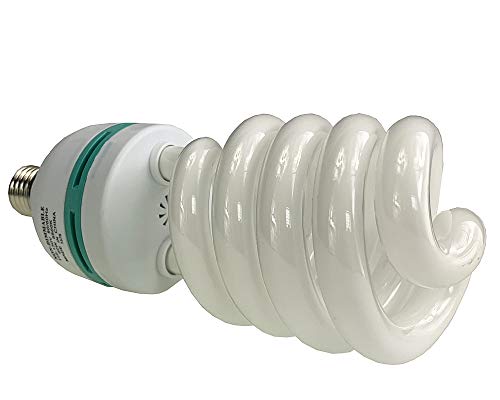
Best for: Hydroponic systems and seed starting that benefit from a balanced full-spectrum daylight look. The 60W CFL bulb emits a 5500K daylight hue, providing an energy-efficient way to maintain steady growth and vigor. It’s a near-incandescent replacement in terms of output but with CFL efficiency, making it suitable for small-to-moderate grow zones.
Why chosen: The 5500K daylight tone supports photosynthesis efficiently across growth stages. Caution: Bulbs of this wattage may have a narrower coverage area; plan for multiple units if lighting a larger bed or shelf.
HAKUTATZ 105W CFL Grow Light, 5500K Daylight
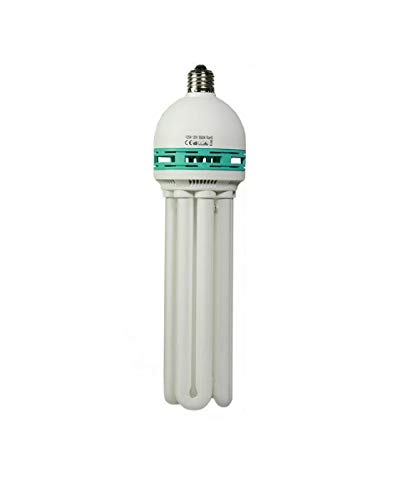
Best for: Energetic setups where higher output is needed without running large fixtures. The 105W CFL light provides a strong 5500K daylight output in a compact form, supporting healthy growth for a variety of greens and herbs. It’s appropriate for mid-sized grow shelves or benches where space efficiency matters.
Why chosen: It delivers more watts per fixture than typical small CFLs while maintaining a compact footprint. Caution: Greater wattage can increase heat; ensure adequate air circulation in enclosed spaces.
Wiyifada 3-Pack A19 9W Full Spectrum Grow Bulbs

Best for: Multi-plant micro-gardens or windowsill farms needing even coverage across several pots. The trio of A19 9W bulbs offers full-spectrum output with a wide 150-degree light spread, delivering energy savings of over 85% by replacing traditional 100W lamps. The bulbs use an E26 base, making it easy to fit most standard fixtures.
Why chosen: The full-spectrum design supports all growth stages, and the longer lifespan helps reduce frequent replacements. Caution: 9W per bulb means you’ll need multiple units or higher-output fixtures for dense canopies or larger plants.
Buying Guide: CFL Grow Lights For Indoor Plants
What to consider when choosing CFL grow lights:
- Light spectrum: Full spectrum (roughly 400–740 nm) closely mimics natural sunlight and supports all growth stages. Look for daylight or full-spectrum bulbs labeled at 5000–6500K for leafy greens and vegetative growth.
- Wattage and lumens: Higher wattage CFLs deliver more light. For small herbs, 13–27W bulbs can work; for larger foliage or more plants, consider 60–105W equivalents in CFL form or multiple bulbs.
- Color temperature: Daylight 5500K–6500K is commonly recommended for vegetative growth. 2700K–3000K bulbs are warmer and may be better for flowering stages in some setups.
- Fixture type: Adjustable stands, floor lamps, or compact desk fixtures each fit different spaces. Choose based on plant height, distance from the canopy, and room layout.
- Heat management: CFLs produce less heat than HID lamps, but higher-wattage CFLs can still warm nearby foliage. Ensure adequate airflow or spacing between bulbs and leaves.
- Longevity and efficiency: Look for bulbs with longer rated lifespans and stable color rendering to maintain consistent growth.
FAQ
- Q: Can CFLs support all stages of plant growth? A: Yes, particularly when using a full-spectrum or daylight-style CFL and adjusting distance as plants grow.
- Q: How close should CFL bulbs be to plants? A: Typically 6–18 inches for smaller bulbs and 12–24 inches for larger, depending on plant type and bulb wattage; adjust to avoid heat stress.
- Q: Are CFLs energy-efficient for year-round use? A: CFLs are generally energy-efficient, but consider total fixture wattage and run-time to estimate energy use accurately.
- Q: Is more wattage always better? A: Not necessarily. More watts increase light intensity but can raise heat. Match wattage to space and plant needs.
- Q: Do I need multiple CFLs for larger shelves? A: For broad canopy coverage, yes. Multiple bulbs provide even light and reduce shading between plants.
- Q: Should I mix CFLs with other light types? A: For best results, combine CFLs with other spectrum options if your setup supports them, ensuring minimal heat buildup.