Bulk microphone cables are for buyers who want to customize lengths, build custom cables, or run long, noise-free lines in studios, stages, or venues. This guide highlights five reliable options from reputable brands, with clear reasons for each pick. It also helps readers compare shielding, copper quality, and conductor gauge to match their needs, from hobbyists to professional installers.
| Product | Brand | Length | Conductor Type | Shielding |
|---|---|---|---|---|
| Sewell Silverback Screamer Bulk XLR Cable | Sewell | 300 ft | Pure Copper (OFC) | 96-strand shielding |
| GLS Audio Bulk Microphone Cable 300′ | GLS Audio | 300 ft | 21 AWG Copper | True balanced Lo-Z shielded |
| Mygatti Bulk XLR Cable 150 ft | Mygatti | 150 ft | 21 AWG Tinned Copper | Double shield (copper + Al-foil) |
| AA Audio 20AWG Bulk XLR Cable 300ft | AA Audio Accessory | 300 ft | 20 AWG OFC | Aluminum foil + 95% OFC shield |
| RapcoHorizon MIC2.K-500 Bulk Cable 500ft | Rapco | 500 ft | Unknown specific gauge | 100% foil shield |
Sewell Silverback Screamer Bulk XLR Cable

Best for large DIY runs and professional setups requiring durable copper conductors. Sewell’s 300 ft spool uses pure copper wiring for better conductivity and flexibility. Its 96-strand shielding provides strong EMI protection, making it suitable where interference is a concern. This option is ideal for installers and hobbyists who need long, reliable cables.
Best for: long stage connections, studio extensions, and large installations where shielding quality matters.
Caution: The length may be more cable than needed for small projects; consider trimming to save space and manageability.
GLS Audio Bulk Microphone Cable 300′ Blue
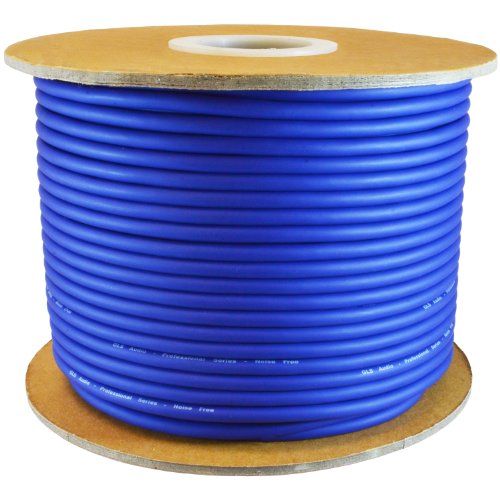
Best for audio enthusiasts who want a professional-grade, balanced mic cable with a rugged jacket. GLS Audio uses true balanced Lo-Z shielding and high-purity copper conductors to minimize noise and preserve fidelity over long runs. The flexible construction supports varied setups, from studios to on-stage applications.
Best for: studio engineers and live sound techs needing reliable, noise-free transmission.
Caution: Heavier gauge cables may require more careful routing in tight installations.
Mygatti Bulk XLR Cable 150 Feet
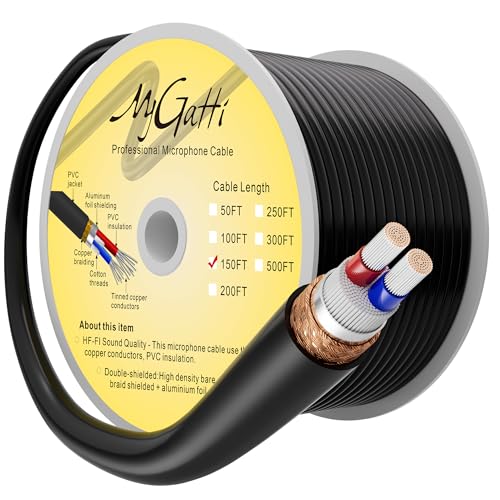
Best for DIY builders who want strong shielding and corrosion resistance. Mygatti uses 21 AWG tinned copper conductors for enhanced signal integrity and durability. The double shielding (copper plus Al-foil) helps reduce EMI and RFI, making it suitable for complex setups with potential interference sources.
Best for: custom-length cables in home studios or small venues where shielding and flexibility matter.
Caution: Tinned copper, while corrosion-resistant, can be more expensive than bare copper; budget accordingly for large-scale runs.
AA Audio Accessory 20AWG Bulk XLR Cable 300ft

Best for professionals who require lower signal loss and robust shielding. This 20 AWG bulk cable uses 99.99% OFC conductors for reduced impedance and high-frequency performance. It combines an aluminum foil shield with heavy shielding to minimize hum and electromagnetic interference in studio or live settings.
Best for: stage and studio use where clearer, more consistent high-frequency response is needed.
Caution: Slightly thicker and stiffer than thinner gauges, which can affect flexibility in tight cable runs.
RapcoHorizon MIC2.K-500 Bulk Cable
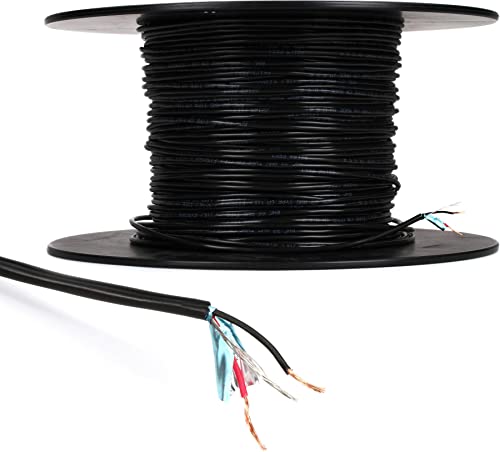
Best for U.S.-made, installation-grade needs. Rapco’s MIC2.K-500 bulk cable features a complete EMI/RF rejection approach with a 100% foil shield, aiming for reliable performance in demanding environments. It’s a practical choice for installers who prioritize shielding and durability in bulk runs.
Best for: professional installations that require strong EMI/RF rejection and U.S. manufacturing origins.
Your Cable Store DIY Cable Kit

Best for builders who want a complete kit for custom cables. This kit includes 250 feet of 28 AWG balanced XLR cable with 12 male and 12 female connectors. It’s a practical option for producing multiple cables at specific lengths while maintaining uniformity across a project.
Best for: hobbyists or small studios building multiple cables with a common connector type.
Buying Guide
- Conductor material: OFC (oxygen-free copper) offers good conductivity and durability. Tin-plated copper provides better corrosion resistance, especially in humid environments.
- Conductor gauge: 20 AWG provides lower signal loss than thinner gauges; 21 AWG and 23 AWG can be more flexible but may have higher resistance for very long runs.
- Shielding: Full shield, foil plus braid, or spiral shielding reduces EMI/RFI. Consider the environment—high-interference spaces benefit from heavier shielding.
- Length and manageability: Long bulk spools are cost-effective but require careful routing and labeling. For smaller projects, shorter reels or pre-cut lengths may be easier to handle.
- Jacket material: PVC jackets offer flexibility and durability; rugged rubber jackets can endure harsher setups but may be stiffer to route.
- Connector compatibility: Ensure cables are compatible with standard 3-pin XLR connectors used in most studios and venues.
Frequently Asked Questions
- What is the benefit of bulk XLR cables over pre-made lengths?
Bulk cables let you cut and assemble exactly to your required lengths, reducing waste and enabling longer runs with consistent shielding. - Why choose tin-plated copper vs pure copper?
Tin-plated copper resists corrosion better, which helps in environments with humidity or salty air, though it may cost more. - How important is shielding for live sound?
Shielding minimizes EMI/RFI from lighting, power cables, and other gear, preserving signal clarity on stage. - Should I prefer 20 AWG or 21 AWG for bulk cables?
20 AWG offers lower resistance and better high-frequency performance for long runs; 21 AWG is typically more flexible and easier to route. - What should I consider when wiring DIY cable kits?
Match the connector type, confirm the conductor gauge, and plan cable lengths to avoid excess slack or tension in performance areas. - Are all bulk cables identical in shielding quality?
No—shielding quality varies by product. Check whether the cable uses foil, braided, or combined shielding, and how many strands or layers it includes.