Choosing an affordable 3D printer that still delivers reliable results is essential for students, hobbyists, and educators. This guide highlights five budget-friendly options that balance ease of use, print quality, and value. Each option offers features that help beginners gain confidence while providing room to grow for more experienced creators. Below is a quick summary of the selected products to help you compare at a glance.
| Product | Brand | Key Benefit |
|---|---|---|
| FLASHFORGE AD5M 3D Printer | FLASHFORGE | Auto calibration and high-speed CoreXY |
| Fully Assembled Mini 3D Printer | XZN | Ready-to-use starter kit for kids and beginners |
| Ender 3 3D Printer | Comgrow | Open-source design with resume printing |
| Portable 3D Printer | Generic | Compact for small spaces, easy setup |
| Geeetech Mini 3D Printer | GIANTARM | Auto leveling and direct-drive extruder |
FLASHFORGE AD5M 3D Printer

The AD5M model targets both beginners and seasoned users with a design that emphasizes reliability and speed. Its all-metal CoreXY motion structure supports high-speed printing while maintaining precision. A key feature is the fully automatic one-click leveling system, which automatically measures the nozzle-to-build plate distance for accurate offsets, removing manual calibration hassles. This reduces setup time and helps achieve a consistent first layer, enabling smoother prints across diverse materials. A robust build and streamlined maintenance support long-term use.
Core benefits include high-speed capability without compromising quality, low-noise operation, and a user-friendly workflow. The printer is positioned as a versatile tool for creative projects, prototyping, and educational demonstrations. With easy nozzle maintenance and smart leveling, users can focus on design rather than setup details, making it a practical option for home workshops and classrooms alike.
Fully Assembled Mini 3D Printer

This compact starter kit from XZN is designed for kids and absolute beginners. It features automatic nozzle cleaning and one-button auto-leveling to simplify setup and maintain print consistency. A pre-loaded filament roll, SD card, and accessories support immediate printing out of the box. The printer emphasizes speed with a top performance of 250 mm/s while delivering high precision (0.01 mm). It is an approachable way to introduce users to 3D printing, with safety features and straightforward operation in mind.
Key strengths include a low entry barrier, hands-on learning potential, and a PEI heated bed to ease model removal. The included kit components offer immediate practice with minimal additional purchases, making it a strong first choice for classrooms or family projects where learners grow from basic models to more complex designs.
Official Creality Ender 3 3D Printer
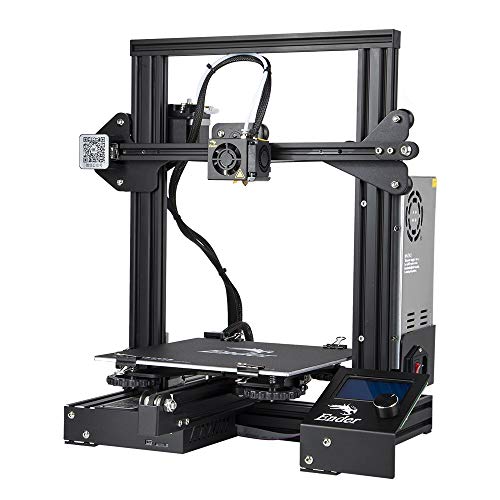
The Ender 3 remains a staple in budget 3D printing, offering a balance of affordability and capability. It supports resume printing after power loss, which reduces failed prints and downtime. The design is open-source, encouraging community-driven improvements and a broad range of compatible filament types. A straightforward assembly process helps users develop foundational printer-building skills, while ongoing support from a large user base simplifies troubleshooting and upgrades.
Performance highlights include reliable extrusion and a sturdy frame. The Ender 3 is widely used for prototyping, education, and personal projects, with a build volume suitable for small-to-medium parts. While it may require some initial setup, the potential for upgrades makes it a durable long-term investment for budget-conscious buyers.
Portable 3D Printer

This compact FDM 3D printer is designed for small spaces and beginners seeking a portable option. It includes a removable build plate, PLA and TPU compatibility, and a user-friendly layout. A 0.4 mm nozzle supports reliable detail without compromising print speed, and a modest build volume suits quick, simple projects. The setup emphasizes plug-and-play ease, with guided steps and a simple bed leveling approach, making it attractive for travel use, classroom demos, or home experimentation.
Considerations for buyers include the balance between size and capabilities, potential trade-offs in print volume for portability, and compatibility with common filaments. Its ease of use is ideal for learners and casual makers who want a dependable starter machine without a large footprint.
Geeetech Mini 3D Printer

The GIANTARM Geeetech mini printer focuses on high-speed and auto-leveling, offering a direct-drive extruder for better control with flexible filaments. Its fully assembled design lowers the barrier to entry, and the auto-leveling feature helps users achieve consistent first layers. The compact footprint makes it suitable for home or school use where space is at a premium. Users can print with a variety of materials, including PLA, and the setup emphasizes quick-start capabilities with minimal maintenance requirements.
Notes for potential buyers include the balance between print volume and speed, the durability of the direct-drive system, and availability of replacement parts and community guidance. This model suits learners who want a capable machine that remains approachable and expandable as skills grow.
Buying Guide: Key Purchase Considerations
- Print quality and reliability: Look for printers with proven bed leveling, stable frames, and good extrusion control. Features like auto-leveling and resume printing help reduce downtime and frustration.
- Ease of use: Beginners benefit from plug-and-play setups, clear manuals, and built-in safety features. Consider whether the device includes auto-calibration, quick-start guides, and supported software ecosystems.
- Build volume vs. footprint: Bigger print volumes enable larger projects, but require more space. For small homes or classrooms, a compact model with adequate performance may be optimal.
- Maintenance and upgrades: Open-source designs offer a robust community for upgrades, but may require more DIY involvement. Closed systems tend to be easier to maintain but less flexible.
- Material compatibility: Check which filaments are supported (PLA, PETG, TPU, etc.). Ensure the hot end temperature and bed heating meet your material needs.
- Speed vs. accuracy: Higher speeds can reduce print times but may impact detail. Balance your expectations with the printer’s motion system and nozzle design.
- Support and ecosystem: A strong user community, available replacement parts, and accessible customer support can save time during setup and troubleshooting.
- Safety and noise: Consider enclosure options for fumes in enclosed spaces and noise levels for quiet operation in classrooms or offices.
To maximize value, align your choice with intended use: education and beginners may prioritize auto-leveling and simplicity, while hobbyists may seek higher speeds, open-source flexibility, and upgrade paths. Compare warranty terms, available spare parts, and software compatibility to ensure long-term satisfaction with your budget-conscious 3D printer choice.