Yes—affordable PCIe graphics cards can add basic 3D acceleration and multi-display capability to older or compact systems. This guide highlights five budget-friendly options and clearly explains who each card is best for, plus any limitations. Ideal buyers include mini-ITX builds, HTPC setups, office PCs needing video output, and casual gamers who want 1080p gameplay without breaking the bank.
Summary table of selected products:
| Product | Brand | Interface | Memory | Ideal For | Notes |
|---|---|---|---|---|---|
| GeForce GT 610 2G DDR3 | Glorto | PCI Express 1.1 x16 | 2GB DDR3 | Low-budget upgrades for SFF/HTPC | HDMI/VGA outputs; Win11 compatible |
| AMD Radeon RX 550 4GB ITX | maxsun | PCI Express X16 3.0 | 4GB GDDR5 | Budget 1080p gaming and content creation | Low-noise fan; decent 1080p performance |
| GeForce GT 210 | QTHREE | PCI Express 2.0 x16 | 1GB DDR3 | Tiny form factor builds or office PCs | Low power; HDMI/VGA |
| GV-N710D3-2GL | GIGABYTE | PCI Express (typical) | 2GB DDR3 | Space-saving upgrade for older desktops | Low profile design |
| MOUGOL RX 580 8GB | MOUGOL | PCI Express X16 3.0 | 8GB GDDR5 | Budget 1080p gaming and multitasking | Dual fan; 8GB VRAM for smoother textures |
GeForce GT 610 2G DDR3 Low Profile Graphics Card

Powered by NVIDIA GeForce GT 610, this entry-level GPU uses a 40nm process with a 523MHz core frequency and 2GB DDR3 memory on a 64-bit bus. It is compatible with Windows 11 and offers HDMI and VGA outputs for basic display needs. Best for: small form factor (SFF) systems, HTPCs, or upgrades where power and space are limited. Caution: performance is limited for modern games or heavy 3D workloads.
maxsun RX 550 4GB ITX Graphics Card

The RX 550 4GB from maxsun uses a 128-bit path with 4GB GDDR5 memory and a 9cm fan for lower noise and strong airflow. It supports DirectX 12 and is suitable for casual gaming, light 3D CAD/CAM work, video editing, and 1080p gaming. Best for: budget-conscious gamers upgrading older systems or small form factor builds. Caution: not ideal for demanding modern titles at high settings.
QTHREE GeForce GT 210 Graphics Card

The GT 210 offers a 589MHz core clock with up to 1066Mbps memory throughput, PCIe 2.0 x16 interface, and outputs for HDMI and VGA. Best for: small or slim PCs, basic productivity, and entry-level multimedia workloads. Caution: limited performance for modern gaming; choose this if you need space-saving, simple plug-and-play upgrade.
GIGABYTE GV-N710D3-2GL 2GB
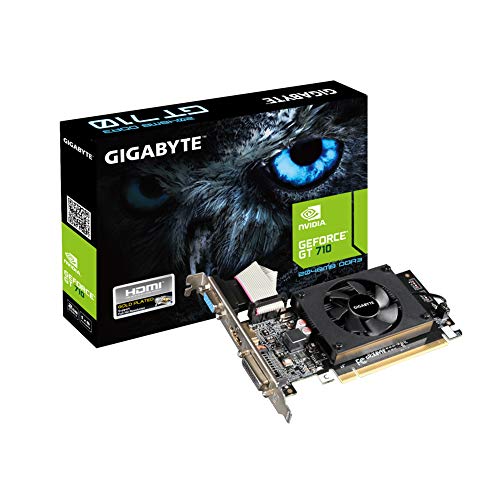
The GV-N710D3-2GL uses a low-profile design with 2GB DDR3 memory and multiple output options (Dual-link DVI-D/HDMI). Best for: upgrading very compact desktops, legacy PCs, or basic display acceleration in media centers. Caution: low-end performance; not suitable for modern gaming or intensive 3D workloads.
MOUGOL RX 580 Gaming Graphics Card
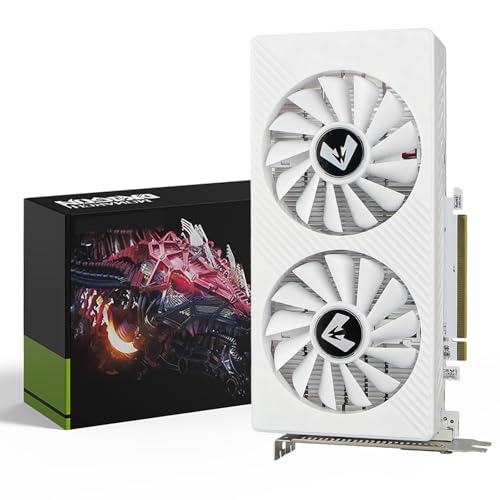
The RX 580 from MOUGOL features 8GB GDDR5, a 256-bit bus, and dual-fan cooling. It supports DP/HDMI/DVI outputs and is built on PCIe 3.0. Best for: budget gamers seeking smoother 1080p performance and better multitasking with larger VRAM. Caution: higher power consumption than entry-level cards; ensure adequate PSU and case cooling.
Buying Guide: Key Purchase Considerations
- What is my primary use? If you need basic display outputs for a factory PC, a GT 210 or GT 610 may suffice. For light gaming or multimedia, RX 550 or RX 580 variants offer better performance per dollar.
- What is my form factor? For small form factor builds, look for low-profile or ITX variants (like RX 550 ITX or GV-N710D3-2GL). Ensure the card fits your case dimensions and power supply.
- How much memory do I need? 2GB or 4GB is adequate for basic tasks and older titles; 8GB RX 580 improves texture-heavy games and multitasking at 1080p.
- Which output options do I require? If you need multiple monitors, prioritize cards with DisplayPort or additional HDMI/DVI outputs. Check compatibility with your monitors’ inputs.
- Power and cooling considerations: Budget cards typically require modest power. However, RX 580 variants may need extra power connectors and better case airflow.
- Driver and compatibility: Most listed cards are compatible with modern Windows versions, but driver support can vary by generation. Confirm driver availability for your OS version.
- Budget vs. performance: If you only need basic acceleration and video playback, low-profile GT 610 or GT 210 can be adequate. For occasional gaming, RX 550 or RX 580 options provide a more comfortable experience.
Frequently Asked Questions
- Are budget PCIe graphics cards good for gaming?
Answer: They provide basic 1080p support for older or less demanding titles; expect lower frame rates on newer games. - Will these cards fit in a small ITX case?
Answer: Yes for many ITX designs, especially low-profile variants like some RX 550 and GT series cards. - Do I need a powerful power supply for these cards?
Answer: Budget cards typically draw modest power; confirm that your PSU has available connectors if required (especially RX 580 models). - Is driver support still active for older GPUs?
Answer: Driver support varies by model; newer OS compatibility is common, but check the vendor site for latest drivers. - Can I use multiple GPUs for better performance?
Answer: In budget builds, cross-GPU setups are generally not supported for consumer gaming performance gains; focus on a single card upgrade. - What should I consider for display outputs?
Answer: Verify that the card provides the necessary HDMI/DisplayPort/DVI outputs to match your monitors.