Answering the search query directly: these bookshelf speakers deliver compact, room-friendly sound with clear detail, making them ideal for small setups, home offices, or entry-level home theaters. The following picks are best for budget-conscious buyers, wireless listeners, or those who want easy plug-and-play options without sacrificing audio quality. The brief table below highlights five strong choices and what each is best for.
| Product | Best For | Key Benefit |
|---|---|---|
| Edifier R1280T | Budget-conscious desk audio | Dual AUX inputs for easy source switching |
| Saiyin Bluetooth Bookshelf Speakers | Wireless listening with multiple inputs | Bluetooth 5.3 with optical/Coax inputs |
| Klipsch R-41M | More dynamic, detailed imaging | 90×90 Tractrix horn for wide soundstage |
| Sony CS5M2 | Compact 3-way in small rooms | Three-driver setup for balanced highs, mids, lows |
| Electrohome Huntley EB10B | Versatile all-in-one powered option | Built-in amplifier and multiple inputs |
Edifier R1280T Powered Bookshelf Speakers
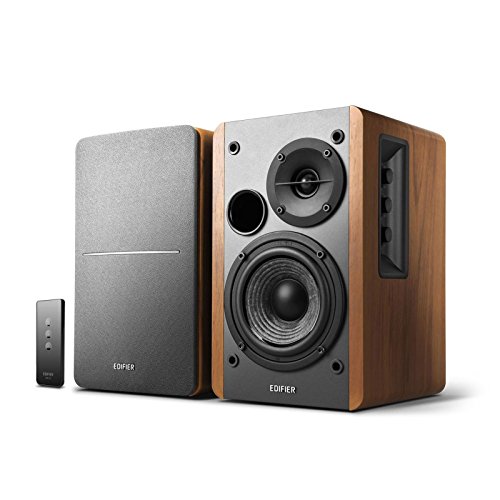
Edifier R1280T is a 2.0 active system with a classic wood enclosure. It provides 42 watts RMS total output, two AUX inputs, and remote-controlled bass and treble adjustments on the side. This setup is best for budget buyers who want simple desktop or small-room listening with easy source switching. A potential limitation is the lack of built-in Bluetooth on this particular model, so wired connections may be preferred for most setups.
Saiyin Bluetooth Bookshelf Speakers

Saiyin’s pair supports Bluetooth 5.3 with multiple wired inputs (optical, coaxial, 3.5mm, and RCA). It is a flexible choice for users who want wireless playback from mobile devices while keeping a direct line to a TV or PC. The model’s remote control enhances convenience, but note that the Bluetooth pairing and line-in behavior require attention to the turntable or source compatibility described in the product note.
Klipsch R-41M Reference Bookshelf Speakers

The Klipsch R-41M uses a 4″ spun-copper IMG woofer and a 1″ aluminum LTS tweeter with a 90×90 Tractrix horn. This combination delivers a dynamic, articulate sound with a wide listening area. Best for listeners who want a more energetic midrange and strong high-frequency extension in a small room. Limitation: larger-than-average cabinet footprint for some desk setups.
Sony CS Speakers SS-CS5M2

Sony CS5M2 offers a 3-way, 3-driver design in a compact form. The combination aims to deliver balanced lows, mids, and highs in smaller spaces. Choose this if you want a traditional multi-driver arrangement in a compact cabinet. Caveat: performance may depend heavily on the paired amplifier’s capability and room acoustics for best results.
Electrohome Huntley Powered Bookshelf Speakers

Electrohome Huntley provides built-in amplification and multiple input options (RCA, AUX, Bluetooth). It’s a versatile, all-in-one solution for turntables, TVs, PCs, and mobile devices. Best for buyers seeking a compact powered option without needing a separate amplifier. Limitation: built-in amp power may be lower than dedicated active systems in large rooms.
Buying Guide
What should you look for in bookshelf speakers?
Power handling and frequency response matter for room size and listening style. Look for speakers with a range that covers at least from 60 Hz to 20 kHz for balanced bass and treble. Consider whether you need Bluetooth or a wired-only setup. The number of inputs and the ease of switching sources can influence daily use.
Passive vs. powered options
Powered (active) speakers have built-in amplifiers and are easier for beginners. Passive speakers require a separate amplifier or receiver but can offer more flexibility as part of a larger stereo system. If you want minimal setup, choose active speakers like Edifier R1280T or Electrohome Huntley.
Room size and placement
Small rooms benefit from compact cabinets and controlled bass. Larger rooms may require speakers with higher sensitivity and more wattage. Position the tweeter at ear level and maintain some distance from walls to reduce bass boost anomalies.
Wired vs. wireless connectivity
Bluetooth offers convenience but can introduce compression in some cases. Optical and coax inputs provide clean digital connections for TVs and PCs. If you plan to connect a turntable, verify that your model supports phono or line-level connection as needed.
Durability and finish
Wood finishes and sturdy enclosures contribute to longevity and aesthetic match with decor. MDF with vinyl finishes is common and provides a balance of weight and resonance control.
What to avoid
Avoid models with limited input options if you plan to grow your system. Also, beware if a speaker heavily relies on a specific amplifier or subwoofer to achieve its best performance; ensure compatibility with your existing gear.
FAQ
- What is the difference between 2.0 and 2.1 bookshelf systems? — 2.0 systems have two speakers (no dedicated subwoofer), while 2.1 includes a sub for deeper bass.
- Do bookshelf speakers need a separate amplifier? — It depends: powered (active) models include built-in amplification; passive models require an external amp or receiver.
- Is Bluetooth essential for bookshelf speakers? — Not essential, but convenient for wireless listening. Wired inputs ensure stable signal and lower latency for TVs or computers.
- Can bookshelf speakers replace floor-standing speakers? — They can in small rooms or on desks, but floor-standing speakers generally provide deeper bass and higher output in larger rooms.
- How should I place bookshelf speakers for best sound? — Place them at ear height, equidistant from your listening position, and with a small toe-in angle toward the listener.
- Should I choose a speaker with a horn-loaded tweeter? — Horn-loaded tweeters can deliver a clearer high end and wider dispersion, which helps imaging in smaller rooms.