Answering the need for easy wireless streaming to wired speakers, a Bluetooth receiver with USB output lets you upgrade legacy sound systems without replacing them. This guide highlights five suitable models for different setups—ideal for home stereo enthusiasts, car audio fans, and computer setups. Each option emphasizes simple plug-and-play use, reliable Bluetooth versions, and compatibility with common USB or 3.5mm inputs.
| Product | Best For | Why It Stands Out |
|---|---|---|
| KAIY Bluetooth 5.4 Receiver for Home Stereo | Modernizing vintage stereo systems | 3-in-1 outputs (Optical, RCA, 3.5mm) with USB drive support; low-latency 5.4 for stable party listening. |
| USB Bluetooth Receiver, H222 (QOFOWIN) | On-the-go streaming in cars and small setups | Simple plug-and-play; small, portable; good for AUX input mode in cars. |
| TP-Link USB Bluetooth Adapter for PC — 5.4 | PC or laptop streaming with wide device support | Bluetooth 5.4 with broader range and faster speeds; strong compatibility with many BT versions. |
| Szyafei USB Bluetooth Adapter | Broad car and home stereo compatibility | Wide compatibility; plug-and-play with 3.5mm AUX; portable for various setups. |
| Esinkin Bluetooth Audio Adapter | Easy wireless music from phones to home speakers | Simple button pairing; works with 3.5mm or RCA; broad speaker compatibility. |
KAIY Bluetooth 5.4 Receiver for Home Stereo

Best for upgrading vintage stereos without losing nostalgia. This model adds Bluetooth 5.4 with 33-foot range for stable wireless playback. It offers three main outputs—Optical, RCA, and 3.5mm—so it can connect to most speakers, amplifiers, or powered setups. Its USB flash drive support lets you play local music directly from a USB drive, which is convenient for devices without Bluetooth pairing. A caution: ensure your wired system supports Optical, RCA, or 3.5mm inputs for full functionality.
USB Bluetooth Receiver, H222 (QOFOWIN)

Best for on-the-go streaming in cars or compact rooms. The H222 is a compact USB Bluetooth receiver with plug-and-play setup and a name that appears as soon as connected. It is suitable for devices with AUX input modes in cars and can be used with home stereo systems that accept USB Bluetooth adapters. Limitation: some older car systems may not support USB Bluetooth input; you might need AUX mode instead. Ideal for quick wireless upgrades without extra software.
TP-Link USB Bluetooth Adapter for PC — Bluetooth 5.4

Best for PC or laptop streaming with broad compatibility. The TP-Link UB500 family brings Bluetooth 5.4 with EDR, delivering faster data transfer and extended range. It supports backward compatibility with Bluetooth 5.3 and earlier versions, making it a good upgrade for mixed device ecosystems. Caution: as a USB dongle, placement can affect signal; keep it unobstructed for best results. Choose this for a desktop audio setup requiring steady, wireless connections.
USB Bluetooth Adapter, Szyafei

Best for broad compatibility across home and car stereos. This adapter supports 3.5mm AUX and USB power, enabling simple upgrade of non-Bluetooth systems. It emphasizes plug-and-play setup and portability for multiple environments. Limitation: the car audio portion may be restricted by some car head units’ USB inputs; use AUX in when needed. Good for quick wireless upgrades without changing existing speakers.
Esinkin Bluetooth Audio Adapter
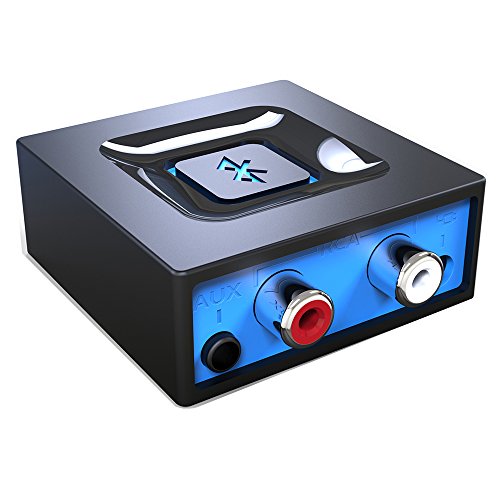
Best for straightforward wireless music to home speakers. The Esinkin adapter connects via 3.5mm or RCA to pair with smartphones or tablets, then streams to the speakers. It’s known for easy setup and automatic reconnect, which is practical for daily listening. Caution: for larger rooms or walls with interference, performance can vary. Useful for quick, reliable wireless listening to existing speakers.
Buying Guide: Key Considerations For Choosing A Bluetooth Receiver With USB Output
What to look for when selecting a Bluetooth receiver for a wired system:
- Connectivity options: Check for Optical, RCA, and 3.5mm outputs to match your setup. Some models also support USB drive playback for local music.
- Bluetooth version and latency: Higher versions (5.3, 5.4) offer longer range and faster pairing. Look for low-latency features if you’re using video or gaming audio.
- Power and placement: USB-powered dongles require a nearby USB port. Consider a powered USB hub or cable length to optimize reception.
- Device compatibility: Ensure compatibility with your primary devices (phones, tablets, PCs) and your speaker system’s inputs.
- Ease of use: A simple pairing button and automatic reconnect can improve daily use, especially in multi-device households.
- Portability vs. fixed setup: Portable models are great for cars or multi-room use; fixed receivers with multiple outputs suit home stereo upgrades.
Buying Tip: How To Choose Between USB Drive Playback and Bluetooth Only
If you want local music playback without Bluetooth, pick a model with USB drive support. If you mainly stream from phones or tablets, prioritize robust Bluetooth range and a stable connection.
Practical Scenarios And Recommendations
- Best for vintage home stereos: KAIY with Optical/RCA/3.5mm and USB drive support.
- Best for cars and AUX-based setups: QOFOWIN H222 for quick plug-and-play in cars.
- Best for PC or laptop streaming: TP-Link USB Bluetooth Adapter with 5.4 and broad compatibility.
- Best for broad compatibility across devices: Szyafei adapter for home and car stereo use.
- Best for simple home listening: Esinkin adapter with easy pairing and two input options.
FAQ
- Do these adapters work with all speakers? Most work with 3.5mm, RCA, or Optical inputs; verify your speaker’s available ports.
- Is Bluetooth 5.x better for music? Yes, it typically offers higher speed, range, and stability compared to older versions.
- Can I use USB drive playback and Bluetooth at the same time? Some models support USB drive playback independently of Bluetooth streaming.
- Will these reduce audio latency? Some receivers offer low-latency features, but performance varies by device and codec compatibility.
- Do I need software or apps to set them up? Most listed options are plug-and-play and do not require additional apps.
- Are there any caveats for car use? In some cars, USB Bluetooth inputs may not be supported; aux inputs are a common fallback.