Keep rooms comfortable with a range of window and portable cooling options. This guide highlights five top picks, spanning budget-friendly window units to advanced inverter models, plus a compact portable option for spaces without a window. Each product includes key features to help you compare performance, energy use, and ease of installation.
| Product | Brand | Key Feature | Amazon Link |
|---|---|---|---|
| MYICY Evaporative Air Cooler | MYICY | 35″ height; 3 speeds; water tank; remote | View Product |
| ROVSUN 8000 BTU Window AC | ROVSUN | 4-in-1: AC, heater, dehumidifier, fan | View Product |
| LG 18,000 BTU Window AC With Heat | LG | 2 speeds; remote; 24-hour timer | View Product |
| GE Window AC 5,000 BTU | GE | Simple install; compact room cooling | View Product |
| Midea 12,000 BTU U Smart Inverter | Midea | Ultra quiet; energy savings; app control | View Product |
Note: The selections cover a range of cooling needs—from small rooms to larger living areas, and from traditional window units to portable options for flexible setups.
MYICY 35-Inch Windowless Evaporative Cooler
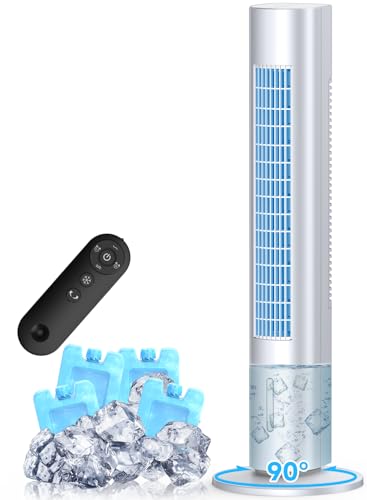
Product highlights emphasize a 1S chill response thanks to a 2026 upgraded motor designed to reduce friction and energy use while increasing cooling coverage by up to 70%. The unit provides two modes and three speeds (low, medium, high) to tailor cooling to work, rest, or sleep scenarios. Its 35-inch ergonomic height makes panel adjustments accessible without bending, and the built-in back handle supports portability between rooms.
Reference features indicate a focus on efficiency and ease of use: fast cooling, adjustable speeds, and a height designed for user comfort. This is best for spaces where a traditional window unit isn’t feasible or where portable flexibility is a priority.
ROVSUN 8000 BTU Window Unit With 4-in-1 Function

This 4-in-1 window unit combines cooling, heating, dehumidification, and fan modes, making it suitable for year-round use in rooms up to about 350 square feet. Operating controls include an LED digital display and a remote for convenience. Install ease is noted with included side panels and mounting parts, though window size should be confirmed before purchase to ensure proper fit and performance.
The unit stands out for versatility across seasons, rapid temperature adjustments, and simple maintenance. Buyers should consider room size, climate needs, and whether heating capability is desirable alongside cooling capability.
LG 18,000 BTU Window AC With Supplemental Heat
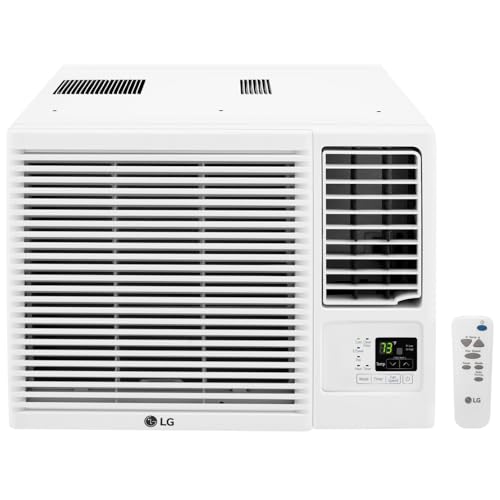
Designed for larger spaces, this LG model cools and heats, with a remote control, 24-hour timer, and multiple modes to customize climate control. A supplemental heat option is included for cooler days, and the unit supports two fan speeds for personalized comfort. The installation and operation are aided by a digital control panel and remote, plus 4-way air deflection for flexible airflow.
Consider this model when cooling living rooms or open-plan areas that require both strong cooling capacity and occasional heating. It is important to ensure electrical compatibility (230/208V) and proper window sizing for optimal performance.
GE 5,000 BTU Window AC For Small Rooms

GE’s compact 5000 BTU window unit is built for small rooms up to about 150 square feet. It includes a straightforward install kit and a mechanical control interface for quick cooling setup. Low-noise operation enhances comfort at night, making it a practical option for bedrooms or home offices that require reliable, quiet performance during sleep hours.
When selecting this model, assess room size, expected usage hours, and whether a simple, mechanical control approach aligns with your preferences for ease of use and dependable cooling without smart features.
Midea 12,000 BTU U Smart Inverter Window AC

The Midea U Smart Inverter model emphasizes ultra-quiet operation and energy savings, aided by a U-shaped window design that minimizes outside noise intrusion. It offers smart control through a mobile app and supports voice commands via Alexa or Google Assistant. With energy savings exceeding 35% and ENERGY STAR certification, this unit balances comfort with efficiency. It remains compatible with smart home ecosystems, which can streamline scheduling and climate control across multiple rooms.
Considerations for this model include the need for a compatible window setup and a home environment where smart control and energy efficiency provide ongoing value. It is well-suited for users who want quiet operation and modern, app-based management.
Buying Guide: Key Purchase Considerations
- Room size and cooling load: Match BTU ratings to room square footage. Smaller spaces may only require 5,000 BTU units, while larger rooms benefit from 12,000–18,000 BTU models.
- Installation and window fit: Traditional window units require compatible window framing; portable or windowless options need alternative mounting setups and water management considerations.
- Energy efficiency: inverter-based models and ENERGY STAR certified units typically deliver lower operating costs over time, especially in hot climates.
- Noise levels: For bedrooms and study spaces, prioritize units with low decibel ratings (generally 50 dB or lower in low mode).
- Heating capability: If you want year-round use, consider units offering supplemental heat or 4-in-1 functionality (cooling, heating, dehumidifying, fan).
- Smart features: Apps, voice control, and remote programming can improve convenience but may come with a higher upfront cost—evaluate whether smart control fits your routine.
- Maintenance: Look for washable or easily replaceable filters, and check for easy maintenance on remote control, timer, and mode selection.
- Budget and space constraints: Portable options reduce permanent installation but may require extra floor space; window units save space but limit window availability.
These considerations help optimize choice across different user needs—whether prioritizing energy savings, quiet operation, or smart integration. Always confirm window dimensions and electrical requirements before purchasing a window-based cooling unit.