Start your home recording journey with condenser mics that combine easy setup, solid sound, and reliable performance. This guide focuses on beginner-friendly options that work well for podcasting, YouTube, streaming, and voiceovers. Each pick offers plug-and-play simplicity, strong sound capture, and features that help you grow your skill without a steep learning curve.
Summary of chosen products:
| Product | Brand | Notes |
|---|---|---|
| MAONO XLR/USB Condenser Microphone A04 Gen2 | MAONO | Dual XLR/USB, professional chipset, software control |
| MAONO USB Microphone AU-A04 (Pink) | MAONO | USB 192kHz/24Bit, plug-and-play, anti-interference USB cable |
| TONOR TC-777 Podcast Microphone | TONOR | Cardioid, USB plug-and-play, adjustable stand |
| MAONO XLR Condenser Microphone PM320S | MAONO | 48V phantom power, cardioid pattern, low noise |
| FIFINE T669 Studio Condenser USB Microphone | FIFINE | USB kit with boom arm, pop filter, and accessories |
For context, these options cover both USB-only and USB/XLR configurations, offering straightforward setup for beginners while still delivering professional-sounding results for creating content at home. Below you’ll find detailed sections for each product, followed by a practical buying guide to help you compare features and determine what matters most for your recording needs.
MAONO XLR/USB Condenser Microphone A04 Gen2

The MAONO A04 Gen2 combines XLR and USB connectivity, offering versatile use from home studios to mobile recording. It features a professional sound chipset and supports a high-resolution sampling rate of 192kHz/24bit, delivering a smooth frequency range of 30Hz-16kHz. In USB mode, MAONO’s software controls let you tweak gain, enable noise reduction, and apply scene presets, compressors, and limiters for a polished vocal tone. When using XLR, ensure phantom power is available. This mic suits podcasters, streamers, and content creators who want a single mic that adapts to multiple workflows. The build is sturdy and the cardioid capsule helps minimize pickup of surrounding noise.
Key features include dual connectivity, studio-grade sound hardware, and software-based sound shaping. If you’re starting a podcast, creating YouTube voiceovers, or streaming, the A04 Gen2 provides flexibility without sacrificing reliability.
MAONO USB Microphone AU-A04 (Pink)

This USB microphone is designed for plug-and-play simplicity with a 192kHz/24bit sampling rate and a smooth 30Hz-16kHz response. The 16mm condenser capsule provides a robust vocal presence with a strong bass response, while the magnet ring on the USB cable helps reduce interference for cleaner sound. It’s ideal for podcasts, live streams, video calls, gaming commentary, and basic music recording. The USB 2.0 interface requires no driver software, and its dual-shielded cable adds extra protection against signal noise. It’s a straightforward option for beginners who want reliable, studio-quality sound without extra hardware.
Consider this mic if you value ease of use, minimal setup, and clear voice reproduction for online content and communications. The Pink variant adds a stylistic choice without impacting performance.
TONOR TC-777 Podcast Microphone

The TONOR TC-777 is a cardioid USB microphone designed for straightforward desktop use. Its USB 2.0 interface enables immediate plug-and-play operation with Windows, Mac, PS4/5, and common conferencing software like Zoom, Skype, and Discord. The cardioid pattern helps reduce background noise from the sides and rear, which is useful in busy home environments. The kit typically includes a stand and pop filter, and the microphone angle is adjustable to tailor the capture to your speaking position. It’s well-suited for podcasters, gamers, and streamers who want an affordable, reliable setup without extra gear.
Key benefits include ease of use, broad compatibility, and capable noise handling for a clean voice in casual home studios. It’s a strong entry point for beginners who prioritize simplicity and value.
MAONO XLR Condenser Microphone PM320S

The PM320S is an XLR condenser microphone that requires 48V phantom power, typically from a dedicated audio interface or mixer. It uses a large 16mm diaphragm and a cardioid polar pattern for focused vocal pickup and reduced ambient noise. The microphone is designed for versatility in podcasts, streaming, singing, and voice-overs. A typical package includes a robust XLR cable and a basic shock mount. The PM320S is a solid choice for users who want to step into professional-grade recording while maintaining a simple workflow with an audio interface.
Consider this mic if you plan to move beyond USB to an external interface or mixer, and you want a cardioid capture with a robust build and lower self-noise for spoken word and vocal work.
FIFINE T669 Studio Condenser USB Microphone
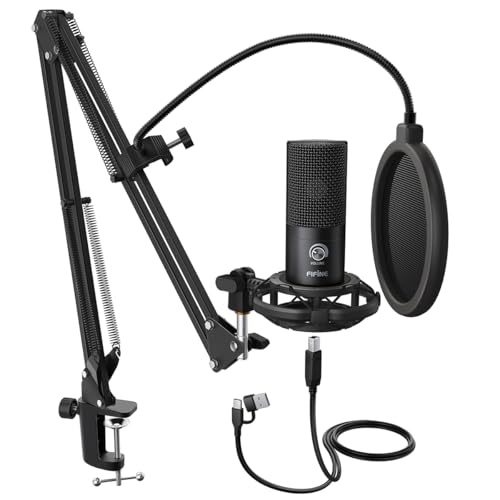
The FIFINE T669 is a USB condenser microphone kit that emphasizes plug-and-play setup with an included adjustable boom arm, shock mount, pop filter, and a USB-C interface in some variants. This package offers a compact, all-in-one solution for streaming, podcasting, YouTube, and gaming. Its cardioid pickup helps isolate the voice from room noise, while the kit components make it easy to place the mic exactly where you need it. The T669 targets beginners who want a complete desktop setup with minimal extra purchases while still delivering good voice clarity and sound balance for everyday content creation.
Important considerations include the balance of mic quality, included accessories, and the role of the built-in features (like a pop filter) in improving vocal performance and reducing drafts or sibilance during recording.
Buying Guide: Key Purchase Considerations
- Connection Type: USB mics are simplest for beginners and work with nearly any computer, while XLR mics require an audio interface or mixer but offer greater future flexibility and sound quality.
- Polar Pattern: Cardioid mics focus on the voice and minimize side noise; consider multiple patterns only if you need group recordings or a more forgiving ambient environment.
- PHANTOM Power: If you choose an XLR mic, check whether your interface or mixer provides 48V phantom power, which is required by many condenser capsules.
- Software and Controls: Some mics include companion software for gain, noise reduction, and EQ presets. Evaluate whether software benefits align with your workflow needs.
- Included Accessories: A kit with a pop filter, shock mount, and boom arm can save time and money, especially for beginners building a desk setup.
- Frequency Response and Noise Handling: Look for a mic with a clear front-end frequency range and low self-noise to capture natural vocals without harshness or hiss.
- Build Quality and Durability: A sturdy metal chassis and reliable connectors help ensure long-term use in home studios or portable setups.
- Future Upgrades: If you anticipate upgrading to higher-end interfaces or multi-mic configurations, consider whether the microphone will scale with your system.
Bottom-line guidance: for someone starting a home recording path, USB mics like the AU-A04 or T669 provide quick wins with minimal setup. If you plan to grow into a more polished studio, an XLR option like PM320S paired with an interface offers superior control and expandability. Evaluate your environment, your content goals, and your willingness to manage additional gear when choosing your first condenser microphone.