Looking for reliable power for outdoor devices like solar lights, garden decor, and remotes? This guide highlights the best battery choices for outdoor use, focusing on long-lasting performance, capacity, and compatibility. We feature five well-suited options and explain which buyers they best serve. Whether you need high capacity for continuous lighting, or durable lithium performance for extreme temperatures, these picks help you choose with confidence.
Suitability snapshot: the top picks below are ideal for outdoor solar lights, landscape lighting, and other weather-exposed devices. The table shows the core strengths of each product to help you compare at a glance.
| Product | Best For | Key Benefit |
|---|---|---|
| Lightalent Ni-MH AA 600mAh | Compact outdoor devices | Pre-charged for 30% power, decent capacity |
| EBL Solar AA 1300mAh | Longer run-time for garden lights | High capacity,Low-Self Discharge |
| Energizer Ultimate Lithium AA | Extreme temperatures and reliability | Longest-lasting lithium option |
| Kruta 1600mAh AA | Very long nightly lighting needs | High capacity, rechargeable many times |
| Philips 36-Pack AA Alkaline | Backup power and widespread devices | Long shelf life and reliability in storage |
Lightalent Ni-MH AA 600mAh – Great For Small Outdoor Lights
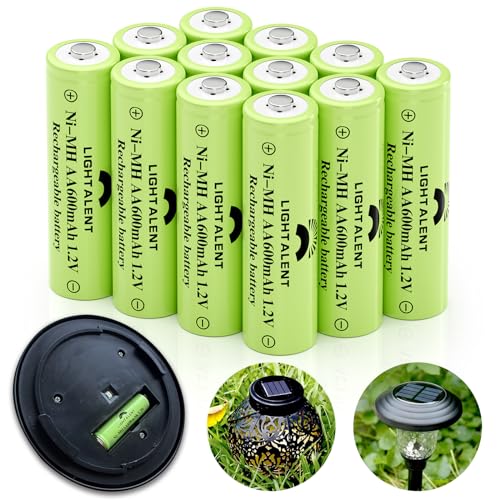
Best for compact outdoor devices. Lightalent’s 1.2-volt AA Ni-MH rechargeable batteries deliver 600mAh per cell and come in a 12-pack. They are pre-charged to 30% for transport safety and require charging before extended use. This makes them a practical option for solar pathway lights, small climate-controlled fixtures, and decorative outdoor lamps that don’t demand ultra-high capacity.
Why chosen: reliability in moderate outdoor conditions and straightforward charging through standard solar lights or wall chargers. The 12-pack provides ample replacements for seasonal setups.
Who it’s for: homeowners seeking a balanced, economical kit for modest outdoor lighting and devices. Consider these if you don’t need ultra-high capacity but want steady, predictable operation.
Caution: ensure you charge fully before first use to maximize run-time and performance in cool weather. These are safer for daily cycle use rather than heavy-load all-night operation.
EBL Solar AA Battery Rechargeable 1300mAh

Best for longer run-time in outdoor solar lights. EBL offers a 1.2V AA NiMH battery with a high capacity of 1300mAh, designed to fit outdoor garden lights and other solar-powered devices. The higher capacity helps extend service times after full charge and reduces the frequency of replacements in illuminated landscapes.
Why chosen: high capacity paired with wide device compatibility, including garden lights and remote sensors. A practical choice when you want fewer battery swaps during peak lighting seasons.
Who it’s for: gardeners and homeowners who value longer daily performance and fewer interruptions with outdoor lighting. Limitations: even at higher capacity, performance can vary with extreme cold unless devices have temperature compensation.
Energizer Ultimate Lithium AA – 2 Pack

Best for extreme temperature performance and high reliability. Energizer Ultimate Lithium AA batteries are designed for the longest-lasting power in demanding outdoor conditions, performing across wide temperature ranges. They are non-rechargeable lithium cells, so consider them when you need dependable, long-life power for remote sensors or weather-exposed equipment that isn’t frequently serviced.
Why chosen: top-tier endurance in temperatures from -40°F to 140°F, ensuring consistent operation in all seasons. They are a solid option for devices that require stability without frequent replacement.
Who it’s for: users who operate in harsh climates or need dependable power for extended outdoor deployments. Caution: these are disposable, so long-term cost and environmental impact differ from rechargeable options.
PHILIPS AA Batteries 36 Pack – Ultra Alkaline
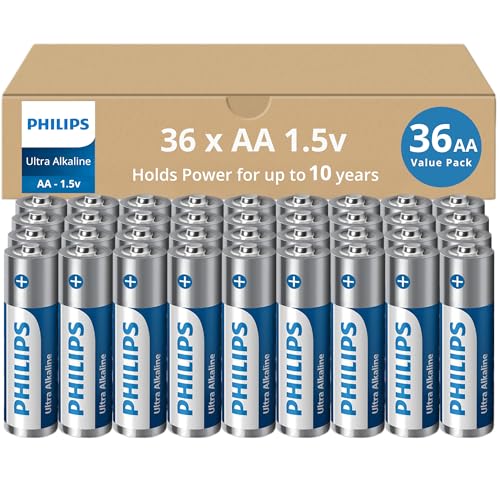
Best for backup power and storage reliability. Philips’ 36-pack of AA alkaline batteries offers a long shelf life and solid performance for indoor and outdoor devices that don’t demand rechargeable power. The pack emphasizes readiness with up to a 10-year storage life, making it suitable for emergency kits and seasonal devices that aren’t used daily.
Why chosen: strong shelf life and leak-resistant design, ensuring reliable standby power when needed. Ideal for devices that aren’t used continuously but must be ready at a moment’s notice.
Who it’s for: buyers seeking a dependable bulk option for seasonal lighting, remotes, and other devices that benefit from long-term storage. Caution: not reusable; requires disposal after use and recycling per local guidelines.
Kruta Solar Lights AAA 1100mAh – 8 Pack

Best for high-capacity AAA needs in garden lights and small devices. Kruta’s 8-pack AAA batteries offer 1100mAh capacity in a compact 1.2V NiMH format, suitable for solar-powered string lights, landscape lighting, and small remotes. They also can replace lower-capacity cells in existing devices.
Why chosen: high capacity in AAA size translates to longer operation between charges for compact fixtures. Choose this if your outdoor setups rely on AAA power and you want dependable longevity.
Caution: ensure device compatibility with AAA NiMH and avoid overcharging with incompatible chargers. These are best used where devices support standard AA/AAA NiMH charging or direct solar charging.
Henreepow Ni-MH AA 600mAh – 12 Pack

Best for balanced outdoor performance with reliable safety. Henreepow’s 12-pack offers 1.2V Ni-MH AA cells at 600mAh. They are pre-charged to 30% for safe transport and can be charged via solar lights or standard chargers. This makes them a practical option for a wide range of outdoor lighting projects and devices.
Why chosen: similar capacity to Lightalent with clear packaging and convenient charging options. These are a solid substitute when you want a dependable mid-range option for outdoor lighting arrays.
Who it’s for: buyers who want a dependable, mid-capacity AA option for garden lights and pathways. Caution: capacity is mid-range; devices with high power needs may benefit from higher-capacity cells.
Buying Guide: Key Considerations For Outdoor Battery Selection
- Capacity vs. run-time: Higher mAh generally means longer operation between charges. For long-night lighting, prioritize 1100mAh and above for AA, or 900mAh+ for AAA where size constraints apply.
- Rechargeability type: Ni-MH cells are common for solar lights and household devices. Lithium AA options excel in extreme temperatures and high-drain applications but are usually non-rechargeable for common consumer use.
- Self-discharge rate: Low-self-discharge (LSD) Ni-MMH cells retain more capacity after storage. This matters for devices used seasonally or intermittently.
- Temperature tolerance: Outdoor use benefits from cells designed to maintain performance in cold or hot climates. Lithium options often perform better in extreme temps.
- Device compatibility: Confirm the device’s accepted battery type and size (AA vs AAA) and whether it supports Ni-MH rechargeables or needs alkaline or lithium disposables.
- Cost and lifecycle: Rechargeables reduce long-term cost, especially in devices used frequently. Consider total cycles and replacement frequency for the best value.
- Safety and handling: Pre-charged packs should be charged before first use. Follow manufacturer guidance for charging and disposal to ensure safety.
Frequently Asked Questions
- What battery type is best for outdoor solar lights? Ni-MH rechargeable AA batteries are a common, practical choice due to reusability and decent capacity, while lithium batteries offer extreme-temperature reliability for special cases.
- Should I choose high-capacity batteries for all outdoor devices? Not always. For low-drain devices or short runs, mid-range Ni-MH cells can be sufficient and more cost-effective.
- Are rechargeable batteries safe for outdoor use? Yes, when used as directed. Choose LSD Ni-MH or high-quality Li-ion options and avoid exposure to extreme conditions beyond their rated specs without protection.
- Do alkaline batteries work for outdoor lights? Alkaline batteries are suitable for intermittent use and non-rechargeable needs, but they require more frequent replacement and produce more waste compared to rechargeables.
- Can I mix brands in a solar lighting kit? It’s best to use matched chemistry and similar capacity cells in a single device to ensure even discharge and performance.
- How should I store extra batteries? Store in a cool, dry place away from direct sunlight. For Ni-MH LSD cells, avoid fully charging and discharging repeatedly before long-term storage.