Choosing the right bass guitar cable can influence your sustain, clarity, and overall stage reliability. This guide reviews five top picks designed for bass players and multi-instrument setups, focusing on durability, shielding, and signal fidelity. Each option highlights connectors, build quality, and compatibility to help you select the best cable for practice, rehearsals, and live gigs.
Overview Of Selected Cables
- Name: Pro Bass Guitar Cable 10 ft
- Brand: AA AUDIO ACCESSORY
- Length: 10 ft
- Connectors: 1/4″ straight to right-angle
- Key features: Gold-plated Neutrik Rean connectors, 18 AWG OFC, Kevlar reinforcement
- Ideal for: Fender, Marshall, other bass amps and combos
The following table summarizes the five chosen cables, helping you compare key aspects at a glance.
| Product | Length | Connectors | Shielding / Conductor | Notable Reinforcement |
|---|---|---|---|---|
| AA AUDIO ACCESSORY Pro Bass Guitar Cable 10 ft | 10 ft | Gold-plated Neutrik Rean 1/4″ (mono) | 18 AWG OFC | Kevlar reinforcement |
| New Bee Guitar Cable 10 ft | 10 ft | Right angle to straight | 22 AWG center conductors, double shield | Low noise high fidelity design |
| Fender Professional Series Instrument Cable 10 ft | 10 ft | Straight to right angle / straight | 8 mm PVC jacket, 95% oxygen-free shield | Durable construction to reduce handling noise |
| New Bee Guitar Cable 6 ft | 6 ft | Right angle to straight | 22 AWG center conductors, double shield | Low noise high fidelity |
| Fender Professional Series Instrument Cable 10 ft | 10 ft | Straight / angle | 8 mm jacket, flexible shielding | Designed to prevent twisting and kinking |
AA AUDIO ACCESSORY Pro Bass Guitar Cable 10 ft

The Pro Bass Guitar Cable from AA AUDIO ACCESSORY uses gold-plated Neutrik Rean connectors for wide compatibility with bass amps and pedals, and an 18 AWG OFC conductor for clean, low-resistance signal transfer. Kevlar reinforcement adds durability for heavy stage use. The construction emphasizes low capacitance and reduced noise, making it suitable for high-fidelity bass tones in live and studio settings.
New Bee Guitar Cable 10 ft

This 10-foot New Bee cable features 22 AWG oxygen-free copper conductors and double shielding for noise rejection, delivering a quiet signal chain ideal for live performances and studio work. It offers both straight and right-angle metal connectors to ensure a secure connection at guitar jacks, pedals, or amps. The design supports wide compatibility with mixers, effect units, and other audio gear.
Fender Professional Series Instrument Cable 10 ft
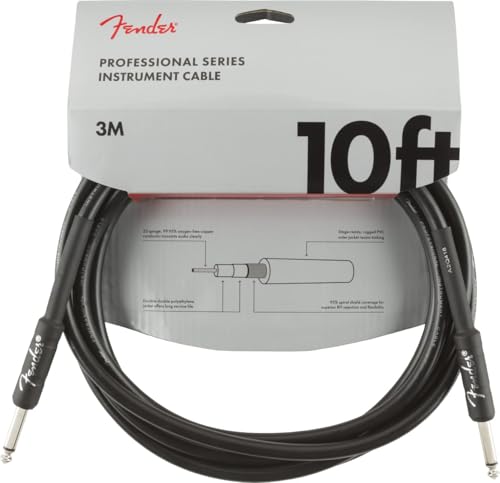
Fender’s Professional Series brings stage-ready reliability with an 8 mm PVC jacket and 95% oxygen-free spiral shielding to minimize handling noise and interference. The 22-gauge conductor supports strong signal transmission, while nickel-plated connectors provide solid durability for frequent plugging and unplugging. Designed to reduce twisting and memory, this cable helps maintain consistent tone across performances.
New Bee Guitar Cable 6 ft

The 6-foot New Bee cable offers the same low-noise, high-fidelity design as its longer sibling, with a right-angle to straight connector configuration. It is compact enough for tight stage setups or studio desks, while maintaining robust shielding to preserve tone and reduce interference across your signal chain.
New Bee Guitar Cable 20 ft
Longer runs require careful shielding and a sturdy build to maintain signal integrity. The 20-foot New Bee cable features 22 AWG conductors with double shielding and a combination of straight and right-angle connectors. It is suitable for larger stages where length is essential, while still aiming to minimize noise and interference for bass tones.
Buying Guide: Key Considerations For Bass Cable Purchases
- Length: Choose length that matches your setup without excess slack. Shorter cables reduce signal loss and noise pickup; longer runs require better shielding and conductor quality.
- Connectors: Decide between straight, right-angle, or a combination. Right-angle plugs save space on crowded pedalboards and amp inputs; straight plugs provide versatility for different rigs.
- Conductor Material: Oxygen-free copper (OFC) offers low resistance and good conductivity. 18–22 AWG is common; thicker gauges can reduce resistance but may be less flexible.
- Shielding: Double shielding (braid plus foil) minimizes hum and RF interference. Higher shielding is especially important on longer runs or venues with poor grounding.
- Durability: Kevlar reinforcement or reinforced jackets improve lifespan in live environments. Look for nickel- or gold-plated connectors for corrosion resistance and stable contact.
- Flexibility And Handling Noise: Cables designed to resist twisting and have low capacitance help reduce handling noise and preserve high-end clarity.
- Compatibility: Ensure compatibility with your bass, amp, and effects chain. Some cables advertise universal compatibility but confirm the impedance and connector type match your gear.
- Budget And Brand Reputation: Reputable brands often offer better durability and warranty. For bass players, investing in a cable with robust shielding and connectors typically pays off in reliability.
Additional Recommendations For Bass Players
When playing aggressively or with high-gain amps, consider cables featuring Kevlar reinforcement and high-quality shielding to protect the signal from microphonic noise. If you frequently switch rigs or play on varied stages, a balanced mix of 10 ft and 20 ft cables can cover most scenarios. Regularly inspect connectors for wear and clean the contacts to maintain optimal tone.
All five cables above emphasize noise reduction, durable construction, and practical connector designs, making them solid choices for bass players seeking dependable signal integrity on stage and in the studio.