Looking for a complete audio speaker system that delivers rich bass, clear dialogue, and immersive surround sound? This guide highlights five solid options that cover TV, PC gaming, and home theater setups. Each pick is best for specific needs—whether you want deep bass, space-saving bars, or a traditional multi-speaker arrangement. Use the buying guide and FAQ to compare features, installation, and use cases before you buy.
| Product | Best For | Main Benefit | Notes |
|---|---|---|---|
| Saiyin Sound Bars for TV with Subwoofer | Compact TV setups | Deep bass from dedicated subwoofer | Wall-mountable; LED indicators for modes |
| Hiwill-Audio Wooden 5.1.2 System | Everyday cinematic sound | Solid wood cabinet with multiple drivers | No Dolby Atmos; spatial expansion tech |
| ULTIMEA 5.1.2ch Skywave F40 | Dolby Atmos loving home theaters | Up-firing drivers and 360° SurroundX | Not compatible with DTS |
| Saiyin 5.0 Home Theater System | Traditional stereo surround | Four speakers plus center for clear dialogue | Passive system; needs amplifier |
| LG S40TR 4.1 Channel Bar System | Compact rooms with rear wireless speakers | Wireless subwoofer and rear speakers | Dolby/DTS compatible |
Saiyin Sound Bars for TV with Subwoofer
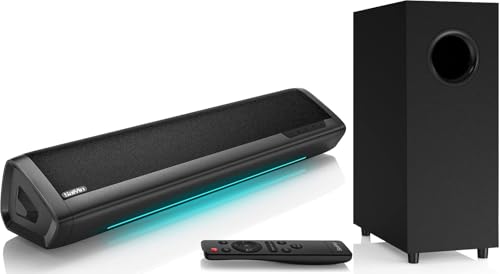
The Saiyin 2.1 sound bar system centers a dedicated subwoofer for deep bass, creating a punchy low end that enhances music, movies, and gaming. The large subwoofer cavity and the bar work in tandem to produce immersive waves of sound throughout the room. This setup is best for small to medium living spaces where a single, wall-mountable bar can be easily installed.
Who it’s best for: buyers seeking enhanced bass without a full multi-speaker footprint. Why selected: strong bass, compact form, and simple connectivity (Bluetooth, AUX, Optical).
Limitations: remote is not compatible with universal or TV remotes; ensure the room size suits 17-inch bar dimensions for optimal audio coverage.
Hiwill-Audio Wooden 5.1.2 Surround System

This 5.1.2 system emphasizes premium materials with solid wood cabinets and 11 drivers, delivering expansive, cinematic sound. It uses discrete spatial expansion to widen the soundstage and create a more immersive experience for everyday viewing and music listening. Dolby Atmos/DTS are not supported, but the setup aims to offer rich, directional sound through a robust driver array.
Who it’s best for: home theater lovers who want a premium, wood-cabinet speaker system with multiple drivers. Why selected: real materials and a large driver count provide a distinctive sonic footprint.
Limitations: does not support Dolby Atmos or DTS; placement of rear speakers affects the surround field.
ULTIMEA 5.1.2ch Skywave F40

ULTIMEA’s Skywave F40 offers a full 5.1.2 channel arrangement with up-firing Atmos-enabled drivers and 360° SurroundX. The system positions audio around and above you for an enveloping experience that can feel cinematic without a dedicated theater space. Note that DTS is not supported, but the system emphasizes a precise, tall soundstage and intelligent spatial algorithms.
Who it’s best for: those who want a true 3D soundstage and atmospheric effects in a home theater. Why selected: advanced up-firing and SurroundX technology.
Limitations: not compatible with DTS content; ensure compatible audio sources support Atmos-like processing for best results.
Saiyin 5.0 Home Theater System

This passive speaker setup includes four bookshelf speakers and a center channel, delivering a traditional surround experience with strong dialogue clarity. It is ideal for users who prefer an amplifier-driven system and want flexibility in speaker placement. The center channel enhances on-screen dialogue for movies and TV shows, helping conversations stay crisp even during action scenes.
Who it’s best for: home theater builders who want a customizable surround arrangement. Why selected: balanced four-speaker setup plus a dedicated center channel for clearer dialogue.
Limitations: requires an external amplifier; integration complexity is higher than active all-in-one systems.
LG S40TR 4.1 Channel Bar System

The LG S40TR combines a 4.1 channel setup with wireless rear speakers and a wireless subwoofer. This system is designed for rooms where space is a priority yet users desire immersive surround sound with a simple setup. Dolby Audio compatibility enhances overall clarity, making it suitable for movies, music, and gaming.
Who it’s best for: consumers seeking a compact, wireless surround system without a cluttered wiring footprint. Why selected: wireless sub and rear channels simplify placement and setup.
Limitations: wireless components may require compatible power outlets and may introduce slight latency if not paired correctly with a TV or source device.
Buying Guide: Choosing Your Audio Speaker System
What should you consider when selecting an audio speaker system?
- Room size and layout: Smaller rooms benefit from compact sound bars or 2.1 setups, while larger rooms can justify 5.1 or 7.1 configurations.
- Speaker type: Sound bars save space; 5.1.2 or 4.1 configurations provide richer surrounds; passive systems require an external amplifier.
- Dolby Atmos and SurroundX: Atmos-enabled systems create height channels; SurroundX focuses on a wide horizontal spread. Not all content supports Atmos or SurroundX.
- Storage and placement: Wall-mount capability, floor space, and cable management affect installation quality and aesthetics.
- Connectivity: Look for Bluetooth, Optical, HDMI eARC, AUX, and compatibility with existing TVs or gaming consoles.
- Budget vs. features: Premium materials and more drivers add cost; assess which features you truly need for your use case.
FAQ
- What is the difference between a sound bar and a traditional surround system? A sound bar combines multiple drivers in a single unit for space efficiency, while a traditional surround system uses several separate speakers to create a wider soundstage.
- Is Dolby Atmos worth it for a home theater setup? Atmos adds height channels and overhead effects; its benefit depends on the content and room acoustics.
- Do I need an amplifier with a passive speaker system? Yes. Passive systems require an external amplifier or AV receiver to power the speakers.
- What’s better for movies: a 2.1 bar or a 5.1.2 system? A 5.1.2 system provides more immersive surround but requires more space and setup complexity; a 2.1 bar is simpler and still enhances bass and dialogue.
- Can wireless subwoofers and rear speakers cause latency? Some wireless setups can introduce minimal latency; it’s best to ensure compatibility with your TV or receiver and follow pairing instructions.
- How important are driver materials? Real materials (wood cabinets, metal drivers) can improve rigidity and acoustic performance compared to plastic cabinets.