Choosing the right audio interface is essential for clean microphone recordings, whether you’re podcasting, streaming, or tracking vocals. The following five interfaces are selected for versatility, preamp quality, and value, helping you capture studio-grade sound from your home setup. Each option supports common microphone types and delivers low latency monitoring and solid dynamic range for clear, professional results.
| Product | Brand | Inputs | Key Benefit |
|---|---|---|---|
| Focusrite Scarlett Solo 3rd Gen | Focusrite | 1 XLR, 1 Instrument | Air mode for brighter recordings |
| Focusrite Scarlett Solo 4th Gen | Focusrite | 1 XLR, 1 Instrument | Improved dynamic range and Air mode |
| M-Audio M-Track Solo | M-Audio | 1 XLR, 1 Line/Instrument | Compact all-in-one package |
| M-Audio M-Track Duo | M-Audio | 2 XLR/Line/Instrument | Dual inputs for stereo or two-mic setups |
| Behringer UMC202HD | Behringer | 2 XLR/Line | Midas mic preamps and zero-latency monitoring |
Focusrite Scarlett Solo 3rd Gen

The Scarlett Solo 3rd Gen delivers professional-grade mic preamps and a switchable Air mode that adds clarity to vocal and acoustic instrument recordings. Its high-headroom instrument input lets guitar or bass shine through, while Gain Halos help prevent clipping during vocal takes. With high-performance converters supporting up to 24-bit/192kHz, this interface preserves sonic detail from mic capture through playback, making it a strong choice for podcasters, vocalists, and producers seeking studio-like results in a compact setup.
Focusrite Scarlett Solo 4th Gen

The 4th Gen iteration emphasizes the same studio-grade heart of Scarlett interfaces—wide dynamic range and premium converters—plus an enhanced Air mode for a more present vocal or guitar tone. This model is designed for solo performers who want a simple, reliable path to polished recordings, with sufficient gain for most dynamic and condenser mics. It pairs well with software suites and offers straightforward compatibility for Windows and macOS systems.
M-Audio M-Track Solo
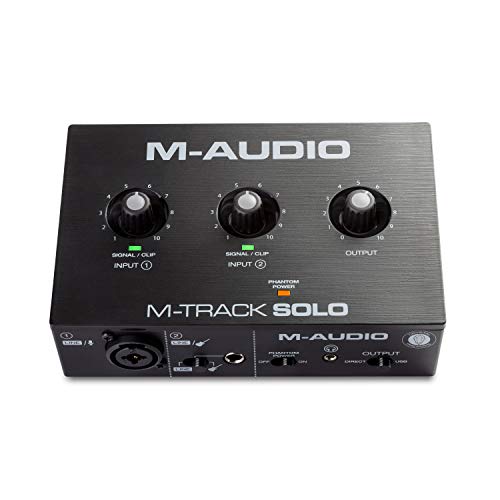
This compact interface is aimed at newcomers and hobbyists who want quick setup without sacrificing audio quality. It supplies a single XLR input with phantom power, plus a line/instrument input for guitars or keyboards. It supports 48 kHz recording, zero-latency monitoring, and a straightforward USB connection, making it ideal for podcasting, streaming, and home recording workflows where space is at a premium.
M-Audio M-Track Duo

Designed for multi-mic setups or dual-voice recordings, the M-Track Duo features two combo inputs (XLR/Line/Instrument) with phantom power and 48 kHz/24-bit recording. It includes a software suite and provides flexible monitoring options via 1/4″ outputs and a dedicated headphone jack. This model suits small bands, two-person podcasts, or dual-mocal recording tasks that require simultaneous inputs.
Behringer UMC202HD

The UMC202HD brings Midas-inspired mic preamps into an affordable 2-in, 2-out USB interface with zero-latency monitoring. Its sturdy build and clear converters support crisp vocal and instrument recordings, while the compact design fits easily into small desks or creative corners. This option appeals to budget-conscious users who still want professional-grade preamps and reliable performance for everyday recording needs.
Buying Guide: key purchase considerations
- Input count and type: Consider how many mics or instruments you plan to record simultaneously. If you only need one mic, a Solo model may suffice; for two people or tracking multiple sources, a Duo or 2-input Behringer/M-Audio option offers more flexibility.
- Preamp quality and headroom: Look for interfaces with transparent mic preamps and adequate gain without noise or distortion. Air or similar enhancements can add presence for vocals and acoustic guitars.
- Dynamic range and sample rate: A higher dynamic range and support for up to 24-bit/192kHz ensure fidelity during capture and mixing, especially for broadcast-grade voice work or subtle performances.
- Monitoring and latency: Zero-latency or direct monitoring helps during live sessions or streaming. Check whether direct monitoring levels are adjustable and intuitive.
- Software ecosystem: Some interfaces ship with bundled software that can accelerate workflow (DAWs, plugins, or control software). This can add value beyond the physical unit.
- Compatibility and drivers: Ensure compatibility with your computer’s operating system and DAW. Some devices offer universal driver support or plug-and-play simplicity.
- Portability and build: For mobile recording or desk setups, consider size, weight, and durability. All listed options balance portability with performance.
- Expansion potential: If you anticipate upgrading mics or adding instruments, choose an interface that can grow with your studio (additional inputs, better converters, or compatibility with optional accessories).
Across the options, you’ll find a spectrum from ultra-compact, beginner-friendly units to mid-range interfaces with enhanced converters and flexible monitoring. For solo vocals or podcasts, a Scarlett Solo model with Air mode provides a clear, bright capture. For two-person setups or future expansion, M-Audio’s Duo or Behringer’s UMC202HD offer reliable preamps and straightforward workflows. Consider your typical recording scenarios, room acoustics, and preferred software to select the best fit for your microphone-focused needs.