Whether you’re mixing tracks in a booth or streaming live sets, a reliable audio interface is essential for clear vocal, instrument, and DJ gear connections. This guide highlights top USB audio interfaces that cater to DJs, producers, and live performers. Each pick balances pre-amp performance, low latency, and compatibility with popular software. Read on to compare features, build quality, and monitoring options to find the best match for your workflow.
| Product | Brand | Inputs | Resolution | Notable Feature |
|---|---|---|---|---|
| Focusrite Scarlett Solo 3rd Gen | Focusrite | 1 XLR + 1 Instrument | 24-bit/192kHz | Air mic preamp for brighter recordings |
| M-Audio M-Track Solo | M-AUDIO | 1 XLR/Line, 1 Instrument | 48kHz | Compact with versatile monitoring options |
| Focusrite Scarlett Solo 4th Gen | Focusrite | 1 XLR + 1 Instrument | 24-bit/192kHz | Air mode for added vocal presence |
| M-Audio M-Track Duo | M-AUDIO | 2 XLR/Line/DI, 2 Instrument | 48kHz | Dual input flexibility for multi-track setups |
| MAONO PS22 Lite | MAONO | XLR + Instrument | 24-bit/192kHz | High dynamic range for studio-like results |
Note: The table above highlights five inputs that best align with DJ workflows, including mic and instrument handling, monitoring options, and high-resolution recording for live mixes or podcasts.
Focusrite Scarlett Solo 3rd Gen

The Focusrite Scarlett Solo 3rd Gen offers a single XLR mic input and a high-headroom instrument input, delivering studio-grade recordings for vocals and guitar. Its high-performance mic pre-amps and Air mode provide brighter acoustic captures, suitable for voiceovers, podcasts, and DJ voiceovers during livestreams. The interface supports up to 24-bit/192kHz, preserving sonic detail when recording vocal takes or adding live instrument tracks. Gain halos help prevent distortion while monitoring remains straightforward for real-time performances.
M-Audio M-Track Solo
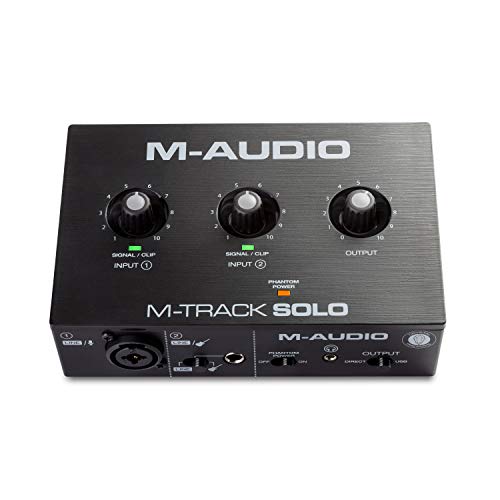
The M-Track Solo provides a compact USB interface with one combo XLR/Line input and one Instrument input, plus a 1/8″ headphone output and stereo line outputs. It supports 48kHz recording, making it a solid choice for DJs who need dependable podcasting or vocal recording alongside track playback. The unit includes direct monitoring with zero latency, which is helpful during live performances or streaming sessions, ensuring smooth cueing and monitoring for DJ sets and voiceovers alike.
Focusrite Scarlett Solo 4th Gen

Focusrite’s Scarlett Solo 4th Gen continues the tradition of high-fidelity, user-friendly recording. It features a single mic input and a dedicated instrument input, plus a generous 120dB dynamic range and Focusrite’s renowned converters. Air mode reintroduces vocal presence and harmonic drive, helping vocals or guitar tracks cut through a dense mix—ideal for live DJ performances or recording sessions where every detail matters. This Gen emphasizes studio-like sound on-the-go with minimal setup complexity.
M-Audio M-Track Duo

The M-Track Duo doubles the input count with two XLR/Line/DI inputs, plus two instrument inputs, making it suitable for DJ setups that involve dual mics or multiple instruments on a live stream or podcast. It delivers 48kHz resolution and provides a robust monitoring path with a USB/Direct switch for zero-latency monitoring. This flexibility makes it a practical choice for DJs who perform with backup vocals, MCs, or live instrument layers during performances.
MAONO PS22 Lite

The MAONO PS22 Lite is designed for high-resolution input and output with 24-bit/192kHz performance and a wide dynamic range. It supports both XLR mics and guitar-type inputs, making it a versatile option for streamers and mobile DJs who need a compact, portable solution. The interface emphasizes clean, clear recordings suitable for VO, podcasting, and live performance, while enabling easy routing and impedance management for guitar and vocal tracks.
Buying Guide
Key considerations when choosing an audio interface for DJ work:
- Input configuration: Decide how many mics and instruments you plan to connect. If you often sing while mixing or MC, prioritize interfaces with at least two inputs or easy expansion options.
- Preamp quality and Air/Hair modes: Interfaces from Focusrite (Air), and others offer preamps with brightness and presence that can help vocals or guitars cut through a dense mix.
- Resolution and dynamic range: Higher bit depth (24-bit) and sampling rates (192kHz) provide more detail and headroom for live environments and recordings.
- Latency and monitoring: Zero-latency monitoring is essential for real-time cueing during DJ sets or livestreams. Look for USB/Direct monitoring switches.
- Portability and software: If you travel or perform live, lightweight interfaces with bundled software can streamline setups. Ensure compatibility with your DAW and streaming software.
- Build quality and inputs: Metal chassis and sturdy knobs help withstand stage or road use. Instrument inputs with adequate impedance handling improve guitar or bass tone.
Buying decisions can also consider future-proofing: consider a two-channel or four-channel model if you expect to add more mics or instruments. For solo vocal work and guitar in a compact rig, a solid Solo or Duo with good mic preamps and Air-like mode serves many DJ and streaming scenarios well. Finally, confirm that the included software and drivers are up to date and compatible with your computer setup and operating system.