Astrophotography is more accessible than ever for newcomers, with beginner‑friendly cameras that pair well with common telescopes and software. This article highlights five approachable options and explains what makes each suitable for first‑time deep‑sky imaging. From planetary captures to lunar detail and crisp star fields, these devices offer real value without requiring expert setup. Read on to compare features, compatibility, and practical considerations for getting started in celestial photography.
| Product | Brand | Key Benefit | Link |
|---|---|---|---|
| SV105 Telescope Camera | SVBONY | Beginner friendly lunar/planetary imaging; plug‑and‑play | Amazon |
| SV205 Astrophotography Camera | SVBONY | 2Kp video with low‑light clarity; simple capture | Amazon |
| Celestron NexImage 5 | Celestron | 5MP color imaging; easy USB 2.0 plug‑and‑play | Amazon |
| 4K Wireless Telescope Camera (SV‑EP03) | Telonixium | 4K video with WiFi remote viewing | Amazon |
| SV305C Astrophotography Camera | SVBONY | Entry‑level color imaging with IMX662 sensor | Amazon |
Below you’ll find concise product sections designed to help you compare performance, ease of use, and fit with common beginner setups. Each entry includes a direct Amazon link, an image, and the most relevant features.
SV105: Beginner Planetary Camera
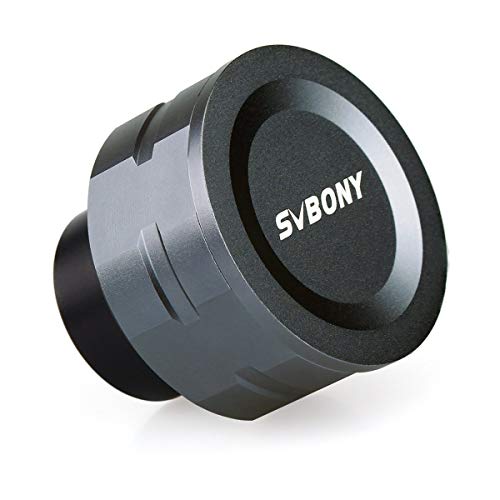
The SV105 is a basic but capable entry point for lunar and planetary imaging. It uses a 1.25″ interface and is designed for quick setup with minimal driver requirements. The camera supports real‑time viewing and simple transfer to a laptop, making it straightforward for beginners to capture quick videos of Moon and bright planets. Compatibility with common capture software simplifies the learning curve while enabling basic post‑processing skills.
SV205: 2K Planetary Imaging Camera

The SV205 offers higher frame rates and a more robust low‑light image pipeline, suitable for real‑time observation and quick video capture of the Moon, planets, and terrestrial targets. It emphasizes plug‑and‑play operation and compatibility with Sharpcap Capture (Windows) or AstroDMx Capture (Linux/Android). This makes it a practical step up from basic cameras for beginners who want smoother videos and clearer planetary shots without complex setup.
NexImage 5: Beginner Solar System Imager

The NexImage 5 is designed for first‑time astrophotographers, offering a 5 MP CMOS sensor for color lunar and planetary imaging. Its USB 2.0 plug‑and‑play capability means you can start imaging with a compatible telescope quickly and with minimal configuration. The device emphasizes straightforward operation and accessible image details for beginners who want to explore high‑contrast celestial features without specialized software expertise.
4K Wireless Telescope Camera (SV‑EP03)

This 4K wireless eyepiece camera combines a high‑resolution sensor with a 2.8‑inch IPS screen and built‑in WiFi for remote viewing within a 32‑foot range. It supports universal eyepiece compatibility and can pair with other viewing devices. The device is suited for observers who want live wireless streaming, quick capture, and flexible mounting to a range of telescopes, binoculars, and microscopes, enabling a broader set of observing scenarios for beginners.
SV305C: Entry‑Level Color Camera

The SV305C uses the IMX662 color sensor and a 1.25″ interface, offering improved red spectral sensitivity and low readout noise. It is positioned as a solid entry‑level option for planetary and lunar imaging, with good performance for EAA (Electronically Assisted Astronomy) enthusiasts. The camera’s back‑illuminated design and sensor characteristics help beginners capture clearer frames in modest light without overexposure, especially when paired with a suitable telescope and basic capture software.
Buying Guide
Purchase considerations for beginners
- Camera type and purpose: Decide whether you want planetary and lunar imaging (SV105/SV205), all‑around beginner imaging (NexImage 5), or a versatile wireless option (SV‑EP03).
- Sensor size and resolution: Higher resolution can improve detail but may require more processing power. For beginners, 2–5 MP range is common and practical.
- Connectivity and software: USB plug‑and‑play cameras are simplest to start with; verify compatible capture software (SharpCap, AstroDMx Capture, etc.).
- Interface compatibility: Ensure the camera fits your telescope’s eyepiece diameter (1.25″ vs 2″). Some models offer universal mounting or adapters.
- Low‑light performance: Look for back‑illuminated sensors, noise reduction features, and exposure flexibility to manage twilight and moonlight conditions.
- Storage and workflow: Consider cameras that support easy local storage and straightforward transfer to a PC for processing in common software like RegiStax, PIPP, or AutoStakkert!
Performance comparisons
- Ease of use: Plug‑and‑play models are best for beginners; more complex setups may yield higher quality but require time to learn.
- Image quality vs. speed: Cameras optimized for real‑time viewing (higher frame rates) help beginners practice alignment and stacking, though very high resolutions demand stronger processing.
- Software ecosystem: A camera with broad software support reduces setup friction and accelerates learning curves.
- Upgrade path: Consider whether the camera can grow with you as your skills develop and telescope setups change.
Practical tips
- Start with the Moon or bright planets to learn focusing and stacking basics before attempting deep‑sky targets.
- Record short video clips to practice frame selection and stacking, then gradually expand to longer sessions as you gain experience.
- Keep a log of settings (exposure, gain, frame rate) to reproduce successful captures on future nights.