Apochromatic refractors (APOs) are designed to minimize chromatic aberration and deliver crisp, high-contrast images for both visual astronomy and astrophotography. This guide highlights five top APO refractors that balance optical quality, portability, and ease of use for American observers exploring deep-sky targets. Each entry includes key specifications, notable advantages, and practical considerations to help you compare options for wide-field imaging, planetary scrutiny, and celestial sightseeing.
| Product | Aperture | Focal Length | Notable Feature |
|---|---|---|---|
| SVBONY SV550 80ED APO Refractor OTA | 80 mm | F6 | Triplet APO design reduces blue-edge chromatic aberration |
| SVBONY SV555 54mm Petzval APO | 54 mm | F4.5–F22 (variable aperture) | Petzval triplet for flat field and deep-sky clarity |
| SVBONY SV550 Triplet APO 122mm | 122 mm | F7 | Large aperture with ED glass triplet for sharp images |
| Sky-Watcher EvoStar 100 APO Doublet | 100 mm | Wide range depending on configuration | Excellent color correction with synthetic fluorite element |
| Sky-Watcher EvoStar 80 APO Doublet | 80 mm | Compact portable tube | High-clarity doublet with premium coatings |
Below are five APO refractors that stand out for imaging and visual observing in the United States, with a practical look at what each brings to the sky.
SVBONY SV550 80ED APO Refractor OTA
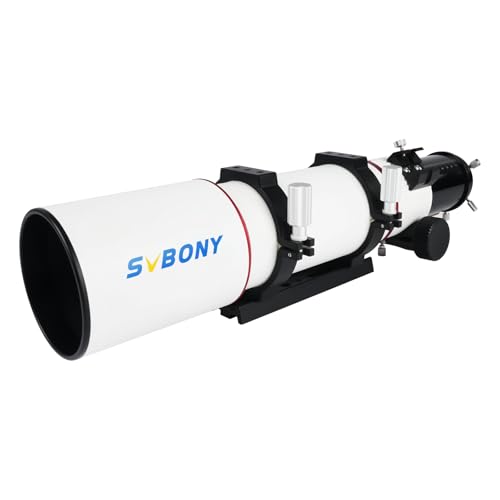
The SV550 uses a triplet apochromatic optical design with one ED glass element and two correction pieces to reduce chromatic aberration and deliver bright, high-contrast images. This OTA is suitable for deep-sky work and visual use, with an 87 mm back focus distance and a 2.5″ dual-speed focuser for precise focusing. Its 80 mm aperture provides a balanced light-gathering advantage for observing Messier objects and planetary details, making it a versatile option for beginners moving toward serious astrophotography.
SVBONY SV555 54mm Petzval APO Refractor

The SV555 redefines compact APO performance with a Petzval triplet that yields superb flat-field performance and minimal coma. This model supports a wide-FOV approach via its variable aperture (F4.5–F22) and includes an electronic auto-focus kit option for precise framing. It suits enthusiasts who want sharp star images across the frame on full-frame or larger sensors, enabling astrophotography of wide nebulae and expansive star fields with less post-processing work.
SVBONY SV550 Triplet APO 122mm Refractor OTA

This larger 122 mm aperture APO refractor features an F7 triplet ED glass design that reduces chromatic aberration and increases image clarity, particularly for faint deep-sky objects. The OTA weighs around 6.4 kg, which makes it portable enough for travel and field setups when paired with a robust mount. The higher light-gathering capability supports detailed imaging of galaxies, planetaries, and nebulae, delivering bright and crisp results with careful guiding and exposure planning.
Sky-Watcher EvoStar 100 APO Doublet Refractor
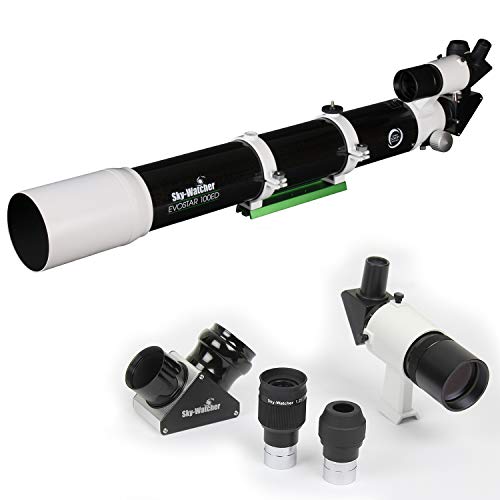
The EvoStar 100 APO doubles as a high-performance visual and imaging optical tube. Its two-element objective includes a synthetic fluorite element to correct color and minimize aberrations across the field. With excellent transmission coatings and a robust build, this refractor is designed to scale with your skill level—from simple wide-field images to more complex multi-frame mosaics. Its versatility makes it a dependable choice for enthusiasts who want a capable all-rounder in their observatory or portable setup.
Sky-Watcher EvoStar 80 APO Doublet Refractor

The EvoStar 80 APO is a compact, portable option with an achromatic-free doublet design aimed at minimizing chromatic aberration for both visual and imaging applications. Its high-contrast, color-accurate performance makes it a favorable match for field work, travel astronomy, and beginners transitioning to serious astrophotography. The lightweight tube is easy to mount and balance on smaller commercial mounts while maintaining image quality that rivals larger instruments in the same class.
Buying Guide: Key Purchase Considerations
- Purpose and use case: Decide whether your main goal is visual observing, deep-sky imaging, or a mix. APO triplets excel at minimizing chromatic aberration for wide-field imaging, while larger aperture APOs boost light gathering for faint objects.
- Aperture vs. portability: Larger apertures (e.g., 122 mm) provide brighter, more detailed images but require sturdy mounts and transport options. Smaller APOs (54–80 mm) are highly portable and cost-effective, suited for travel and beginners.
- Focal ratio: Faster systems (lower F-number) gather more light and are better for wide-field imaging, but may require precise focusing and guiding. Slower systems provide high-contrast, sharp views suitable for planetary detail and deep-sky work with longer exposures.
- Optical design: Triplet APOs typically offer superior chromatic correction and field flatness, ideal for astrophotography. Doublets still provide excellent color correction and are lighter and more budget-friendly.
- Focuser and back focus: A reliable dual-speed focuser and adequate back-focus distance support precise framing and compatible accessories like field flatteners or cameras.
- Mount compatibility: Ensure your mount and tripod can support the telescope’s weight and provide stable tracking. The right mount is crucial for high-precision astrophotography.
- Accessories and expandability: Consider including a field flattener, off-axis guider, or auto-focusing kit if you plan long-exposure imaging. Look for OTA compatibility with standard 2″ and 1.25″ accessories.
APO refractors offer a compelling balance of color accuracy, sharpness, and ease of use for stargazers across the United States. When choosing, weigh aperture against portability, and consider future expansion in imaging capabilities. The selected models above provide a spectrum of sizes and optical designs to help you identify a telescope that matches your observing goals and budget.