When choosing amps for microphones, focus on clarity, reliability, and how they fit your setting. This guide highlights five top options suited to different needs, from battery-powered portable units to small practice amplifiers with dedicated mic channels. Ideal buyers include buskers, bedroom performers, small churches, and home studios. Below is a quick overview of the five selections to help you compare at a glance.
| Product | Type | Best For |
|---|---|---|
| Flatsons Crush20 Acoustic Guitar Amp | 20W dual-channel amp with mic input | Singer-songwriters needing two independent channels |
| Flatsons FBA-10 Guitar Amp | 10W mini amp with clean/drive | Compact practice and travel |
| ResponseBridge S99 100W Voice Amplifier | 100W PA with two mics | Small venues, churches, events |
| Rodyweil RO03 Mic Preamp | XLR/TRS mic preamp | Low-noise mic boosting and studio setups |
| COOLMUSIC Acoustic Guitar Amplifier | 20W Bluetooth mic/guitar amp | Dual instruments and Bluetooth playback |
Flatsons Crush20 Acoustic Guitar Amp Review

The Flatsons Crush20 combines a 20W full-range speaker with two independent channels for guitar and microphone. It uses a 2-band Bass/Treble EQ to shape vocal tone and includes built-in reverb on both channels for a stage-ready sound. The unit runs on a 3000mAh battery for up to eight hours, making it suitable for outdoor performances. A key strength is its balance between vocal clarity and guitar warmth, helping solo performers cut through ambient noise. Best for singer-songwriters who need portable, all-in-one mic and guitar amplification. Caution: battery life may vary with wireless usage and reverb settings.
Who it’s best for: solo performers and small street gigs who want a rechargeable amp with separate mic and guitar channels.
Why chosen: robust 20W output, dual channels, and battery-powered operation for mobility.
Flatsons FBA-10 Mini Guitar Amp Overview

The Flatsons FBA-10 focuses on pure analog sound with a 10W output and two tone modes—CLEAN and DRIVE. Its 100Hz–20kHz frequency response aims for clear, natural tone, and it offers a 3.5mm headphone jack plus an AUX input for external audio. This model is well-suited for indoor practice and street performances where a compact, simple setup matters. Caution: lacks a dedicated mic input, so pairing with a separate mic preamp may be needed for high-volume vocal use.
Who it’s best for: players seeking a compact, all-analog practice amp with flexible input options.
Why chosen: clean accurate tone and good range for quiet or mid-volume performances.
Limitation: no built-in dedicated mic channel.
ResponseBridge S99 100W Microphone Power Amp

This 100W system pairs a high-output amplifier with two wireless microphones and various input options, including Bluetooth, USB, TF card, and Aux. It supports 3.5mm and 6.35mm mic jacks, giving you flexibility for wired or wireless scenarios. The 360-degree sound dispersion and dedicated guitar ports make it suitable for small venues, classrooms, and events. Caution: feature set can be more than needed for solo practice; consider your typical venue size. Best for events that require quick setup and reliable mic coverage.
Who it’s best for: organizers and performers needing a complete PA with two mics.
Why chosen: robust output and multi-source playback options.
Limitation: heavier and larger than pocket amps; not ideal for ultra-portable use.
Rodyweil RO03 Mic Preamp: Clean Mic Boost

The RO03 is designed to improve mic signal quality with a claimed -120dB EIN, low-noise performance, and a 19–66dB gain range. It features XLR/TRS inputs and a Type-C power option. It’s intended for upgrading mic signals before recording or mixing, not as a standalone vocal amp. Best for home studios or small setups where clean, noise-free mic gain is a priority. Caution: two inputs cannot be used simultaneously; plan your signal chain accordingly.
Who it’s best for: home studios and budget-conscious performers needing clean gain.
Why chosen: practical low-noise improvement for mic signals at modest gain.
Limitation: single-input operation at a time.
COOLMUSIC Acoustic Guitar Amplifier With Mic Input
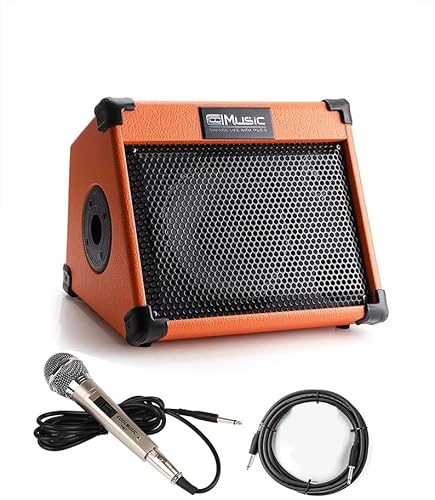
This 20W amplifier supports two-channel use, allowing both microphone and guitar connections with a three-band EQ and built-in reverb. It also offers Bluetooth streaming and multiple input sources including USB and AUX. This model is a practical choice for small practice rooms, jam sessions, and casual performances where Bluetooth playback is convenient. Caution: Bluetooth quality may vary with interference; wired connections remain more reliable for critical performances.
Who it’s best for: players needing a versatile, small amplifier with mic and guitar support.
Why chosen: integrated mic input with reverb and Bluetooth playback.
Limitation: Bluetooth can introduce latency or interference in busy environments.
Buying Guide: Key Considerations For Your Mic Amp Purchase
- Intended use: Are you performing solo on stage, busking, teaching, or recording at home? Choose an amp with the right channel configuration and portability for that setting.
- Microphone input: Look for dedicated mic channels (XLR or 1/4″ combo) with enough gain and low noise. Separate mic pres can improve vocal clarity in live use.
- Power and portability: Battery-powered models are ideal for outdoors; mains-powered units may be more suitable for fixed setups. Consider weight and battery life if you’ll travel a lot.
- Sound shaping: At least a two-band EQ is helpful for tuning vocal tone. Reverb or effects can enhance live performances but may require careful control to avoid muddiness.
- Connectivity: AUX, Bluetooth, USB, and guitar inputs add versatility. Assess whether you need wireless mics or wired options in your typical venues.
- Noise and impedance: For mic preamps, look for low EIN and proper input impedance to minimize hiss and impedance mismatch with dynamic or condenser mics.
Frequently Asked Questions
- What type of amp is best for a microphone at a small venue?
A dedicated mic channel with clean gain and a reliable power source is ideal. Look for models with a separate mic input and built-in reverb for stage-ready sound.
- Should I use a mic preamp with my guitar amp?
For best vocal clarity on a guitar amp, a mic preamp can improve gain and reduce noise before sending the signal to the amp’s input.
- Is Bluetooth on mic amps worth it?
Bluetooth adds flexibility for playback and practice, but wired connections are generally more reliable for live performances due to possible interference.
- How long should a portable mic amp’s battery last?
Battery life varies by usage and features like Bluetooth and reverb. Expect several hours on a full charge for most compact devices.
- Can I run multiple mics on one amp?
Some amps support two wireless or wired mics. If you need more channels, consider a dedicated small PA system or a mixer with sufficient inputs.
- What should I consider when choosing mic impedance?
Higher input impedance helps preserve high-frequency detail with certain microphones and reduces tone loss when plugging into guitar amps or DI boxes.