If you’re shopping for an amplified phone for an elderly loved one, prioritize clarity, large controls, and reliable answering features. The top picks below are chosen for seniors who need stronger sound, easier dialing, or memory aids. This guide highlights five models that balance amplification, accessibility, and ease of use. Each entry explains who it’s best for and why it’s a strong choice, plus a quick note on any limitation to watch for.
| Product | Key Benefit | Best For |
|---|---|---|
| VTech Amplified Cordless Senior Phone with Answering Machine | 90dB ringer, 50dB Audio Assist; cordless and expandable | Seniors needing mobility and strong ringer |
| VTech SN5147 Amplified Corded/Cordless Senior Phone | Corded base with cordless handset; 50dB Audio Assist | Power-outage reliability and hybrid use |
| VTech SN5307 Amplified Photo Dial | Photo speed dials; DECT 6.0 | Memory support and fast calling |
| VTech SN1127 Amplified Corded Senior Phone | 8 photo speed dials; visual ringer | Memory aid and visibility |
| Sacumea Large Button Phone | 110dB+ ringer; large keys; visual indicator | High-volume needs and vision challenges |
VTech Amplified Cordless Senior Phone With Answering Machine

Best for: seniors who want full cordless flexibility at home and an integrated answering machine. This model supports expansion to four handsets, which helps households with multiple caretakers or guests. The 90dB ringer and 50dB Audio Assist offer clear, adjustable amplification for users with hearing impairment. A full-duplex speakerphone enables natural hands-free conversations, while oversized, backlit keys simplify dialing and caller ID reading. Caution: the base unit’s features rely on a powered setup; ensure the home has reliable power for continued use during outages.
VTech SN5147 Amplified Corded/Cordless Senior Phone

Best for: households that want a reliable corded base plus a cordless handset for mobility. The 90dB ringer with visual indicator, along with 50dB Audio Assist, supports hearing difficulties. The dual speakerphone on base and handset provides clear hands-free calls. The design includes big, high-contrast buttons and a large display, aiding those with vision or dexterity challenges. Limitation: manual base unit is needed for operation during power outages if the corded portion remains essential.
VTech SN5307 Amplified Photo Dial

Best for: seniors who benefit from photo-based speed dials. This accessory handset expands SN5127 or SN5147 bases and uses DECT 6.0 for clearer calls with reduced interference. The large buttons and big display stay easy to read, while photo labeling simplifies dialing. Caution: as an add-on, it requires a compatible base system to work; it isn’t a standalone unit.
VTech SN1127 Amplified Corded Senior Phone
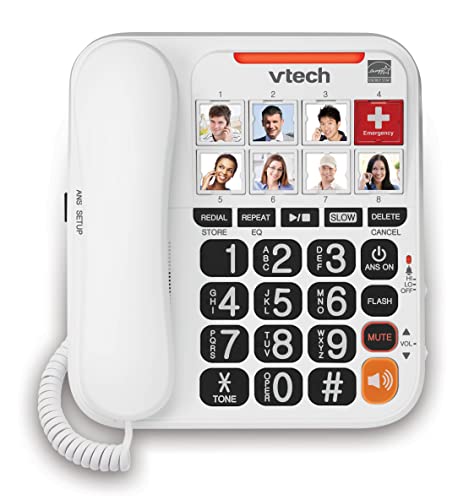
Best for: users who prefer a corded model with easy speed dialing. It includes 8 photo speed dial keys and a 90dB ringer with a bright visual alert, ensuring calls aren’t missed. The phone is reliable during power outages but requires a landline connection. Limitation: no cordless handsets, which reduces mobility in larger homes.
Sacumea Large Button Phone For Seniors

Best for: seniors needing very large buttons and extremely loud alerts. This model features a 110dB+ ringer with an 80dB handset volume and a flashing indicator, aiding users with significant hearing or vision challenges. It’s straightforward with prominent keys and simple dialing. Caution: the device emphasizes volume and visibility; it does not include a built-in speakerphone, so speaking and listening require the handset.
Buying Guide
What features matter most when choosing an amplified phone for an elderly user?
- Ringing volume and auditory clarity: Look for models with 90dB or higher ringer levels and adjustable handset volumes.
- Display size and button size: Large backlit displays and oversized buttons reduce dialing errors and improve readability.
- Power options: Corded, cordless, or hybrid systems affect reliability during power outages and mobility around the home.
- Memory and speed-dial capabilities: Photo speed dials or dedicated SOS keys help memory support and quick calling.
- Additional accessibility aids: Visual indicators, call blockers, and hearing-aid compatibility matter for different impairments.
How to choose between cordless, corded, or hybrid?
Choose cordless if you want mobility around the house and expandable handsets. Corded is reliable during outages and simple to use with minimal setup. Hybrid systems offer a mix, typically providing a base with one cordless handset and the option to add more. Consider the user’s living space and preferred calling style when deciding.
Common limitations to consider
- Some models depend on a stable electrical supply; power outages may temporarily affect features on corded units.
- Add-on handsets require compatible base systems to function.
- High amplification can sometimes introduce a slight background noise; test the model for comfort with long calls.
FAQ
- What amplification level is best for most seniors? Most users benefit from at least 50dB of handset amplification and a 90dB ringer, with adjustable settings.
- Do these phones work during power outages? Corded baselines typically do; cordless models depend on battery and home power, so a hybrid option can help.
- Are photo speed dials helpful for memory support? Yes, photo labels simplify fast calling to trusted contacts.
- Can I block unwanted calls on these phones? Some models include call-block features or programmable numbers to reduce spam.
- Is it necessary to have a Wi-Fi connection? Only models with advanced features like captions or CapTel require internet; most amplified phones work with landlines.
- Which model is best for a visually impaired user? Look for large, high-contrast displays, oversized buttons, and visual ring indicators.