Whether you’re a beginner, a student traveler, or just practicing on a budget, affordable guitar amps can deliver solid tone and portability. This guide highlights five cost-effective options from well-known brands, emphasizing portability, built-in effects, battery power, and easy connectivity for quick practice sessions and casual jamming.
| Product | Brand | Key Benefit |
|---|---|---|
| LEKATO Mini Electric Guitar Amp 5W (JA-05G) | LEKATO | Built-in 4 effects; compact, battery or USB powered |
| Flatsons FBA-10 Guitar Amp (White) | Flatsons | 10W analog tone with clean/drive channels; USB-C recharge |
| GLARRY Electric Guitar Amp (20W) | GLARRY | 20W power; flexible tone controls; headphone/AUX |
| Flatsons F1R Mini Guitar Headphone Amp | Flatsons | True analog tone; silent practice with headphones |
| JOYO Mini Amp 5W (JA-05G) | JOYO | 4 effects; compact, plug-and-play; extended plug option |
The following sections break down each recommended option, covering what makes it suitable for affordable practice, and how it stacks up on portability, tone options, and ease of use.
LEKATO Mini Electric Guitar Amp 5W (JA-05G)

Two built-in features stand out: four effects including clean, distortion, overdrive, and reverb, and a compact, portable form factor. The 5W speaker provides adequate volume for practice, while lightweight construction makes it easy to carry in a backpack. The 6.35mm input offers simple plug-and-play operation, reducing cord clutter and enabling quick setup anywhere. Rechargeable power adds flexibility for travel and practice without constant power outlets.
Flatsons FBA-10 Guitar Amp (White)

This 10W mini amplifier emphasizes analog tone with a clear frequency response and two independent tone modes: CLEAN and DRIVE. It offers a broad range for practice, travel, or street performances. A 3.5mm headphone jack and AUX input expand practice options, allowing silent sessions or jamming to tracks from a phone or player. USB-C recharge adds modern convenience for daily use on the go.
GLARRY Electric Guitar Amp (20W)

With a 20W speaker, this GLARRY amp delivers more volume without distortion until driven. It provides a complete control suite—gain, volume, treble, bass, and middle—facilitating a broad tonal range from clean to crunch. The built-in headphone jack enables silent practice, while the AUX input lets players accompany themselves with backing tracks. It is designed for both beginners and more ambitious players seeking more stage-ready output from a compact unit.
Flatsons F1R Mini Guitar Headphone Amp
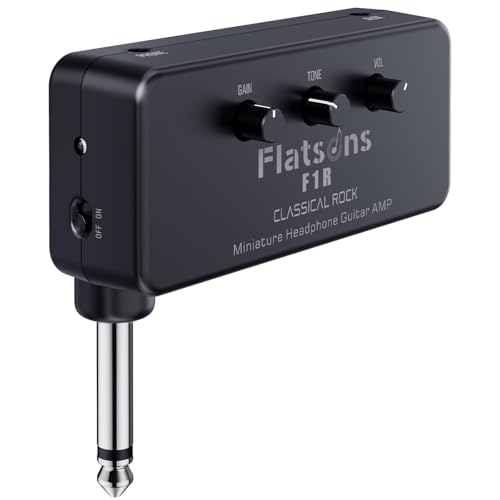
Designed for silent practice, the F1R emphasizes true analog tone with a 16-bit signal and high-impedance input to preserve tone. It offers high-fidelity distortion for classic rock timbre and utilizes GAIN, TONE, and VOL controls for precise shaping. The 3.5mm headphone output and AUX input enable private practice with tracks, making it an ideal option for dorm rooms or shared spaces where noise is a concern.
JOYO Mini Amp 5W (JA-05G)

JOYO’s JA-05G offers a compact, plug-and-play experience with four built-in effects: clean, distortion, overdrive, and reverb. An included extension plug helps accommodate various guitar types, addressing a common issue with small-pronged plugs. The combination of portability, effects variety, and ease of use makes it a practical selection for on-the-go practice or impromptu jamming sessions.
Buying Guide
- Power and portability: For travel and small spaces, 5–10W amps are usually sufficient. If you need louder volume for larger rooms or small performances, consider higher wattage models like 20W options.
- Effects and tonal options: Look for built-in effects (clean, drive, distortion, reverb) if you want immediate versatility without extra pedals. Two-channel designs (clean and drive) are often most flexible for beginners.
- Connectivity: A 6.35mm instrument input is standard for guitars, while AUX and headphone jacks enable silent practice or practice with backing tracks. USB-C recharge is a plus for portable use.
- Power source: Battery-powered or rechargeable amps add portability for travel. If you’ll practice at home, a standard power supply is fine, but rechargeable options reduce cable clutter.
- Sound quality vs. practice needs: Analog pathways typically deliver warmer tones; digital-built amps may include additional effects or modeling. Evaluate based on your preference for authentic amp feel or versatility.
- Durability and size: Smaller amps are easier to transport but can yield limited low-end. Choose a model that fits your guitar type and your space constraints.
- Audience and usage: Beginners benefit from simple interfaces and clear tone, while more advanced players may prefer adjustable gain and tone controls for varied genres.