All-in-one (AIO) flight controllers integrate the flight controller, sensors, and ESCs into a single unit, delivering compact setups and streamlined wiring for FPV drones. This guide highlights five standout AIO boards suited for a range of builds—from tiny 1S whoops to more capable 2-6S quads—based on performance, integration, and expandability. Readers will find concise specs, notable features, and practical considerations to compare when selecting an AIO FC for their next FPV project.
| Product | Brand | Type | Highlights |
|---|---|---|---|
| BETAFPV F4 2-3S 20A Flight Controller | BETAFPV | AIO FC | DJI/O3 PMU, 20A NMOS ESC, dual BECs |
| HGLRC SPECTER F722 Lite FC | HGLRC | AIO FC with ELRS | ELRS 2.4G receiver, light, 8.4-25.2V |
| HGLRC Specter 40A 4-6S AIO | HGLRC | AIO FC/ESC | MPU6000 gyro, 32-bit STM32F722, HDMI-ready |
| BETAFPV Air Brushless FC 1S AIO | BETAFPV | 1S AIO FC | G473 CPU, 4-in-1 25-400VTX, compact |
| MicoAir743V2 AIO Flight Controller | Generic | AIO FC | STM32H743, dual IMU, 2–6S, O3/O4 support |
BETAFPV F4 2-3S 20A Brushless Flight Controller

The BETAFPV F4 2-3S 20A flight controller is designed for HD digital quadcopters like the Pavo Pico and Pavo20. It features dual 9V@2A BECs for DJI O3 and 5V@3A for external devices, plus a new DJI O3 6-pin PMU for easy plug-and-play installation without soldering. The board upgrades control with a 20A ESC using a single NMOS design to handle continuous current efficiently. This board suits small to medium racing and freestyle builds needing compact integration and reliable HD transmission compatibility.
HGLRC SPECTER F722 Lite FC with ELRS Receiver
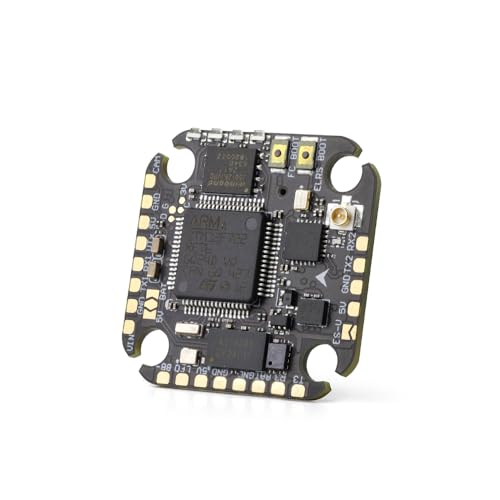
The SPECTER F722 Lite is a compact flight controller that includes an onboard ELRS 2.4G receiver, with an external receiver option. Its light weight and integrated F722 main control enable millisecond-level response in high-speed racing and freestyle. The FC supports a wide input range (8.4V-25.2V, 2-6S), and it eliminates the need for an external BEC by offering streamlined wiring. This board is ideal for builders seeking a small but capable race-ready setup with broad compatibility for various HD transmission systems.
HGLRC Specter 40A 4-6S AIO with MPU6000

Powered by an MPU6000 gyro, the Specter 40A 4-6S AIO provides stable attitude control suitable for aggressive lines and fast maneuvers. It features a 32-bit STM32 F722 processor and a direct plug-in interface for HD video transmitters, reducing soldering work. With five UART ports and support for 2-6S LiPo batteries, it delivers strong performance for FPV racing, providing smooth throttle and precise control across demanding flight regimes.
BETAFPV Air Brushless 1S AIO FC
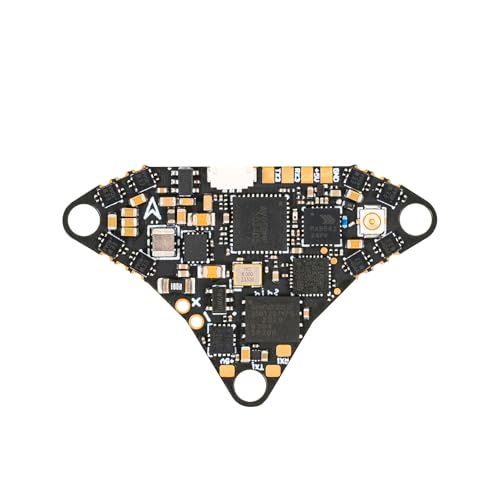
As the first 1S AIO FC using the G473 CPU, this board brings notable performance gains with a 55% faster computing speed and quick response times for tight racing and freestyle. Despite its small size, it maintains high integration and includes a built-in OSD chip. Weighing around 2.9g (4IN1 version), it provides additional UART ports for expanded functionality, and its default onboard VTX streamlines 1S FPV builds without sacrificing capability.
MicoAir743V2 AIO Flight Controller

The MicoAir743V2 AIO Flight Controller integrates a 45A 4-in-1 ESC on a single board powered by an STM32H743 core, dual IMU sensors, and a barometer. It supports 2–6S input and O3/O4 HD transmission compatibility. The platform’s high-end MCU delivers robust performance for demanding builds, while dual IMUs improve vibration resilience and attitude accuracy in dynamic flight conditions, making it suitable for larger 5-inch frames and advanced pilots.
Buying Guide: Key Purchase Considerations
Purpose and compatibility matter when choosing an AIO flight controller. Consider frame size, target battery voltage (2-6S or 1S), and intended flight style (racing, freestyle, long range). Sensor quality (IMU type, barometer) influences stability, while processing power (STM32 or similar 32-bit MCUs) affects responsiveness and firmware options (Betaflight, INAV, or ArduPilot compatibility).
Integration and weight impact airframe performance. Boards with built-in receivers (ELRS or others) reduce wiring and weight, but may limit upgrade options. If you plan to HD video transmission, ensure the FC provides a compatible VTX/HD link interface or easy plug-in options without soldering. Consider the number of UARTs and GPIOs for GPS, telemetry, and additional peripherals.
Cooling, heat management, and current handling are practical concerns for 4-in-1 ESCs. Higher amperage ratings (e.g., 40A–45A) support more powerful motors but can add weight. Board stiffness and mounting options also influence vibration damping and overall flight feel. Ensure firmware support and community resources are available for ongoing maintenance and tuning.
Ease of installation and future readiness vary across models. Some boards emphasize plug-and-play with HD systems and minimal soldering, while others prioritize modularity with multiple vestigial ports. Your choice should align with your skill level, anticipated upgrades, and the specific demands of your FPV setup.