Answering the question: which AGM solar battery is best for an off-grid setup? The top picks below target common buyer intents—reliability, long shelf life, and maintenance-free operation. They suit RVers, campers, boaters, cabins, and small off-grid systems. The following selections emphasize safety, performance, and practical use cases to help you choose quickly.
| Product | Best For | |
|---|---|---|
| Renogy Deep Cycle AGM 12V 100Ah | 12V, 100Ah | Compact RVs, light off-grid cabins, basic solar kits |
| Renogy Deep Cycle AGM 12V 200Ah | 12V, 200Ah | Full-size off-grid systems, higher power needs |
| WEIZE 12V 100Ah AGM | 12V, 100Ah | Budget-friendly solar setups, campers |
| VMAX SLR125 12V 125Ah AGM | 12V, 125Ah | Longer service life, heavy-duty off-grid use |
| Go Power GP-AGM-100-12 | 12V, 100Ah | Solar, RVs, boats needing sealed, maintenance-free battery |
Renogy Deep Cycle AGM 12V 100Ah Battery

Best for compact, space-conscious setups where reliability matters. The 100Ah model is suited for small RV systems, cabins, or solar arrays that do not require high current bursts. It supports series and parallel connections (up to 4P), enabling scalable configurations. This battery emphasizes safety and low maintenance thanks to its sealed AGM design. A potential limitation is lower energy storage density compared with larger packs, which may matter for larger power loads.
Why choose this for you
- Best for: smaller RVs, camping rigs, and light off-grid cabins.
- Why: maintenance-free, safe chemistry, and simple wiring compatibility.
- Limitations: moderate capacity means frequent cycling in higher-demand setups.
Renogy Deep Cycle AGM 12V 200Ah Battery

Best for higher demand off-grid systems, larger cabins, or RVs with extensive power needs. The 200Ah capacity provides extended usable energy between charges and supports more parallel or series connections. Its maintenance-free AGM design reduces upkeep. A potential drawback is physical size and weight, which may require reinforced mounting and appropriate terminals for integration.
Why choose this for you
- Best for: bigger off-grid systems and camping setups with higher loads.
- Why: more usable capacity means fewer recharges and better runtime.
- Limitations: heavier and larger than 100Ah models; installation space matters.
WEIZE 12V 100Ah AGM Battery

Best for budget-conscious buyers seeking a solid all-around AGM battery for RVs, solar setups, and camping gear. WEIZE emphasizes long life with a low self-discharge rate per month, aiding storage and readiness. A caution: some users may upgrade to higher-grade packs for very demanding off-grid systems where peak current is critical.
Why choose this for you
- Best for: affordable, reliable energy storage for standard solar or RV needs.
- Why: low self-discharge helps in seasonal setups.
- Limitations: peak current is adequate, but may be outperformed by higher-discharge models in heavy-use scenarios.
VMAX SLR125 AGM Battery 12V 125Ah
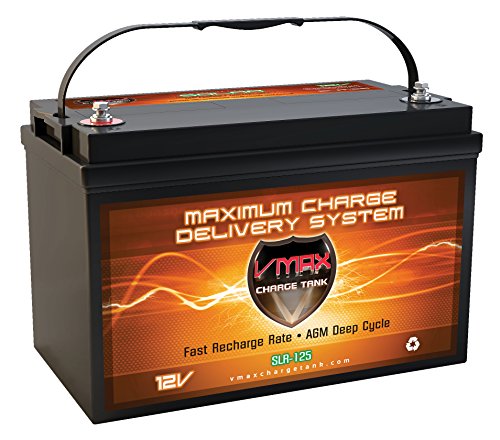
Best for long service life and heavy-duty off-grid or backup applications. The 125Ah capacity sits between typical 100Ah and 150Ah offerings, giving a balance of runtime and weight. Its military-grade plate design suggests strong durability, and float service life is listed at 8–10 years. Caution: like many AGM designs, performance can vary with temperature and charging regime.
Why choose this for you
- Best for: longer-lived batteries suitable for remote cabins or solar setups with steady loads.
- Why: robust plate design and extended service expectations.
- Limitations: requires proper charging strategy to maximize life in varying climates.
Go Power GP-AGM-100-12

Best for RVs, boats, and off-grid systems needing a sealed, spill-proof 12V battery. The 100Ah capacity makes it suitable for mid-size solar arrays and inverter setups. It is designed for solar and RV use with a no-maintenance seal. A limitation is consistent performance depends on a proper charging profile and temperature control in extreme environments.
Why choose this for you
- Best for: mobile applications and sealed systems where maintenance should be minimal.
- Why: spill-proof, maintenance-free design suits marine or travel use.
- Limitations: ensure your charger and inverter are compatible with AGM charging profiles.
Buying Guide — AGM Battery Essentials For Off-Grid Power
- Capacity vs. space: Choose 100Ah for compact setups or 200Ah for larger power needs, balancing weight and space.
- Cycle life and temperature: AGM batteries perform differently with temperature; aim for batteries rated for cooler or hotter environments as needed.
- Maintenance and safety: AGM design reduces leaks and top-ups; sealed construction helps with ports and mounting in mobile settings.
- Discharge current: Higher max discharge (A) supports higher load bursts; consider whether your inverter and loads require higher peaks.
- Size and terminals: Check terminal layout and dimensions to ensure fitment with existing cables and mounting hardware.
- Charging compatibility: Ensure your solar charger or inverter uses a compatible AGM charging profile to maximize life and performance.
Frequently Asked Questions
- What is an AGM battery? A sealed lead-acid battery that uses absorbed glass mat separators to prevent spills and reduce maintenance.
- Are AGM batteries good for off-grid solar? Yes, they are common in RVs, boats, cabins, and small solar arrays due to reliability and low upkeep.
- What does “3% self-discharge” mean? It indicates the battery loses about 3% of its charge per month when not in use at room temperature, which helps storage readiness.
- How many cycles do AGM batteries last? The cycle life varies by model and usage; many offer several hundred to over a thousand deep cycles under ideal conditions.
- Can I mix different AGM brands in the same system? It is generally not recommended to mix brands or capacities in parallel without careful planning and matching.
- What is the best practice for charging AGM batteries? Use a charger with an AGM charging profile, monitor temperature, and avoid full discharges to extend life.