Answering the primary buyer intent: if you want steady shots without breaking the bank, these affordable DSLR stabilizers offer practical options for different setups. This guide highlights five solid choices, who they’re best for, and how to choose among them for your camera style and shooting needs. The top picks cover handheld grips, multi-purpose rigs, and smartphone-compatible models to ensure you find a stable solution whether you’re vlogging, traveling, or shooting low-angle scenes.
| Product | Best For | Notes |
|---|---|---|
| Zeadio Video Action Stabilizing Handle Grip | All cameras with 1/4-20 thread; moving low-angle filming | Ideal gift-worthy option for travel and events |
| AFUNTA Pro Handheld Stabilizer | DSLRs with light lenses up to 2.1 lbs | Comfort grip; polished counter-weight |
| FeiyuTech SCORP-C | Mirrorless/DSLR with larger payloads | Three-axis control; ergonomic design |
| Zeadio Camera Smartphone Handheld Stabilizer | Smartphones and compact cameras | Triple cold-shoe handle; removable wireless shutter |
| Wandalu S40 | DSLRs and action cameras up to mid-weight | Quick-release plate; versatile for GoPro and DSLRs |
Zeadio Video Action Stabilizing Handle Grip
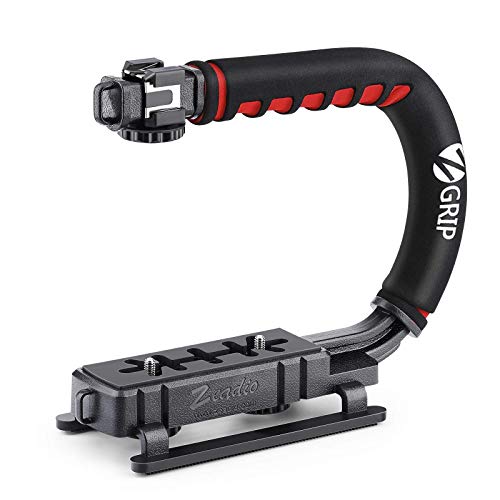
The Zeadio stabilizing handle is a compact, portable grip designed for a wide range of cameras that use a standard 1/4-20 thread. It emphasizes low-angle movement and smooth panning, making it a practical first-stabilizer for hobbyists who want cinematic motion on the go. Best for travelers, party videographers, and family events where a lightweight setup is preferred. The device is marketed as a versatile gift option for friends and family, expanding its appeal beyond just the camera user.
Why it works for you: the simple build keeps weight down while enabling quick setup, which is ideal for those who shoot spontaneous scenes. The primary limitation is that it does not offer a full three-axis stabilization system; it functions best as a stable handheld grip and support rather than a complete gimbal, so expect smoother but not perfectly gimbal-stabilized footage on heavier lenses or fast movement.
Who this is best for: beginners and intermediate creators who want a low-cost, easy-to-carry solution for everyday filming, travel vlogs, and non-professional runs-and-gun shoots. If you primarily shoot with light lenses or compact cameras, this can be a dependable, unobtrusive option.
AFUNTA Pro Handheld Stabilizer

The AFUNTA Pro stabilizer supports DSLR setups with light lenses up to about 2.1 pounds total weight. It features a comfortable grip and a polished counter-weight system to help balance motion during recording. Its compatibility with universal 1/4 screw holes makes it easy to attach to many cameras and camcorders that use standard mounting threads.
Best for: users who want a straightforward upgrade from a basic handheld grip to a more controlled, smooth motion without the complexity of a full gimbal. It’s a solid option for hobbyists and semi-pro shooters who often switch between compact DSLRs and lighter lenses.
Limitations: it’s designed for lighter outfits, so heavier lenses or more dynamic, fast-moving shoots may require a more advanced stabilizer. If you upgrade to heavier bodies, you might outgrow this model quickly.
FeiyuTech SCORP-C Gimbal Stabilizer

The FeiyuTech SCORP-C is a 3-axis gimbal designed for a broad range of mirrorless and DSLR cameras, with a payload capacity around 5.5 pounds. It features an integrated hanging handle, a three-axis motor lock, and a five-way center of gravity adjustment. The camera can be mounted in upright or underslung positions, and the gimbal includes Arca-compatible quick-release features for faster setup. It’s aimed at providing stabilized footage in more demanding shooting scenarios than simple handheld grips can handle.
Who should consider it: creators who need robust stabilization for mid-weight cameras and lenses, including run-and-gun filmmakers, vloggers, and event shooters. Choose this if you want better stability, faster setup with vertical shooting, and flexible balance control. Caution: it may be heavier and bulkier than entry-level options, so consider carrying comfort and space in your bag.
Zeadio Smartphone Handheld Stabilizer

This Zeadio model focuses on smartphone compatibility while still offering 1/4-20 threading for optional camera attachments. The triple-cold-shoe design accommodates a smartphone rig and additional accessories, making it a flexible option for creators who often shoot with phones or compact cameras. It supports various angles and provides cordless shutter controls via the removable wireless shutter feature for smartphones.
Best for: mobile creators who shoot primarily with smartphones or compact cameras but want a stable rig with extra mounting options. It’s a practical pick for social media content, travel vlogs, and quick-turnaround video projects. Limitation: its primary strength is light-weight devices, so heavier DSLRs require a more robust setup.
Fantaseal 3-Shoe Rig Kit
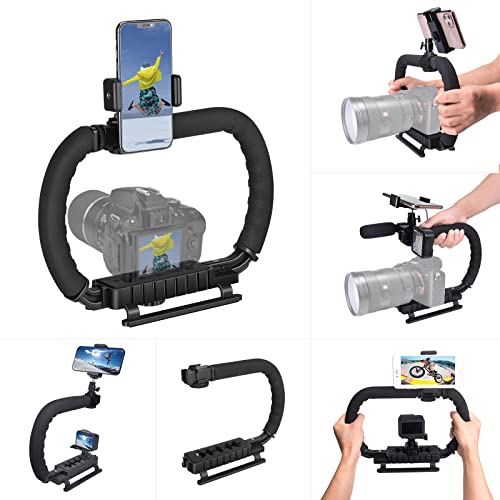
The Fantaseal 3-Shoe Rig is a versatile mount designed for multiple devices including DSLRs, mirrorless cameras, action cameras, and smartphones. It emphasizes ergonomic design and stability, with a detachable low-position shoot option and a universal 1/4-inch thread. Its modular approach allows adding monitors, lights, or microphones to suit the production needs.
Best for: shooters who want a flexible rig that can evolve with their setup, especially when needing low-angle shots or integrating accessories for a more complete video kit. Consider this option if you plan to expand your rig into a full mobile studio. Limitation: some features require additional accessories for full operation, which could increase total cost and setup time.
Buying Guide: How To Choose An Affordable DSLR Stabilizer
What should you evaluate when choosing an affordable stabilizer? Consider weight, payload, mounting options, and intended use. If you shoot lightweight configurations or travel often, prioritize lighter rigs with simple balancing. For more ambitious projects with larger lenses, target stabilizers offering higher payload and full 3-axis control.
- Payload capacity: Match the stabilizer to your camera and lens weight. Exceeding payload reduces stabilization effectiveness and can strain the device.
- Mounting compatibility: Ensure there are standard 1/4-20 threads and any required quick-release plates or Arca compatibility for fast setups.
- Ergonomics: Look for comfortable grips and well-balanced designs to reduce fatigue during longer shoots.
- Versatility vs. simplicity: If you need vertical shooting or accessory racks, prioritize stabilizers with these features rather than basic grips.
- Portability: For travel or on-the-go filming, weight and compactness influence how often you’ll actually carry the rig.
Choosing By Scenario
If you primarily shoot on smartphones or compact cameras, consider triple-cold-shoe handles with wireless shutter controls to streamline your workflow. For DSLR or mirrorless setups with light lenses, a mid-weight stabilizer with a stable counterweight system provides a good balance between control and portability. If you want professional-level stabilization with vertical shooting and quick-release systems, a three-axis gimbal with an integrated control interface is worth the investment.
Practical Setup Tips
- Balance before shooting: Ensure the camera is balanced front-to-back and side-to-side to maximize stabilization.
- Use a light lens: When testing a stabilizer for the first time, pair it with a light kit to achieve smoother balance.
- Practice low angles: If your goal is a dynamic, low-angle perspective, start with a stable grip and gradually introduce tilt movements.
FAQ
- What is a stabilization device best for beginners? A lightweight handheld grip or a basic stabilizer is ideal for beginners who are learning balance and posture during shooting.
- Do these stabilizers support heavier camera bodies? Some models support mid-weight payloads; check the manufacturer’s specified weight limit before use with heavier bodies.
- Are smartphone stabilizers interchangeable with cameras? Many supports use standard 1/4-20 threads and can adapt to cameras, but verify compatibility for your exact model.
- Can a stabilizer replace a full gimbal? For advanced, professional stabilization, a three-axis gimbal provides more precise control, especially for complex movements.
- Is vertical shooting supported by these stabilizers? Several models offer vertical shooting options or quick-release systems to accommodate vertical frame capture.
- How do I know which stabilizer to buy? Match payload, mounting options, ergonomics, and intended use (travel, vlogging, low-angle shots) to your camera setup and shooting style.