Whether you’re streaming 4K, gaming online, or running a smart-home setup, a robust 8-port WiFi router helps you keep everything connected with fewer bottlenecks. This guide highlights five top 8-port WiFi 7 routers, explaining who each model is best for and why it stands out. Use this to compare wired speed, wireless performance, and security features before you buy. The quick summary below shows who benefits most from each option.
| Product | Best For | Why It Stands Out |
|---|---|---|
| ASUS RT-BE88U | Power users needing high-speed wired links | 1x 10G SFP+ and 4x 2.5G/1G ports for ultrafast wired backhaul |
| NETGEAR Nighthawk RS90 | Large households with many devices | Wide coverage and strong WiFi 7 performance |
| TP-Link BE6500 (BE400) | Homes with many smart devices | Strong overall WiFi 7 performance and home security features |
| GL.iNet GL-BE6500 Flint 3e | VPN-focused setups | Integrated VPN options and broad coverage |
| TP-Link BE9700 (Archer BE600) | Users needing extensive wired ports | Multiple 2.5G/10G options and large device support |
ASUS RT-BE88U WiFi 7 Router

The ASUS RT-BE88U focuses on maximum wired performance with a 10G SFP+ port and multiple 2.5G/1G ports, plus high-speed WiFi 7 capable of up to 7.2 Gbps total across bands. It includes AI WAN detection for steady internet and USB tethering options for mobile data backups. This model is best for users who want a future-ready router with strong wired backhaul for gaming rigs or home studios. A caveat is that setup and management can be more technical than simpler consumer routers.
Who it’s best for: Tech enthusiasts and power users needing ultra-fast wired backhaul and robust WiFi 7 performance for large, bandwidth-heavy networks.
Why selected: It combines a dedicated 10G SFP+ port with multiple high-speed LAN ports, enabling flexible network topology and minimal congestion for demanding tasks.
Caution: The advanced features may require a bit more configuration and expertise to maximize benefits.
NETGEAR Nighthawk RS90 WiFi 7 Router

The RS90 is designed for households that need broad coverage and reliability with a dedicated dual-band WiFi 7 router. It supports pairing with existing modems, offers straightforward app-based setup, and enables guests, speed tests, and device pausing. Best for: households that want easy management and scalable coverage without adding new hardware beyond the router. Limitation: some gateways may require bridge mode with certain ISP devices.
Who it’s best for: Families or roommates who want solid wireless performance with simple app-based control and easy integration into existing internet setups.
Why selected: It emphasizes practical home networking with reliable coverage and user-friendly management, ideal for non-technical users seeking reliability.
Caution: Some setups may require bridge mode with certain ISP devices to avoid double NAT or conflicts.
TP-Link BE6500 Dual-Band WiFi 7 Router (BE400)
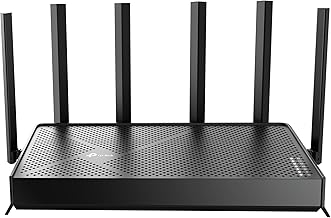
This BE6500 model leverages WiFi 7 with features like Multi-Link Operation and multi-RU technology to maximize total bandwidth. It supports up to 2,400 square feet of coverage and can handle up to 90 devices concurrently. It also includes a Quad-core setup, USB 3.0, and HomeShield security for home networks. Best for: households with many devices and a need for robust parental controls and privacy features.
Who it’s best for: Homes with many smart devices, many simultaneous connections, and a desire for strong security features.
Why selected: It balances high throughput with solid coverage and device support, making it a strong all-around choice for busy households.
Caution: The high device count can still be limited by the physical environment and interference in crowded homes.
GL.iNet GL-BE6500 Flint 3e Wi‑Fi 7 Router

The GL.iNet Flint 3e emphasizes VPN readiness with OpenVPN and WireGuard speeds up to 1100 Mbps. It offers expansive coverage suitable for larger homes or small offices and can support many devices with stable connections. Best for: users prioritizing built-in VPN options and privacy-conscious setups. Limitation: VPN performance can vary with server location and ISP constraints.
Who it’s best for: VPN-focused homes or remote workers who need secure connections for gaming, streaming, and work tasks.
Why selected: The router’s VPN-first approach provides reliable options for secure, remote access across devices.
TP-Link Tri-Band BE9700 WiFi 7 Router (Archer BE600)
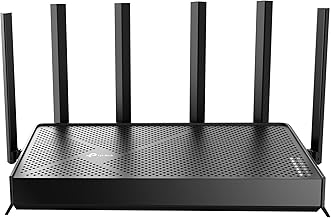
The BE9700 (Archer BE600) supports a 10G port, a 2.5G port, and multiple 2.5G LAN ports, delivering extensive wired capacity for busy networks. It features 320 MHz channels and VPN with HomeShield Security, making it suitable for homes with many wired devices and security considerations. Best for: users needing multiple high-speed wired connections and comprehensive security controls.
Who it’s best for: Tech-forward households that require strong wired performance and extensive device support without sacrificing wireless reliability.
Why selected: The combination of ample wired ports and security features makes it a strong choice for large homes with wired-heavy setups.
Buying Guide: Key Considerations for 8-Port WiFi 7 Routers
- Wired Backhaul: Look for 10G SFP+ or 2.5G/1G ports to support high-speed backhaul to networked devices or storage servers.
- WiFi 7 Benefits: Multi-Link Operation and high-channel bandwidth improve performance in congested homes; consider total, per-band, and range performance.
- Device Density: If many devices are connected, prioritize models with robust processing power and multiple LAN ports.
- Security and Privacy: HomeShield, VPN options (OpenVPN/WireGuard), and parental controls help protect a family network.
- Management: App-based setup and remote management simplify ongoing configuration and guest access.
- Size and Placement: Larger homes may benefit from routers with stronger antennas and beamforming; consider placement to maximize coverage.
- Future-Proofing: A model that supports WiFi 7 and has multiple high-speed ports offers longer relevance as devices upgrade.
Frequently Asked Questions
- What is the advantage of a 10G SFP+ port?
It provides ultra-fast wired backhaul to NAS devices or switches, reducing wireless congestion for wired devices. - Do I need WiFi 7 to benefit from 8-port routers?
Not always, but WiFi 7 improves wireless efficiency and throughput, especially in busy homes with many devices. - Is VPN required for a home router?
VPN is optional but beneficial for secure remote access and privacy across devices. - Can these routers replace my modem?
Many support bridge mode or work with existing modems, but some setups may require bridge configurations with certain ISPs. - How important is device capacity?
If you have many smart devices, prioritize higher WAN/LAN throughput and stronger processing to avoid slowdowns. - What is HomeShield or security notification features?
They provide built-in firewall, parental controls, and device-based monitoring to improve home security.