Upgrade your workstation with a 4K docking station that supports multiple displays, high-speed data transfer, and robust power delivery. This article highlights five top-rated docking stations designed for Windows, Mac, and more, helping you connect 2–4 monitors at 4K and expand your desk with a single, organized setup. Below is a quick overview of the selected products.
| Product | Monitors Supported | max Power Delivery | Key Benefit |
|---|---|---|---|
| Acer Premium 13-in-1 Docking Station | Triple Display (2x HDMI + DP) | 110W | Triple 4K output on Windows with DSC |
| Plugable 13-in-1 UD-ULTC4K | Triple Display (3x HDMI + 3x DP) | 100W | Driver-based, flexible triple-4K setup |
| Anker Prime Docking Station DL7400 | Triple Display (2x HDMI + DP) | 140W | High port count with smart power management |
| Baseus Laptop Docking Station 9-in-1 | Dual HDMI | Up to 85W | Compact, fast Ethernet, 4K at 120Hz support |
| TobenONE DisplayLink Docking Station | Triple / Quad Display (3x HDMI + 3x DP) | 150W | Extensive port selection with very broad compatibility |
Note: Outcomes such as 4K@60Hz or triple 4K display capabilities depend on your host laptop, GPU, and DisplayLink/DSC support. Always verify compatibility with your specific OS and hardware before purchase.
Acer Premium 13-in-1 Docking Station

The Acer 13-in-1 docking station provides a robust 110W power adapter and supports two HDMI outputs plus a DisplayPort for a triple-monitor setup. It includes 3 USB-A ports, a USB-C port, Gigabit Ethernet, a 3.5mm audio jack, and SD/TF readers for simultaneous card access. This model is designed to extend Windows laptops across three independent screens via MST, with up to triple 4K@30Hz output available under the right system configuration. Note that macOS systems typically mirror displays and may not support extended desktop across all three outputs. The included 110W adapter helps maintain laptop performance during heavy workloads.
Plugable 13-in-1 USB C Docking Station 4K Triple Monitor
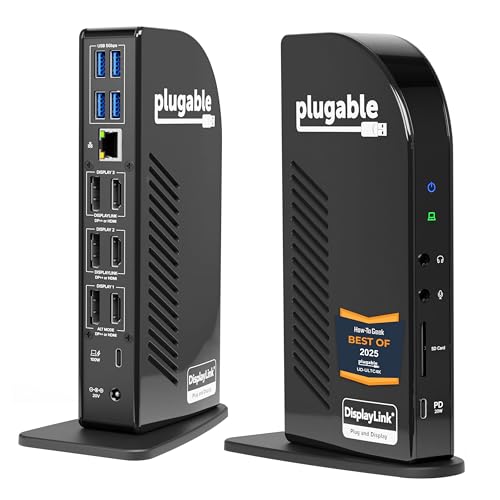
This all-in-one docking station provides 13 ports including USB-C with 100W charging, three USB-C/USB-A data paths, 3x HDMI, and 3x DisplayPort outputs through a single USB-C connection. It enables triple 4K displays at 60Hz on compatible laptops and supports 100W Power Delivery so you can leave the laptop charger in your bag. It’s a strong choice for users who need flexible video output and a broad port set without extra adapters.
Anker Prime Docking Station (DL7400)

The Anker Prime DL7400 offers 14 ports in a compact package, including dual HDMI outputs, a DisplayPort, multiple USB-A and USB-C connections, a 2.5Gb Ethernet port, and SD/TF card slots. It delivers up to 140W total power with smart distribution across connected devices and supports triple 4K 60Hz displays. This model emphasizes a balance between high port density, fast data transfer, and robust charging for a modern multi-monitor desktop setup.
Baseus Laptop Docking Station 9-in-1

The Baseus 9-in-1 hub focuses on dual 4K output via two HDMI ports and includes a stable 1000Mbps Ethernet connection plus a 85W power delivery capacity. It’s designed for compact workspaces and supports 4K at up to 120Hz for the connected display. The hub emphasizes practical network reliability and straightforward multi-monitor use, making it suitable for home offices and remote workstations where space and budget matter.
TobenONE DisplayLink Docking Station

The TobenONE DisplayLink Docking Station offers up to 18 ports and supports triple or quad 4K displays through a combination of HDMI and DP outputs. It includes a 150W power supply for charging and operates with a wide range of systems including Thunderbolt 4/3, USB-C, Windows, macOS, Chrome OS, and more. This dock is geared toward power users who need extensive peripheral connectivity and high-capacity video output, with careful attention to DisplayLink driver requirements for optimal performance.
Buying Guide
- Display outputs and exact resolutions: If you work with 4K displays, confirm whether the dock supports triple 4K at 60Hz or 30Hz, and whether you need HDMI or DisplayPort connections. Some docks deliver 4K@60Hz on certain outputs only with DSC or a compatible GPU.
- Power delivery: Check the maximum PD rating and how it’s allocated across ports. Higher watts (100W–160W) can support charging a laptop while running multiple monitors, but actual delivery may vary by device and cable quality.
- Port variety and layout: Consider USB-A vs USB-C, Ethernet speeds (1Gbps vs 2.5Gbps), SD card readers, and audio jacks. A dense port set reduces the need for dongles on a busy desk.
- Driver and OS compatibility: DisplayLink-based docks often require drivers and may have specific macOS or Windows caveats. Verify driver availability, OS version support, and whether you’ll need to install updates for stable operation.
- Recommended use cases: Triple-monitor workspaces for data analysis, coding, or design benefit from docks that provide a mix of HDMI/DP outputs and strong USB data transfer. Quad-monitor setups demand careful consideration of host GPU and DisplayLink capabilities.
- Cable quality and length: Use certified USB-C or Thunderbolt cables to maximize power delivery and video performance. Poor cables can limit both display output and charging.
- Future-proofing: If you anticipate upgrading to newer laptops or displays, choose docks with higher port counts and flexible video options to minimize future upgrades.
When selecting a 4K docking station, match the chosen model to your primary needs: number of displays, required port types, and whether you prioritize portable power delivery or extensive USB expansion. For Mac users, consider whether extended desktop across multiple 4K monitors is supported in your configuration, as some setups may impose SST mirroring constraints. For Windows, ensure your GPU and DSC (if applicable) enable the full triple 4K capability. Always consult product documentation or vendor support for the most accurate compatibility details with your specific hardware.