Choosing the right four-monitor setup for trading hinges on reliable performance, seamless switching, and clear visuals. This guide highlights five Amazon options that support multi-display workflows, fast data access, and steady reliability. Each pick offers different strengths—from KVM switching and 4K visuals to robust trading-oriented desktops and ergonomic mounting. Use these profiles to compare how you can optimize charting, news feeds, and order entry across a streamlined four-monitor system.
Product Overview
| Product | Brand | Key Benefit | Typical Use |
|---|---|---|---|
| 4 Computers 2 Monitors USB 3.0 HDMI KVM Switch 4K@60Hz Dual Monitor | Terived | Seamless switching between four computers with dual 4K monitors | Trading desks needing independent machines with quick handoffs |
| HP Trading Optimized PC Bundle | HP | High-performance trading PC with multiple display outputs | Primary trading machine with stable OS and fast drives |
| SRhonyra GT 730 2GB DDR3 4 Monitors HDMI | SRhonyra | Quad-monitor capable GPU at entry level | Budget multi-monitor stock/trading displays |
| TechMagnet Trading Desktop PC, Intel Core i5 9th Gen, 16GB RAM | TechMagnet | Solid multi-monitor performance with substantial RAM | Heavy charting and multiple windows |
| MOUNTUP Triple Monitor Stand Mount | MOUNTUP | Ergonomic, space-saving mounting for three screens | Desk organization and flexible viewing angles |
Terived: 4 Computers 2 Monitors USB 3.0 HDMI KVM Switch 4K@60Hz Dual Monitor
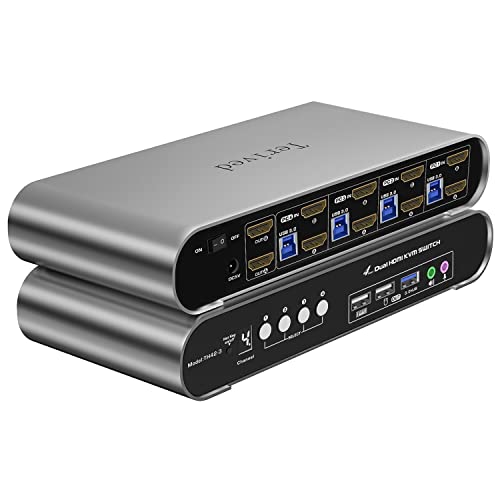
Terived presents a KVM solution designed to control up to four computers using two HDMI monitors, a keyboard, and a mouse. The setup supports 4K at 60Hz with RGB 4:4:4 color and HDR10, ensuring sharp charts and readable market data. HDMI 2.0 compatibility helps maintain high refresh rates for responsive trading dashboards. A built-in USB 3.0 hub expands data transfer and audio/mic support, which is useful for conference calls or voice analytics during market sessions. This option is ideal for traders who want to consolidate multiple machines into a single, streamlined workspace while maintaining high visual fidelity.
Key features include dual-monitor support across four computers, 4K@60Hz video, and an integrated USB 3.0 hub with audio/mic. The aluminum chassis provides sturdy construction and efficient heat dissipation, which can help maintain performance during long trading days. For traders who frequently switch between data streams, this device offers hotkey and auto-switching capabilities to reduce hands-on downtime. The bundled cables simplify initial setup.
HP Trading Optimized PC Bundle Intel i5 6th Gen
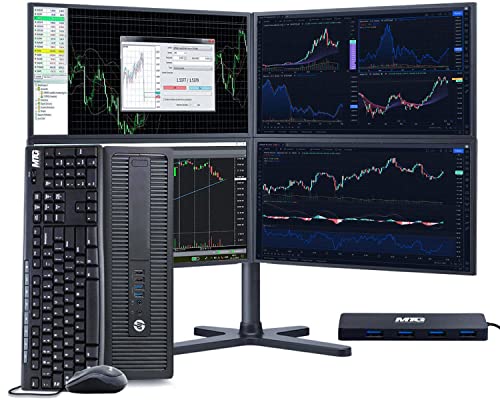
HP’s trading-optimized bundle combines a capable Intel Core i5 processor with ample memory and fast storage to manage multiple trading platforms. The configuration includes 32 GB of RAM and a 512 GB NVMe SSD, designed to handle charting, backtesting, and platform navigation smoothly. The bundle also references two network cards to help ensure robust, wired connectivity—a key factor for low-latency trading environments. Enhanced storage and memory support a responsive system during data-heavy analysis, while the included 24-inch monitors extend your field of view across multiple charts and windows. This setup is well-suited for traders who prioritize speed and reliability across a centralized, multi-display environment.
While the product emphasizes Windows 11 compatibility and a complete keyboard/mouse package, the core benefit is steady performance across several trading applications. Expect improved multitasking, faster data retrieval, and reliable platform performance, especially when running multiple market feeds in parallel. The bundle’s wired components aim to minimize input lag and maintain consistent response times during market surges.
SRhonyra GT 730 2GB DDR3 4 Monitors HDMI

The SRhonyra GT 730 is an entry-level GPU option with four native HDMI outputs, enabling a straightforward quad-monitor setup. This card supports full HD across all displays and is compatible with multi-monitor configurations suitable for trading dashboards, flight simulators, or stock-trading arrays. Its low-profile design makes it a fit for compact PC builds, including ITX cases. The GT 730’s energy efficiency (around 25 watts) helps keep power consumption in check while delivering multi-monitor output. This card is an economical way to outfit a four-monitor trading station if a dedicated gaming-grade GPU is not required.
The card doesn’t rely on additional power connectors, relying on the PCIe slot for operation. This makes installation simpler in smaller form-factor systems. For traders who want a budget solution with four HDMI outputs, this GPU offers basic 4-monitor support with adequate performance for charting and window management rather than intensive 3D workloads.
TechMagnet Trading Desktop PC: Intel Core i5 9th Gen
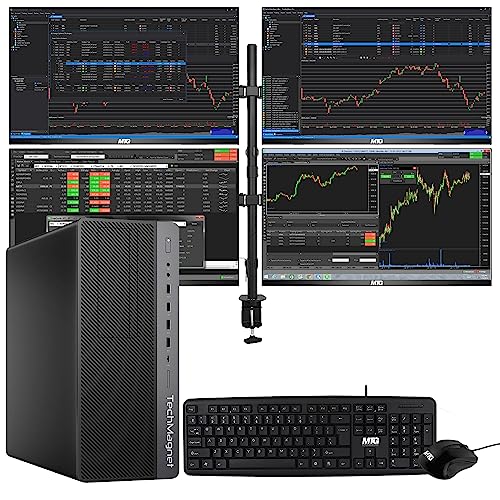
This TechMagnet offering targets traders who require robust multitasking across several monitors. Equipped with a 9th-generation Core i5 processor, 16 GB of RAM, a 512 GB solid-state drive, and a 2 TB hard drive, the system balances speed with ample storage. Two network cards support wired connectivity, which is critical for maintaining stable data feeds and reducing latency. The system is designed to support multiple trading platforms—online or locally installed—making it a practical centerpiece for a four-monitor layout used for charting, order entry, and news feeds. A wired keyboard and mouse help preserve fast input responses during trading sessions.
With these specifications, the TechMagnet setup aims to deliver consistent performance under load. The combination of CPU power, memory, and storage supports simultaneous windows and widgets—crucial for traders who monitor multiple markets or instruments. The presence of two network interfaces further supports reliable, low-latency data transmission across different feeds and servers.
TechMagnet Trading Desktop PC: Core i5 9th Gen, 4 Monitors, Renewed
This renewed TechMagnet PC mirrors the prior model’s emphasis on trading performance, offering a Core i5 9th Gen processor, 16 GB RAM, a 512 GB SSD, and a 2 TB HDD. The configuration supports multiple trading platforms and ensures responsive operation for charting and order management. Like the other TechMagnet option, it includes two network cards and wired peripherals to minimize latency and maximize reliability. The renewed status makes it a cost-conscious choice for traders who still require capable performance and multi-monitor compatibility. Expect solid multitasking capabilities across four displays with efficient data handling for market analysis.
Buying Guide: Key Purchase Considerations For A 4-Monitor Trading Setup
Choosing the right four-monitor configuration depends on performance, expandability, and workspace ergonomics. Here are essential factors to weigh as you compare options:
- Display and GPU capacity: Ensure the GPU or KVM solution can drive four displays at the required resolution. For 4K charts and data feeds, confirm support for 4K at 60Hz and adequate VRAM. Consider upgrade paths if your plotting software or data feeds demand higher resolutions.
- CPU, RAM, and storage: Trading software and market data streams benefit from fast CPUs, ample RAM, and fast storage. A minimum of 16 GB RAM is advisable, with 32 GB or more for heavy multitasking. NVMe SSDs improve boot times and data access for real-time analytics.
- Networking: Latency matters. Look for machines with multiple wired NICs or high-quality network adapters to minimize delays in data feeds and order routing. Ensure stable Ethernet connections and consider dedicated network gear for partitioning trading data from other tasks.
- Display real estate and ergonomics: A four-monitor setup should promote efficient workflows. Mounts or stands that offer tilt, swivel, and height adjustments can reduce neck strain. Cable management and desk organization play a critical role in long trading sessions.
- Switching and workflow integration: If using multiple PCs, a reliable KVM or switch system helps you move smoothly between environments without losing momentum. Evaluate hotkey support, auto-switching, and compatibility with your operating systems.
- Power and heat management: Four monitors plus a capable PC generate heat and draw power. Ensure your setup has adequate cooling and a power plan that can sustain extended trading hours without throttling performance.
- Future-proofing: Consider PCIe bandwidth, potential GPU upgrades, and available monitor inputs. A modular approach with a solid hub or docking option can simplify future expansions or monitor replacements.
Additional Perspectives: Different Setups For Different Trading Styles
– High-frequency or algorithmic traders may prioritize ultra-low latency, compact workstations, and direct market access hardware. In such cases, KVM switches with robust USB 3.0 hubs and precise switching are valuable, along with fast NVMe storage and dependable wired networking.
– Technical analysts relying on extensive charting across multiple asset classes may prefer stronger GPUs, larger RAM pools, and more monitors with higher brightness or color accuracy to resolve nuanced indicators at a glance.
– Casual or developing traders might start with a cost-effective four-display arrangement using a quad-monitor GPU or a multi-output card, pairing with a mid-range CPU and adequate RAM to support basic data feeds and order entry without overinvesting in hardware.
Buying Guide Summary: Matching Your Needs To The Right Hardware
By aligning your system with your trading discipline—whether you need raw speed, expansive visual space, or budget-friendly scalability—you can optimize decision-making and reduce screen-switching friction. Consider the balance between processor power, memory capacity, display bandwidth, and reliable network connectivity. A well-chosen 4-monitor setup should offer a stable, readable, and responsive environment that supports informed, timely trading decisions across multiple data streams.