If you’re exploring virtual reality on a budget or seeking a high-end wired-free experience, a 3D VR headset can open a world of games, videos, and interactive tours. This article highlights five top options, from premium wireless systems to versatile phone-based headsets. Each entry includes a quick spec snapshot and how it fits different use cases, so you can choose the best 3D VR headset for your needs.
Summary of selected products:
| Product | Brand | Type | |
|---|---|---|---|
| Meta Quest 3 512GB | Meta | Wired-free VR Headset | 2X graphical power, 4K-like visuals |
| Meta Quest 3S 128GB | Meta | Wired-free VR Headset | More memory, untethered play |
| TECKNET VR Headset for Phone | TECKNET | Phone-based VR Headset | Wide 90°-110° FOV, adjustable fit |
| PUSABIYOU VR Headset (Black) | PUSABIYOU | Phone-based VR Headset | Anti-blue light, adjustable IPD |
| CoCerKet VR Headset | CoCerKet | Phone-based VR Headset with Headphones | 120° FOV, built-in headphones |
Meta Quest 3 512GB VR Headset

The Meta Quest 3 512GB VR Headset aims at delivering a near 30% leap in resolution with a sharp, 4K Infinite Display. It’s a wireless-powered headset designed for untethered play, enabling immersive gaming, fitness, and media with no cables. The device leverages advanced processing power to support next-gen graphics, reducing load times and enabling more immersive experiences across a broad library of apps and games. Ideal for users seeking high graphical fidelity in standalone VR environments.
Meta Quest 3S 128GB VR Headset
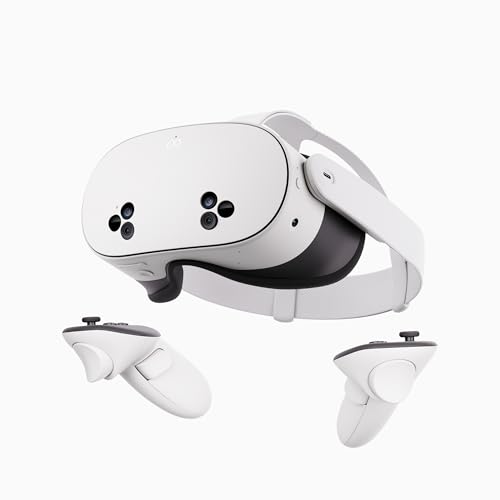
The Meta Quest 3S 128GB brings substantial graphical power and memory in a standalone design. It features a notched increase in processing capability and memory to support more complex scenes, higher frame rates, and smoother transitions in VR games and applications. This model is well-suited for players who want robust performance without being tethered to a PC, while still offering access to a large ecosystem of experiences.
TECKNET VR Headset for Phone

The TECKNET VR Headset for Phone provides a wide 90°-110° field of view and anti-blue light lenses, designed for comfort during extended sessions. It supports a broad range of smartphones (4.7-7.2 inch screens) and includes adjustable pupil distance and object distance. The headset emphasizes a simple setup and improved heat dissipation, making it a practical option for casual users seeking an accessible entry into mobile VR.
PUSABIYOU VR Headset (Black)

The PUSABIYOU VR Headset (Black) mirrors the White model’s core features: anti-blue light protection, ease of setup, IPD and distance adjustments for clear visuals, and compatibility with most 5–7 inch smartphones. It emphasizes a straightforward VR journey with support for 3D content, movies, games, and YouTube VR experiences. Suitable for budget-conscious users seeking versatile mobile VR across diverse apps.
CoCerKet VR Headset
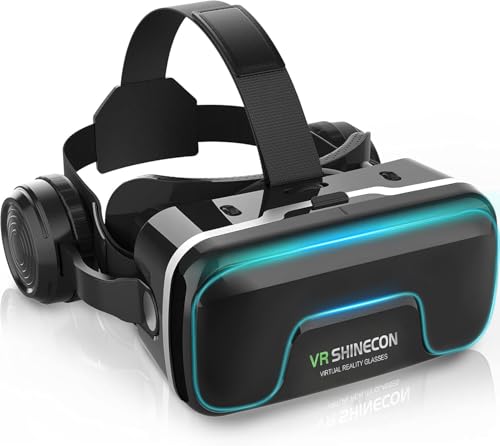
The CoCerKet VR Headset features built-in headphones, a 120° field of view, and aspherical lenses for a more immersive viewing experience. It is designed for compatibility with a wide range of smartphones (4.7–7.2 inches) and emphasizes comfort through modern materials and adjustable settings. The included stereo audio adds depth to VR movies and gaming, making it a compelling all-in-one option for entry-level to intermediate users.
Buying Guide
Key purchase considerations help compare types and find the best fit for your needs:
- Device type: Standalone headsets (like Meta Quest) offer untethered experiences, while phone-based headsets rely on your smartphone and may require extra apps for full functionality.
- Display and resolution: Higher resolution and refresh rate improve clarity and reduce motion blur, especially in fast-paced games or cinematic content.
- Field of view (FOV): A wider FOV enhances immersion; most phone-based headsets offer 90°–110°, while premium standalone models push higher.
- Comfort and fit: Look for adjustable headbands, balanced weight, breathable foam, and IPD (interpupillary distance) adjustments to avoid eye strain.
- Audio: Built-in headphones or high-quality speakers contribute to immersion; consider if you’ll use external headphones.
- Compatibility: Ensure your phone size (for mobile headsets) and your ecosystems (Quest app library, YouTube VR, etc.) align with what you want to view.
- Content ecosystem: Access to games, apps, and media is crucial. Standalone devices provide a broader, curated library; phone-based sets rely on mobile apps and streaming compatibility.
- Cost and upgradability: Higher-end devices offer better performance and future-proofing, while budget options are better for casual, temporary exploration.
By evaluating these factors, you can balance immersion, comfort, and budget. For first-time users, a versatile phone-based headset may offer the quickest path to explore VR content, while standalone devices provide deeper experiences and richer ecosystems for longer-term use. Consider your preferred content, whether you value wireless freedom, and how important comfort is for long sessions when choosing the best 3D VR headset for you.